
The BA-27 on warwheels.net is here and here
I – Situation of soviet armored cars after the civil war and consequences:
By the end of the Russian Civil War (October 1922), the Red Army’s armored forces possessed over 300 armored cars of 22 different models, manufactured either during World War I or between 1918 and 1920 in various factories in central and southern Russia. This entire fleet relied on foreign-made chassis: British Austins, Lanchesters, and Sheffield-Simplexes; Italian and American Fiats; American Garfords; and French Renaults. There were very few armored cars built on domestic Russo-Balt chassis, and only a handful of American Jefferys, alongside captured German Ehrhardts and Daimler.
However, by the mid-1920s, a pressing issue arose: not only the prospect of introducing armored cars into the army on a large scale but also the challenge of maintaining the existing fleet in a combat-ready state. Most of the chassis were heavily worn, and stocks of spare parts were virtually exhausted (in a report dated January 16, 1925, M.V. Frunze, Deputy Chairman of the USSR Revolutionary Military Council, even estimated the available spare parts for Red Army motor vehicles at « 0% »). Obtaining spare parts, new chassis, or vehicle kits from Great Britain and France was impossible given the prevailing military-political climate, while sourcing them from Italy and USA was doubtful. Consequently, the number of armored cars in the Red Army declined over the next two years; some were stripped of their armor, while others were dismantled for parts.
The first attempt to modernize this obsolete fleet was made in 1925 by the Mechanical Traction Department of the Red Army’s Artillery Directorate (AU), which proposed purchasing Daimler 2C and Krupp truck chassis from Germany for the production of new armored cars. However, this proposal was rejected by the General Staff of the Workers’ and Peasants’ Red Army (RKKA), the Red Army leadership beeing not satisfied with the chassis offered by manufacturers from Weimar Germany which had established a partnership with Soviet Russia. The issue of « import substitution » became critical in this area as well.
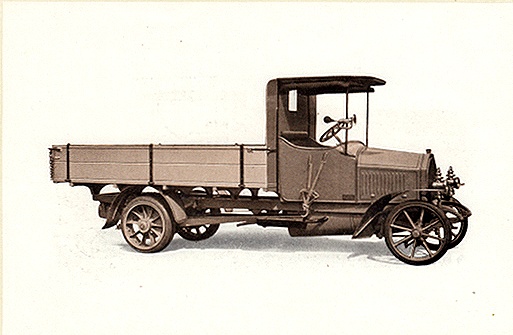
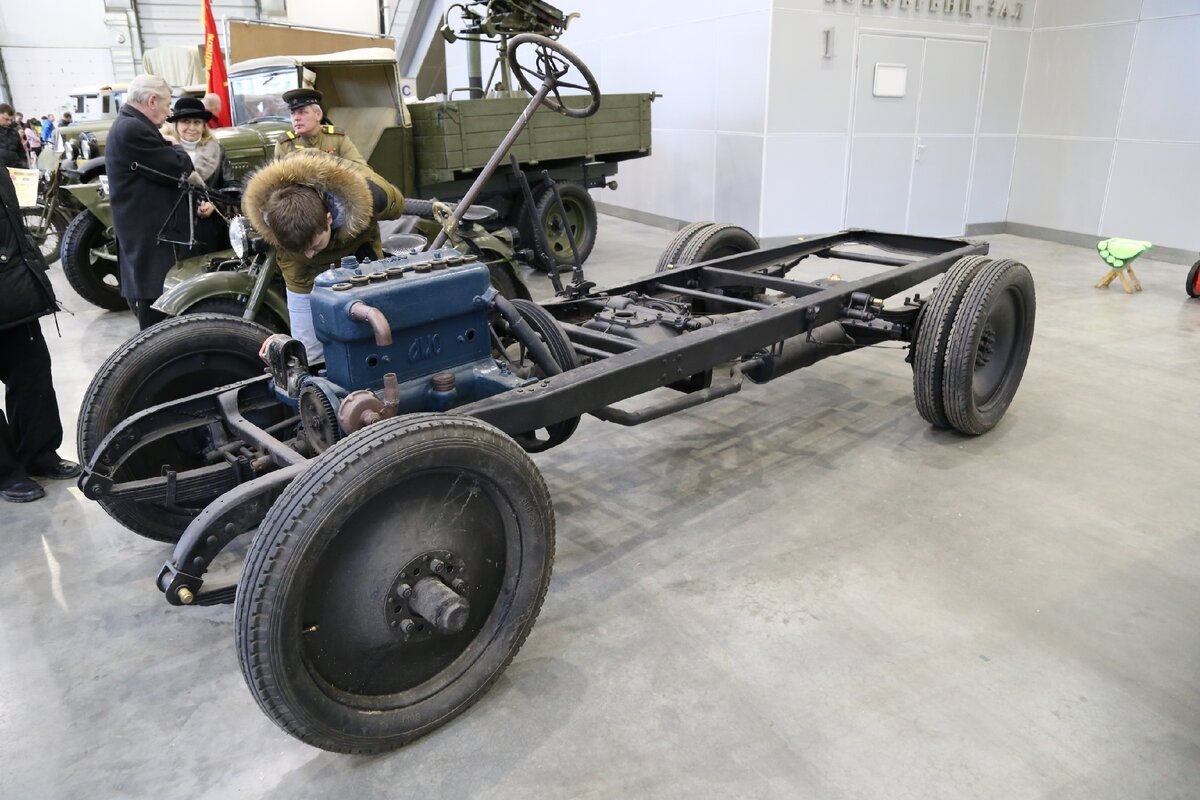
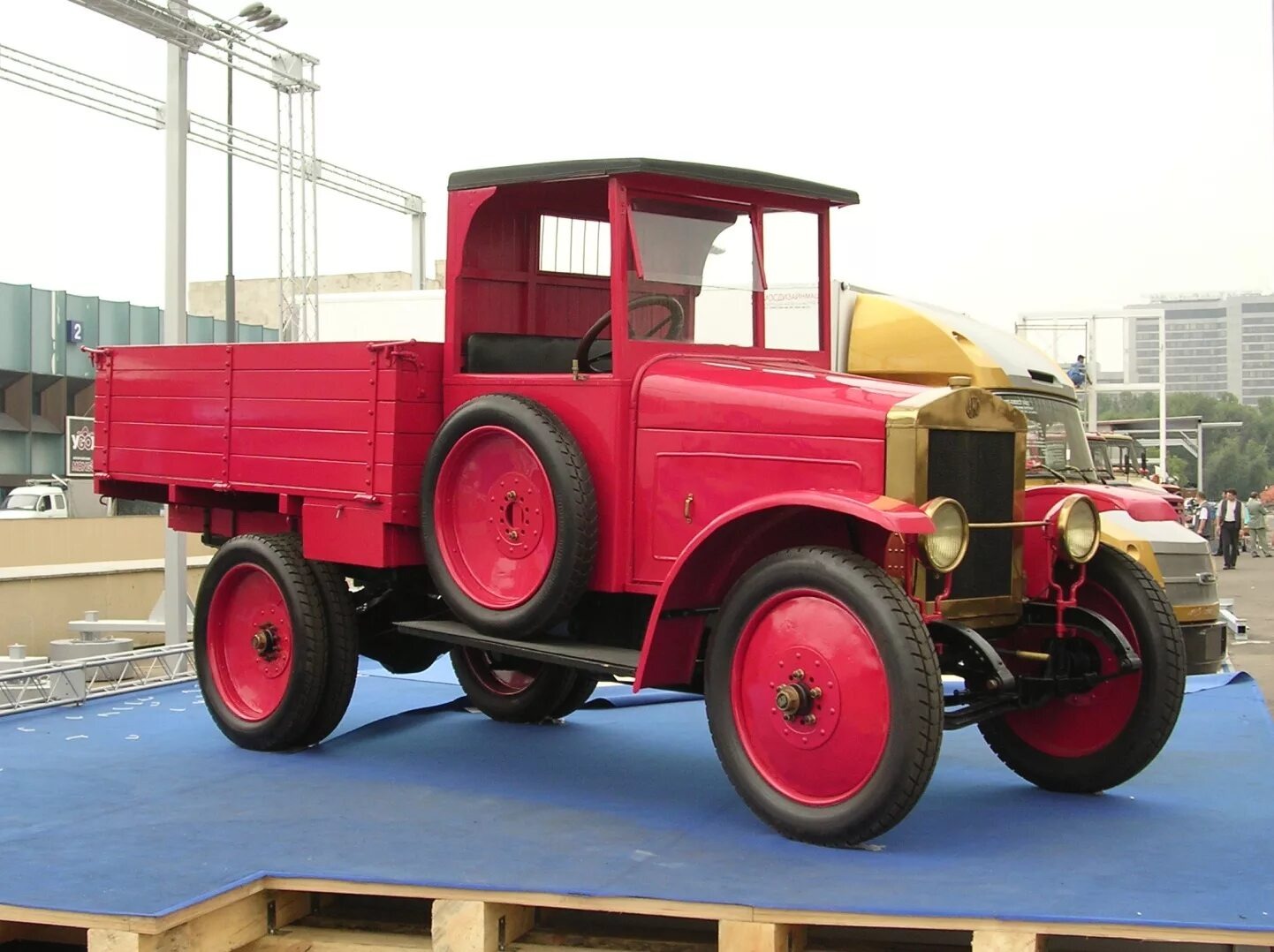
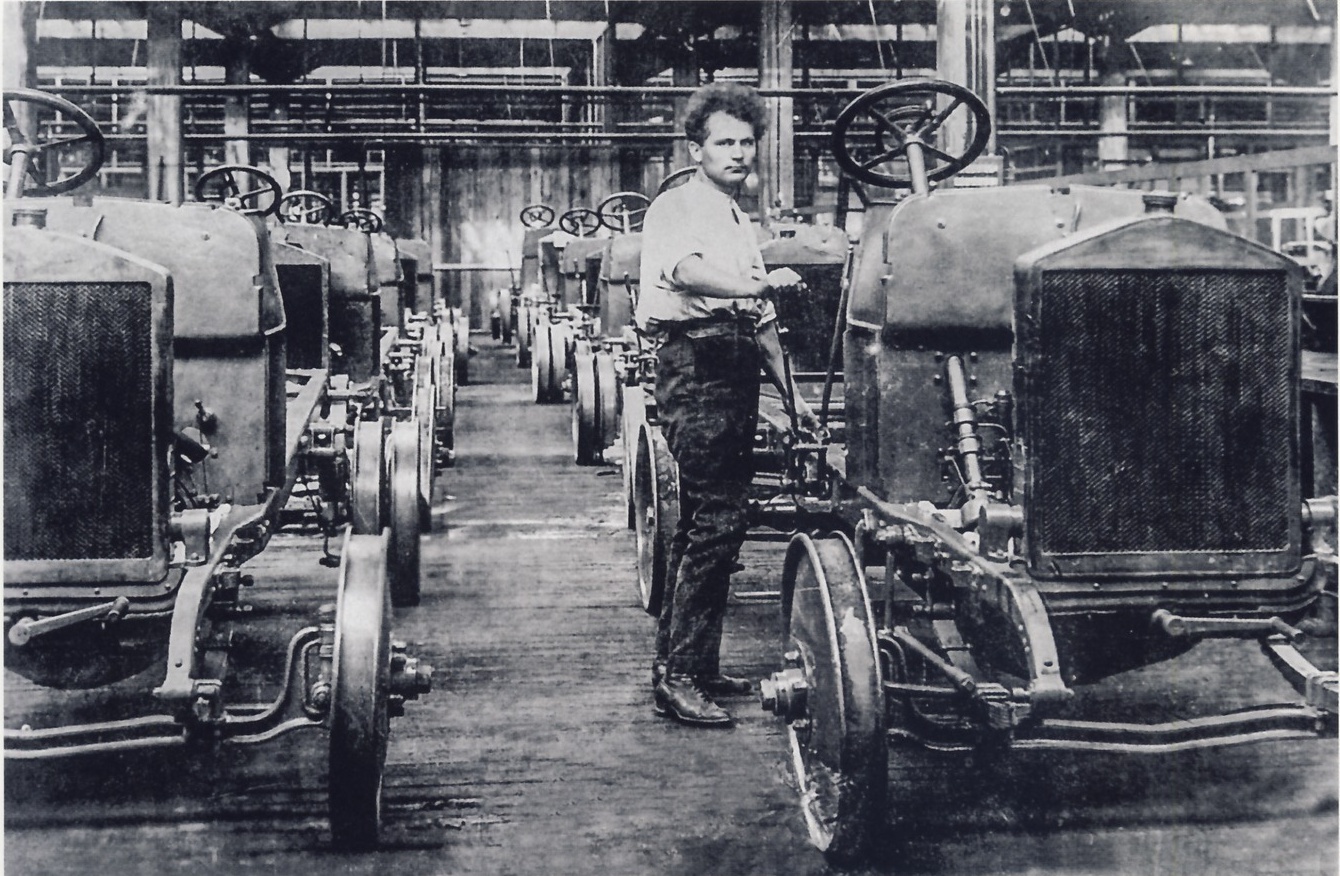
An urgent development and the organization of armored car production could have been the solution on a chassis produced by the domestic industry. The choice was, to put it mildly, limited. The only available mass-produced chassis was the 1.5-ton AMO F-15 truck, which had been manufactured in Moscow since the autumn of 1924 and had proven its suitability for service during the Moscow–Leningrad–Moscow run in November–December of that same year. The development of an armored car based on this chassis was undertaken by the Technical Bureau of the Main Directorate of the Military Industry of the USSR’s Supreme Council of the National Economy (VSNKh) (referred to as the « T-Bureau, » or in some sources, the « Tank Bureau »).
II – The AMO F-15 GUVP armored car project :
In April 1925, the T-Bureau submitted a proposal « for the armor-plating of the AMO-15 vehicle » to the Artillery Committee of the Red Army (RKKA) Artillery Directorate (which was responsible for armored vehicle development at the time). The explanatory note accompanying the project, signed by the bureau’s head, S.P. Shukalov, on April 1, 1925, justified the need for the development: « Taking into account…
1. The worn-out state of the armored vehicles currently in service with the Red Army.
2. The impracticality of refurbishing existing vehicles due to the enormous cost of manufacturing spare parts and the need to set up new production lines for them.
3. The lack of a specialized chassis for armor-plating.
The Main Directorate of the Military Industry is designing the 1.5-ton Fiat-type chassis built by the AMO plant for the future armored car. By possessing armored vehicles manufactured in Russia from Russian materials, the Army, in addition to achieving absolute independence from foreign markets, will have access to all spare parts and repair capabilities at a plant equipped with specialized machinery. The location of the plant manufacturing the chassis for armoring and performing repairs on armored vehicles in Russia is highly convenient from an operational standpoint. Furthermore, the availability of spare parts will minimize the time required for frontline repairs.”
To manufacture the armored car, the Technical Bureau decided to make a number of modifications to the chassis:
“1. The rear section of the frame is cut down by approx.
400 mm…
2. The steering column is tilted and shortened…
3. The control pedal shaft is relocated beneath the chassis to lower the pedal position.
4. The control levers are shortened.
5. A starter ring gear is installed on the flywheel.
6. A starter-generator, battery, and electrical system components are installed.
7. The exhaust pipe and muffler are routed externally…”
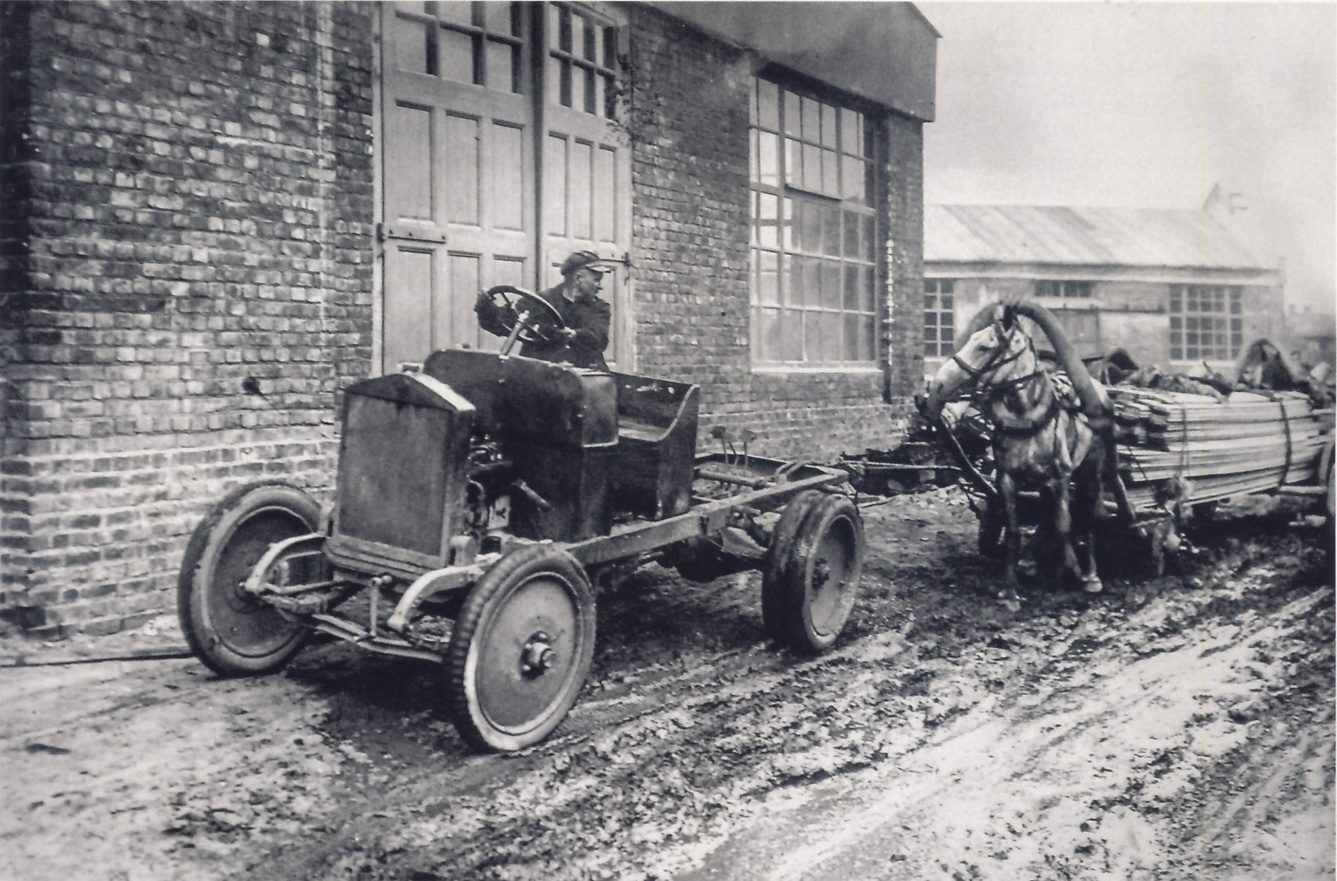
The low positioning of the driver’s seat (the specialty of “driver-mechanic” did not yet exist) was intended to reduce the vehicle’s overall height and improve stability by lowering the center of gravity. The design called for a light machine-gun armored car with a three-man crew (“com-
mander, driver, and machine gunner”). Naturally, like many wheeled armored vehicles developed at the time, it retained, both structurally and technologically, features inherited from World War I-era predecessors: maximum retention of the base vehicle’s layout (front-mounted engine compartment, transmission components located beneath the chassis, right-hand drive, etc.), assembly of a
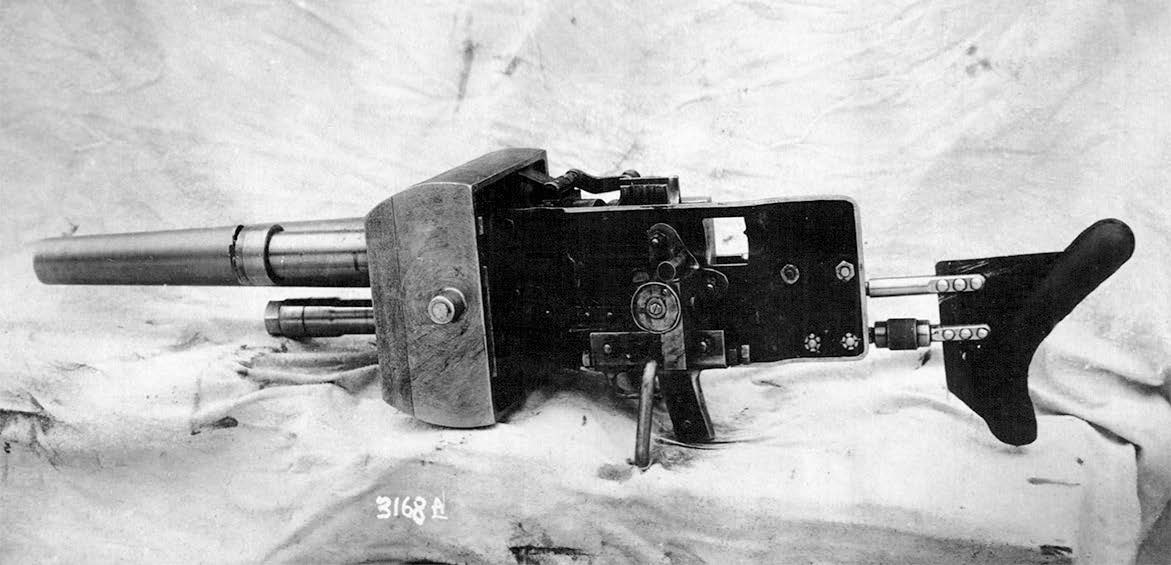
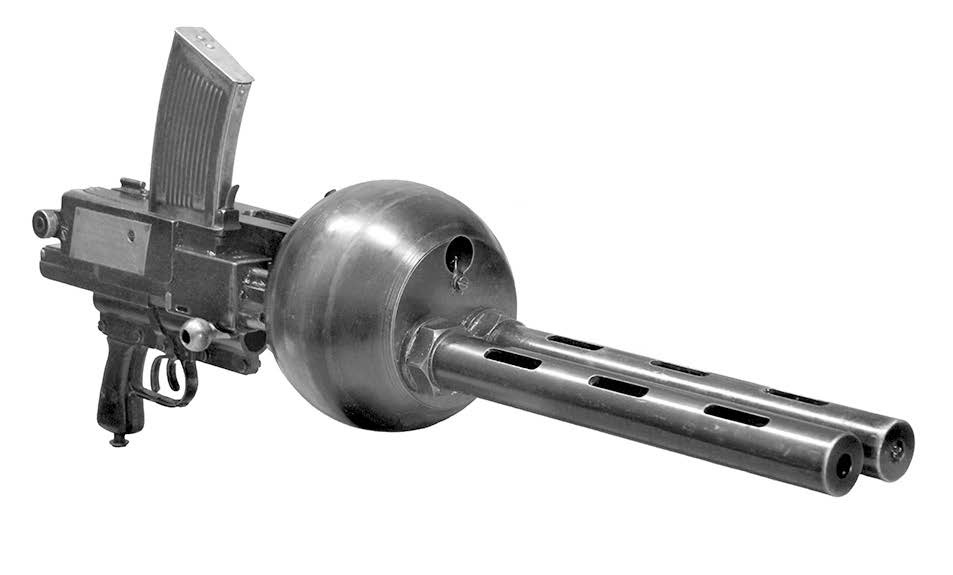
riveted armored hull on a framework mounted to the chassis frame, and vertical installation of most armor plates, open viewing slots. The requirement, first put forward during World War I, for confident vehicle control while reversing was also maintained. To achieve this, the design shifted the driver’s position as far as possible from the vehicle’s longitudinal axis, placing it in a small cabin that projected slightly from the right side of the hull; hatches with hinged covers and vision slits were incorporated into the cabin’s front and rear walls. Consequently, the armored turret was offset to the left. Mounted within the 900 mm diameter turret were twin Fedorov (or Fedorov-Shpagin) machine guns, arranged in an « inverted » configuration within an Ivanov ball mount. The guns were magazine-fed, and the mount featured a pistol grip for control and a shoulder rest. It is worth noting that, according to a report by the Secret Department of the NKVM (People’s Commissariat for Military and Naval Affairs) Administration for the USSR Revolutionary Military Council, the development of a « machine gun mount for armored vehicles featuring twin machine guns » was listed among the « primary projects of the GUVP Technical Bureau for 1925 »: the mount had been « approved by the Artillery Directorate and is slated for production » (with the Kovrov Machine Gun Plant designated as the manufacturer). The machine guns offered vertical traverse angles of -20° to +30° and 360° horizontal traverse; the dead zone when firing forward was approximately 7 meters. The machine gunner was seated on a height-adjustable seat. Small firing ports were also provided in the armored hull for the use of revolvers. Armor plating up to 7 mm thick offered protection against standard small-arms fire and against armor-piercing rounds at ranges of 50 meters or more (a requirement established as early as World War I). The engine radiator was fitted with a shutter that could be opened and closed from the driver’s seat. Crew entry and exit were via armored doors mounted on external hinges in the left hull side and the rear of the hull. The vehicle retained the 35 hp carbureted automotive engine—supplemented by an electric starter—as well as the transmission (featuring a dry clutch, a four-speed gearbox, and a bevel-gear rear-axle final drive) and solid-disc wheels (single-tire front and dual-tire rear). The designers’ estimated top speed of 52 km/h was arguably optimistic, given that the base AMO F-15 model could reach no more than 50 km/h. Plans called for two fuel tanks with a combined capacity of « 80 kilograms » to be located either in the rear section of the armored hull or in a separate armored tool box at the rear.
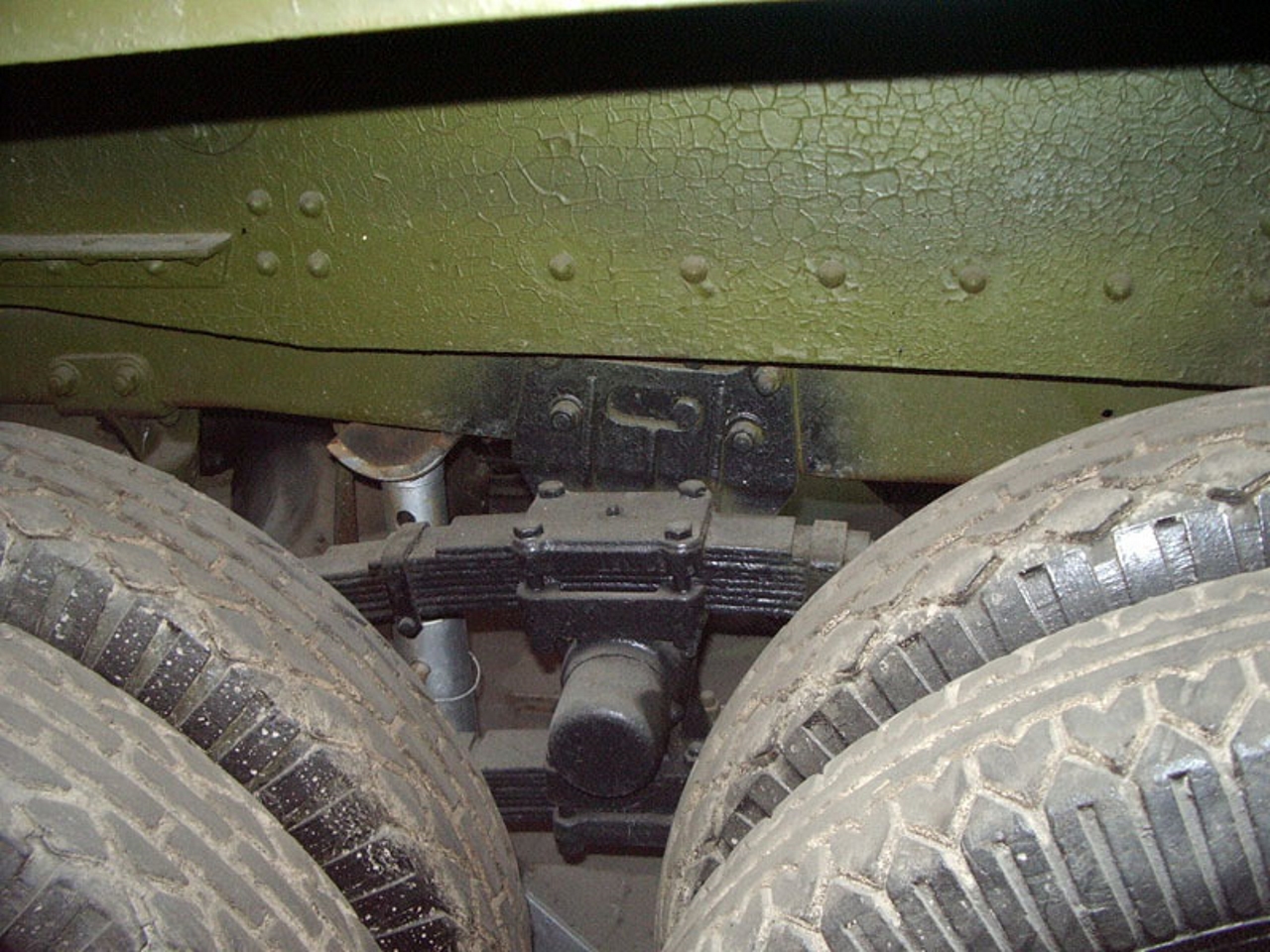
The project’s explanatory memorandum included a fairly detailed calculation of the vehicle’s weight and performance characteristics. Furthermore, to account for the increased load on the chassis – the armor alone was expected to weigh 640 kg, rising to 800 kg when including the framework and mounting hardware – plans were made to reinforce the longitudinal semi-elliptical leaf springs by adding two extra leaves to the existing seven in each spring assembly. It is worth noting that the explanatory memorandum listed the dimensions and key tactical and technical specifications of the system under development.
The armored vehicle was compared with the Austin, Fiat, and Garford armored cars, as well as the Austin-Kégresse half-tracks and the Gulkevich « armored tractor » (referred to as an « American tractor with Putilov Plant armor »). The inclusion of the latter in the memorandum was evidently not accidental: plans envisaged armored car variants with both wheeled and half-track running gear.
In 1926, the « Military Industry Design Bureau » was tasked with developing the « AMOG-15 armored car », utilizing elements of the same chassis but fitted with a « tracked propulsion system », with a submission deadline of March 1926.
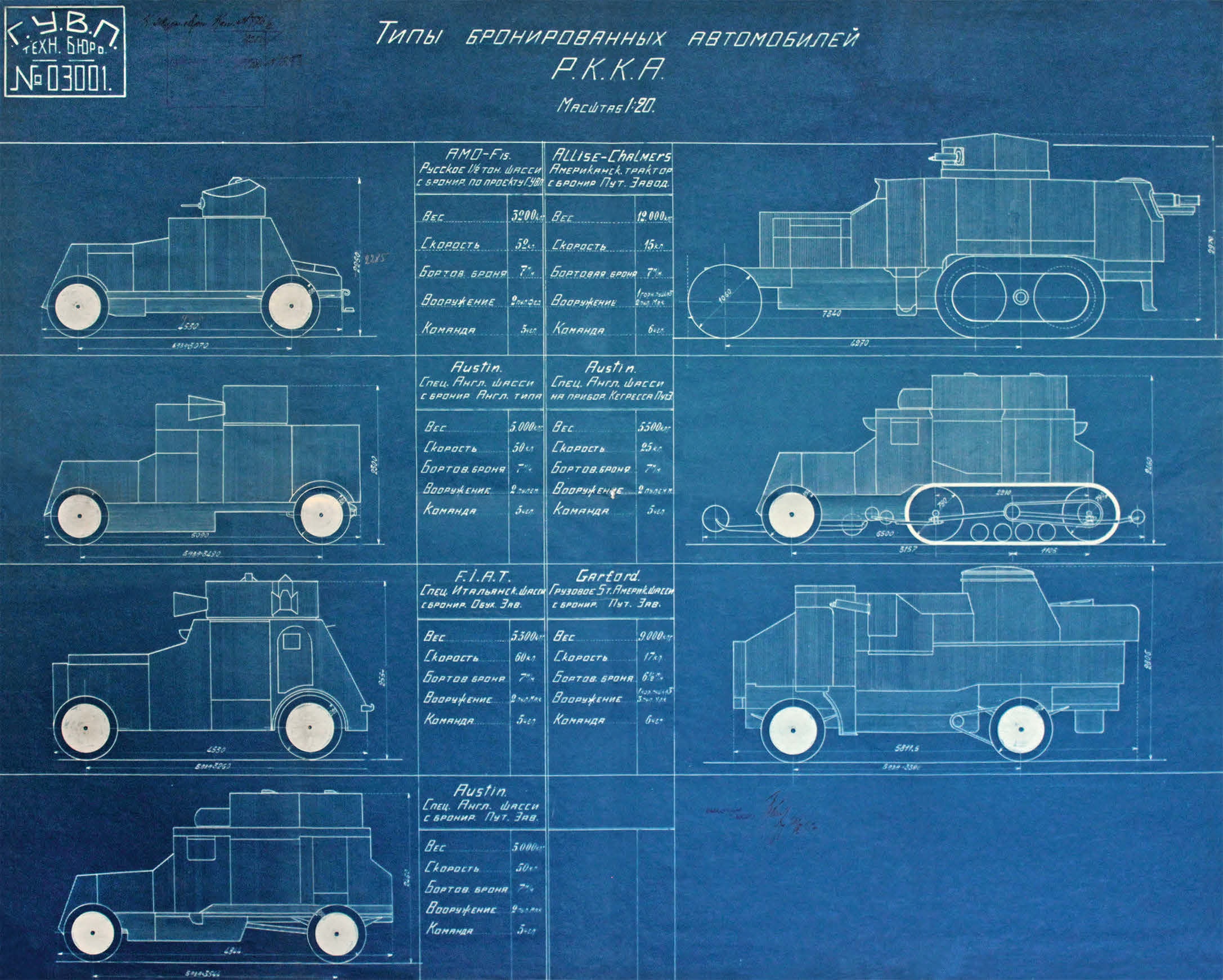
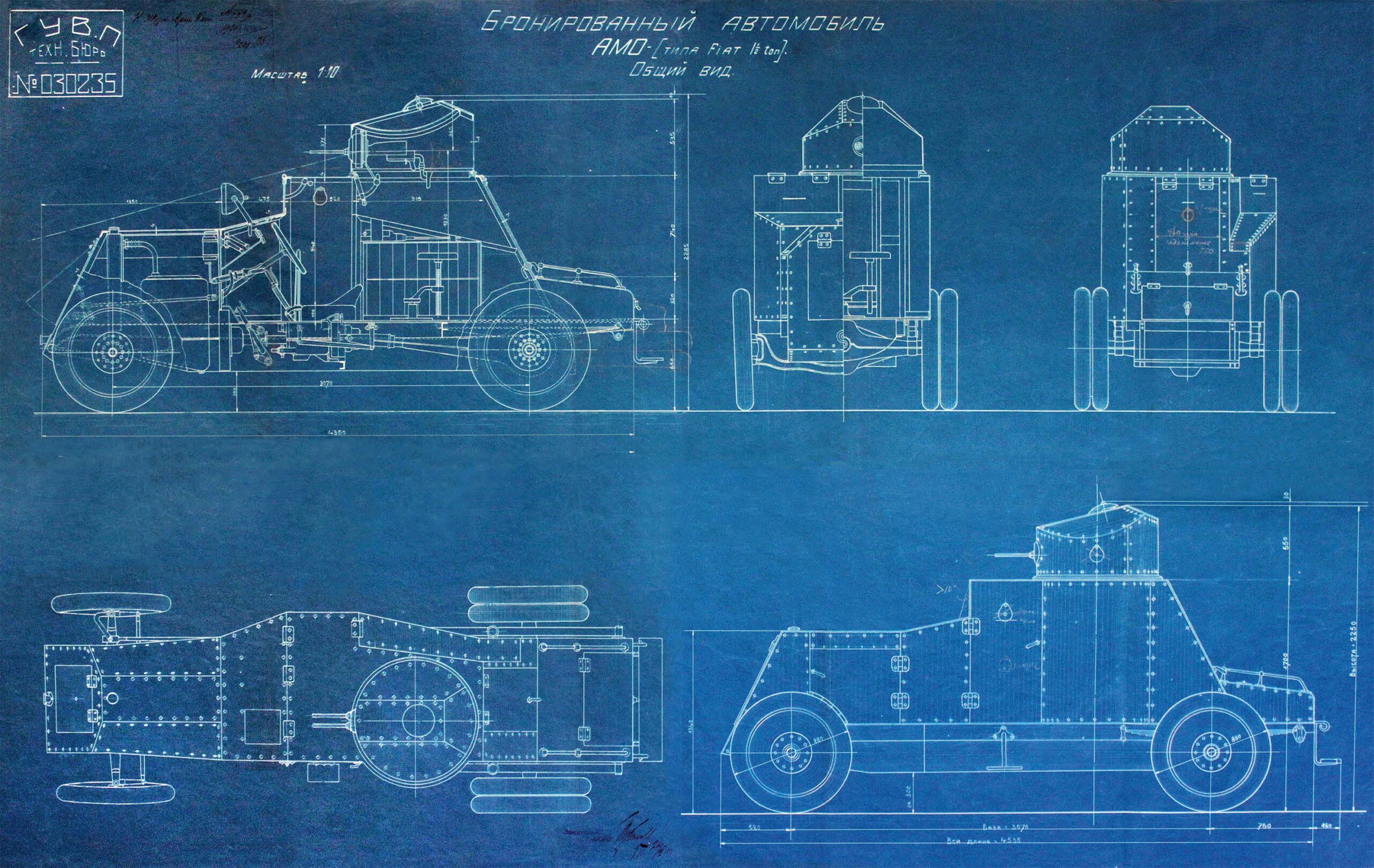
III – Updating the armor and armament :
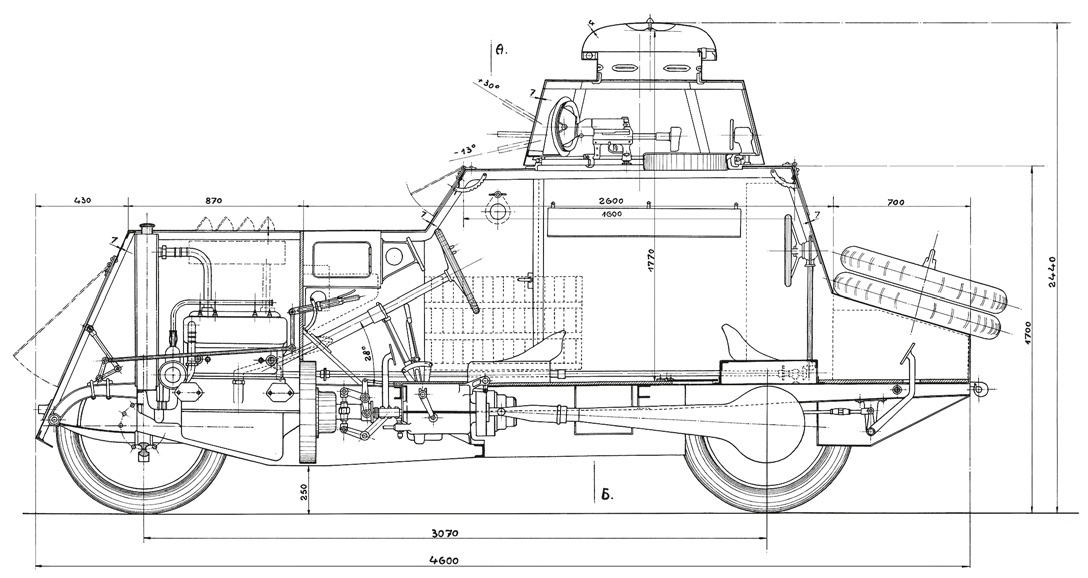
The design for athe light four-wheeled version armored car based on the AMO F-15 chassis was reviewed by the Artillery Committee (Artkom) of the Artillery Directorate in Protocol No. 779s, dated July 3, 1925. The Committee was clearly dissatisfied with the proposed armor and armament configuration. It should be noted that, during this period, armored cars were viewed not merely as assets for combat reconnaissance and security, but also for providing fire support to cavalry and motorized infantry during maneuver warfare. A relevant quote can be drawn from the book Tactics of Armored Units by P.D. Gladkov, an instructor of armored force tactics at the Red Army Military Academy: « …Armored car combat generally consists of a rapid raid and a brief burst of fire from the closest possible range… After the strike, the armored cars withdraw to cover to prepare for the next attack. » Sometimes, however, an attack by armored cars might culminate in the pursuit of a fleeing enemy… The targets of armored car operations were most often personnel, either exposed or under light cover, and less frequently enemy armored vehicles, wooden buildings, machine-gun nests, and the like, targets against which the power of armor-piercing bullets and 37mm shells was sufficient… Such views largely shaped the requirements set forth by the Artillery Committee for the further refinement of the design. In May 1926, the Technical Bureau of the GUVP (renamed « Voenprom » in November 1925) submitted to the Artillery Committee a design for « armoring the AMO F-15 vehicle according to the second variant. »
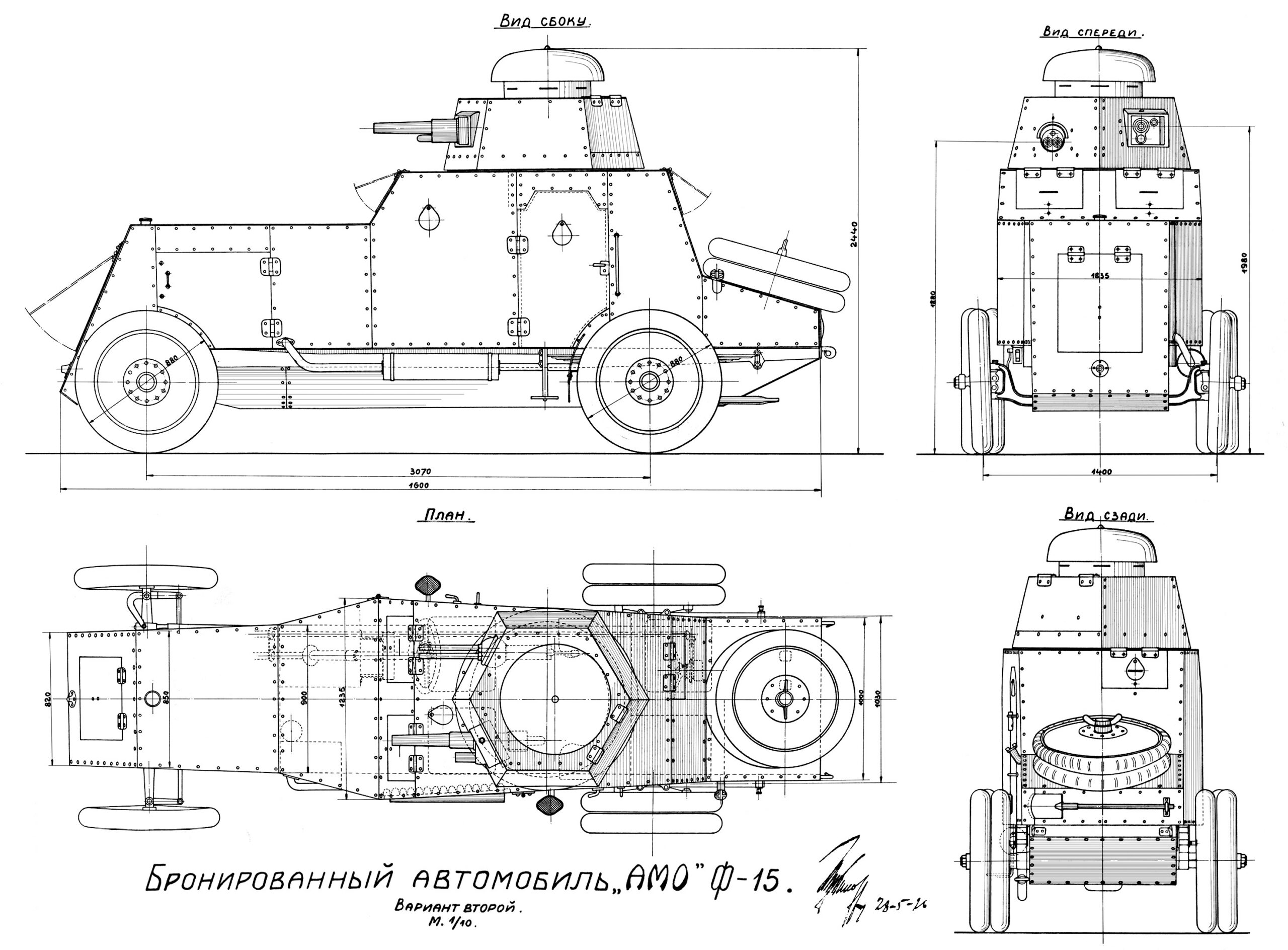
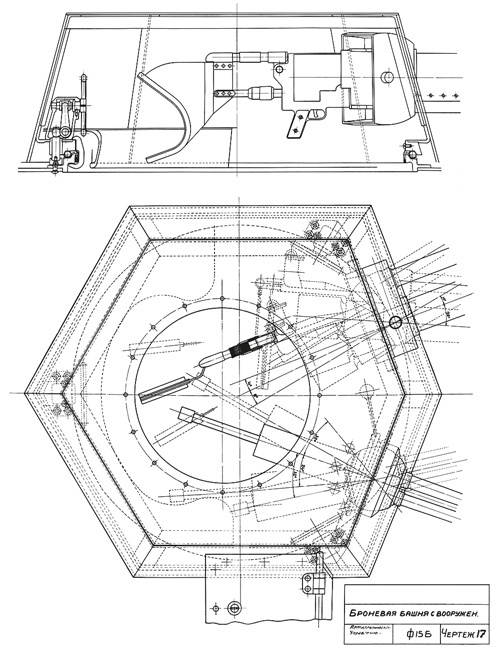
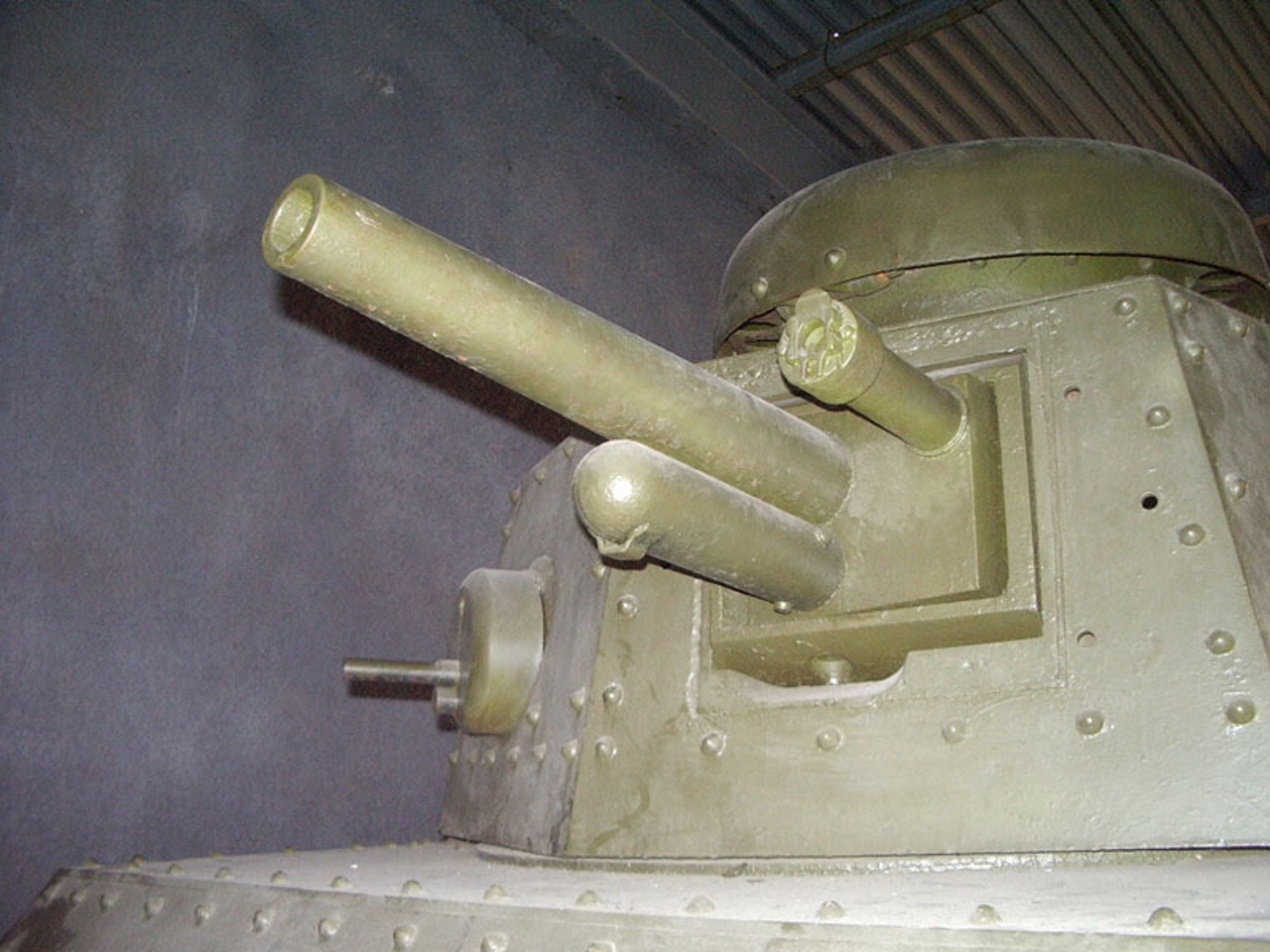
The primary change lay in the armament. The armored car was equipped with both a cannon and a machine gun; its armament suite mirrored that of the T-18 (MS-1) light infantry support tank, which was being developed concurrently at the same design bureau under the leadership of S.P. Shukalov. Mounted on the vehicle’s centerline was a hexagonal, single-seat turret— »of the type installed on the prototype infantry support tank »—featuring a ball mount on the right side for a twin-barrel Fedorov (Fedorov-Shpagin) machine gun and a 37mm Hotchkiss cannon with an armored mantlet on the left.
It is worth noting that while the Fedorov tank machine gun is typically cited as having a 6.5mm caliber, it was actually developed in two variants: a 6.5mm (2.5-line) version chambered for the Japanese cartridge and a 7.62mm (3-line) version chambered for the Russian cartridge. The explanatory note for the « second variant » of the armored car specifies « two 3-line [7.62mm] twin Fedorov machine guns in a ball mount » (i.e., specifically 7.62mm). The machine gun and cannon mounts were equipped with a shoulder rest and a pistol grip for control. The cannon, along with its
mantlet, could traverse within the mount frame relative to the turret by 32° to the left and 5° to the right horizontally, and elevate from -10° to +30° vertically. The twin machine gun ball mount allowed for a traverse of 6° to the left and 46° to the right, and a vertical range of -13° to +30°. The
rear left armor plate of the turret was designed to hinge open for gun maintenance and « ventilation while on the march. » Ammunition rounds and cartridges were stored in special racks in the rear of the hull and along the right side in the mid-section. A small hatch in the hull floor served to eject
spent casings. It is interesting to note the mention that « special mounts were to be designed for the spare barrels of the automatic rifles » so they could be used as individual crew weapons; in other words, arming armored car and tank crews with « automatic rifles » (still chambered for the rifle
cartridge) was already being planned in the 1920s. Small hatches for firing revolvers and « automatic rifles » were provided in the hull walls and armored doors. The turret featured a mushroom-shaped
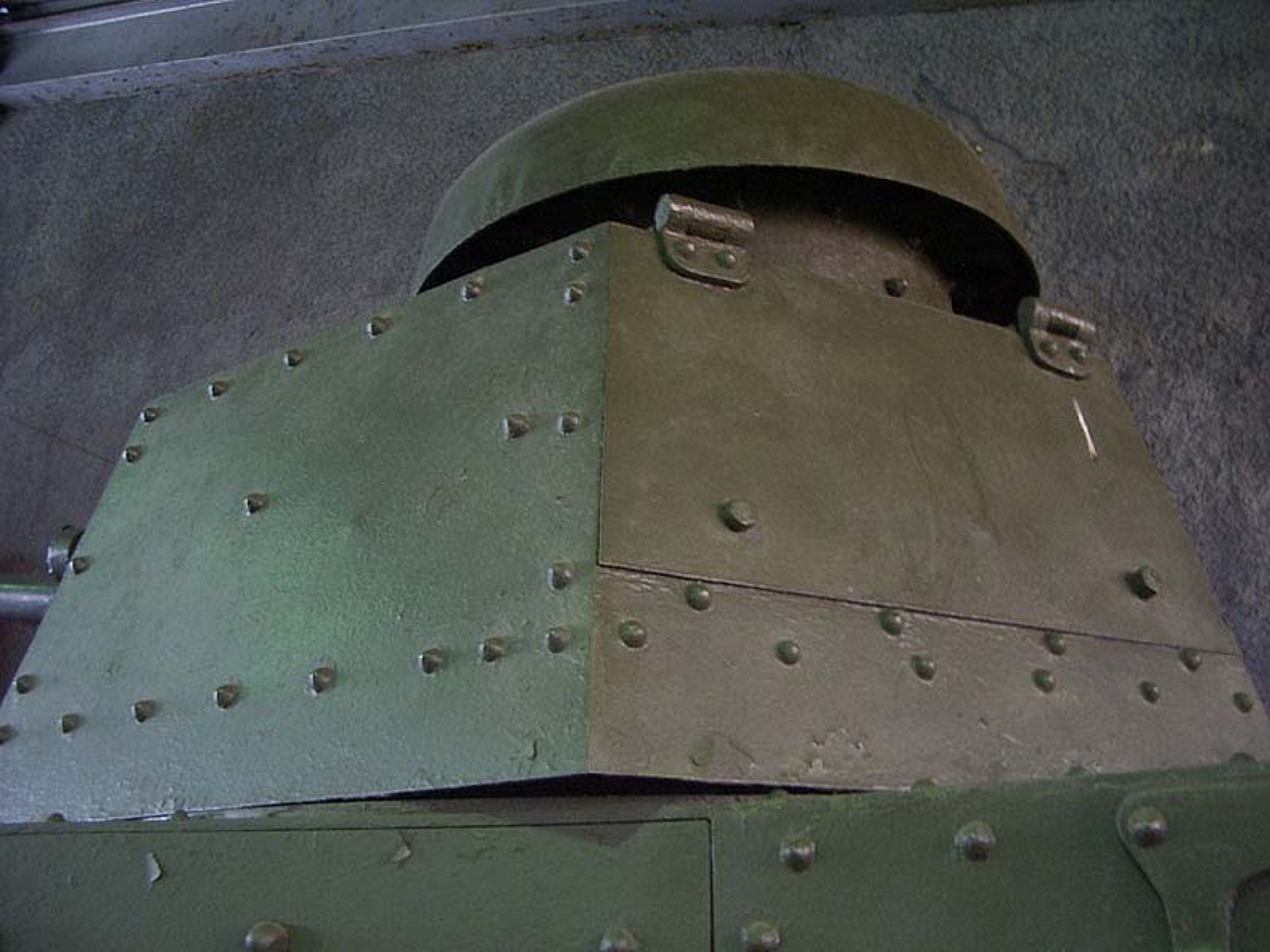
armored cupola with vision slits and a raised roof (for ventilation), was mounted on a ball-bearing race, and was equipped with three locking mechanisms; the gunner could engage two of these using a strap to lock the turret’s rotation while fine-tuning the weapon’s aim via a shoulder rest.
Dual controls were now implemented, similar to the « Austin » armored car (the Russian version), featuring a rear control station equipped with a steering column, clutch and brake pedals, a seat, and a hatch with a cover and vision slit.
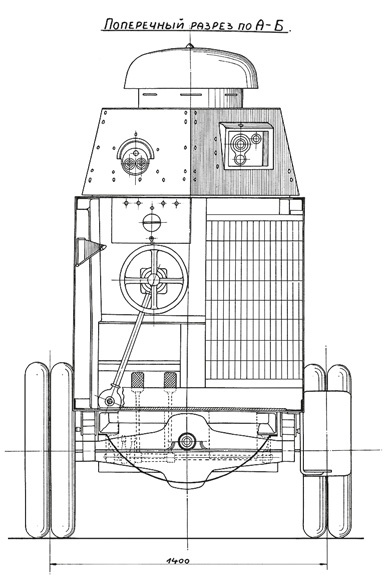
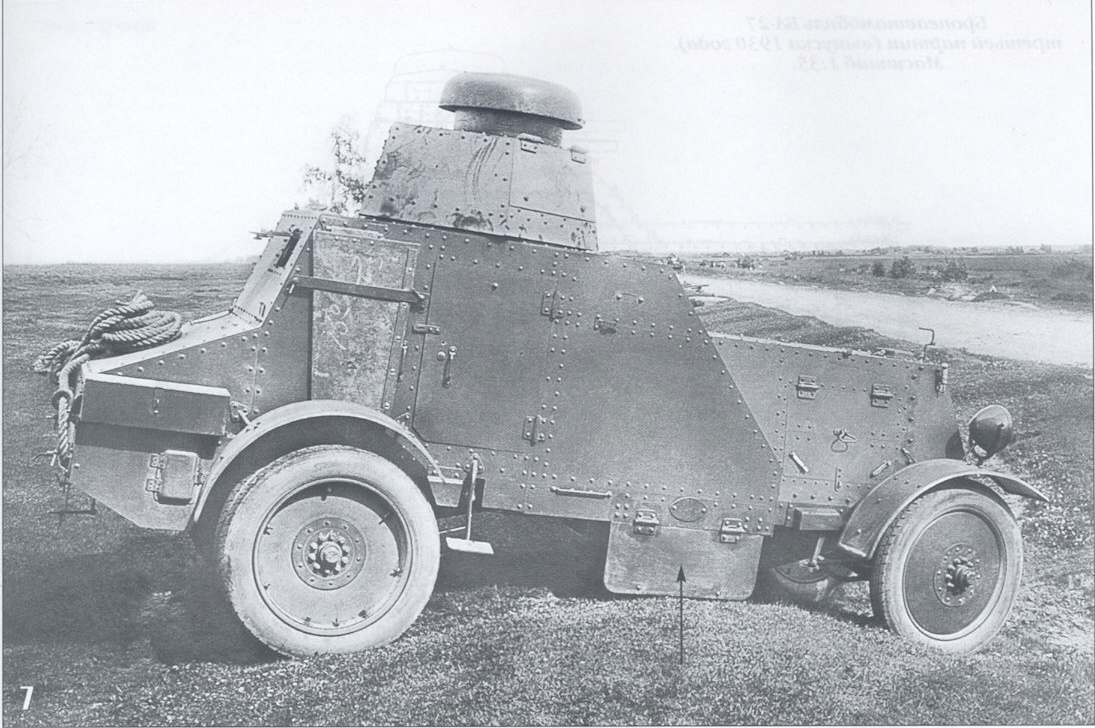
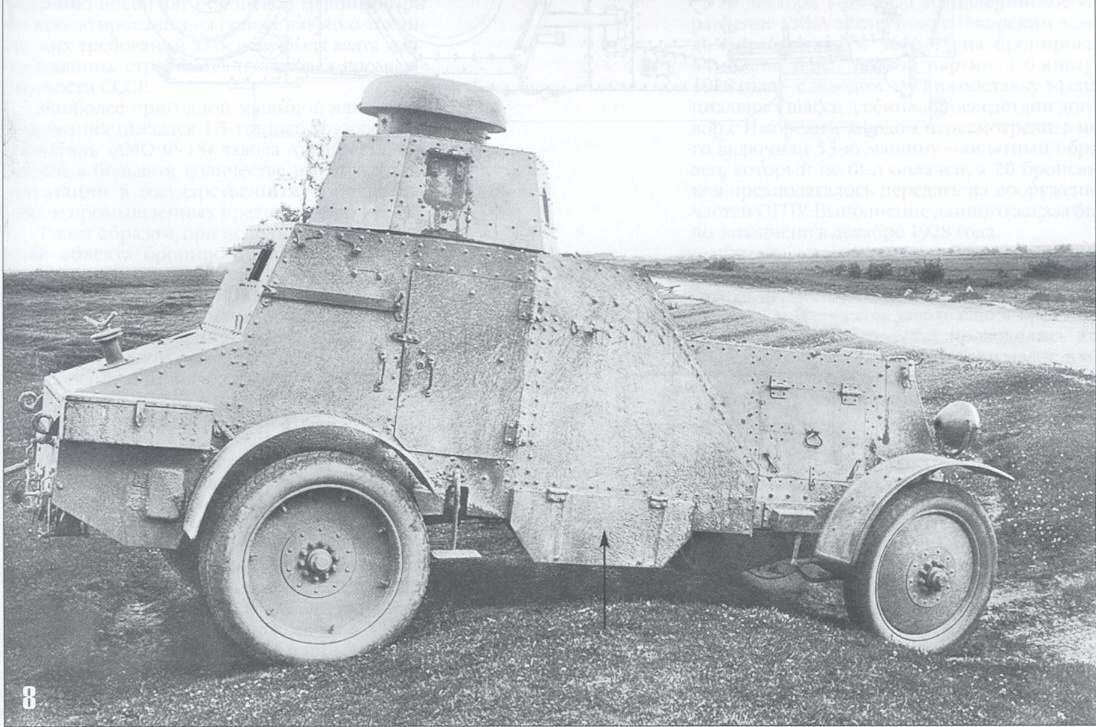
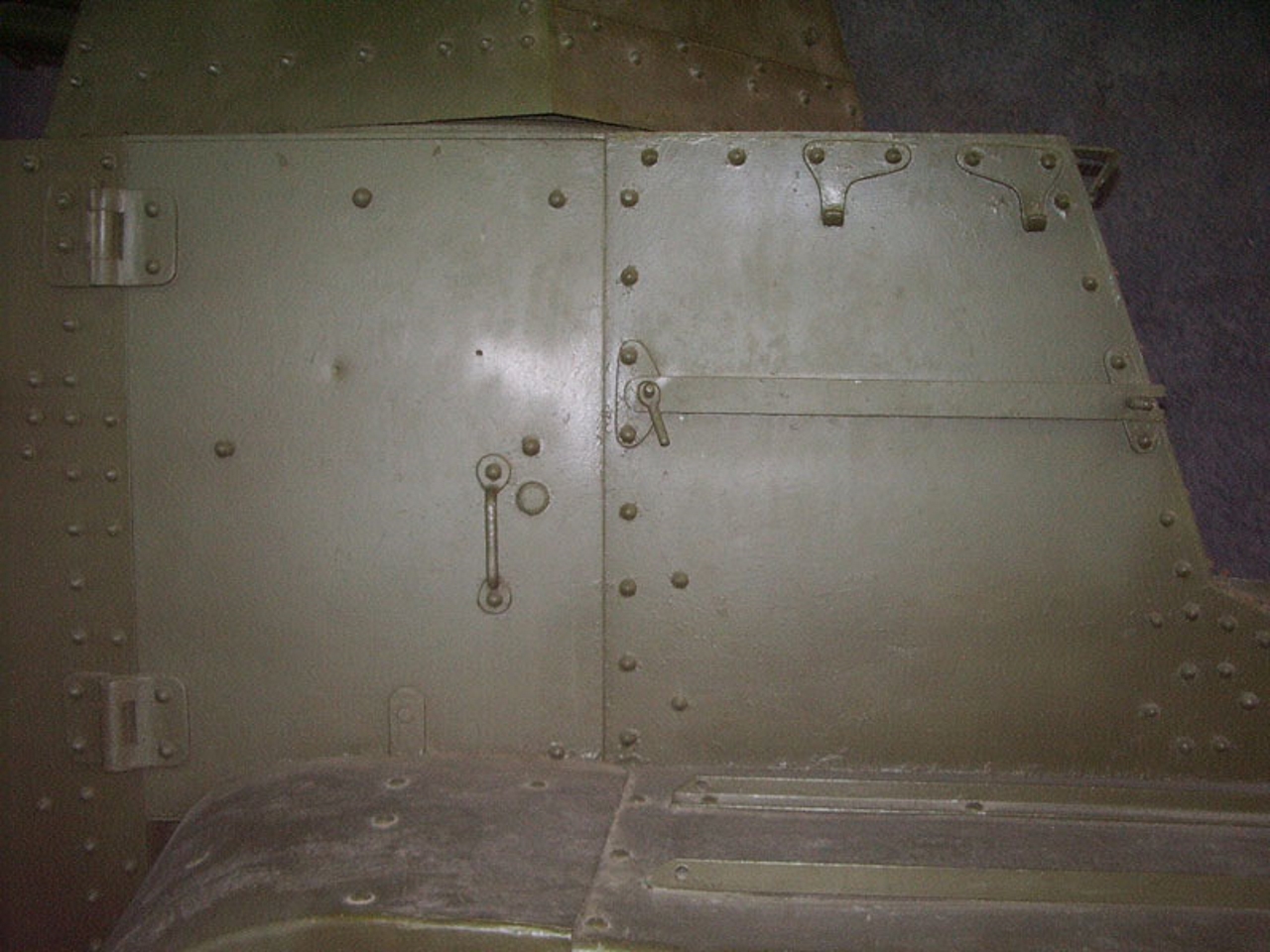
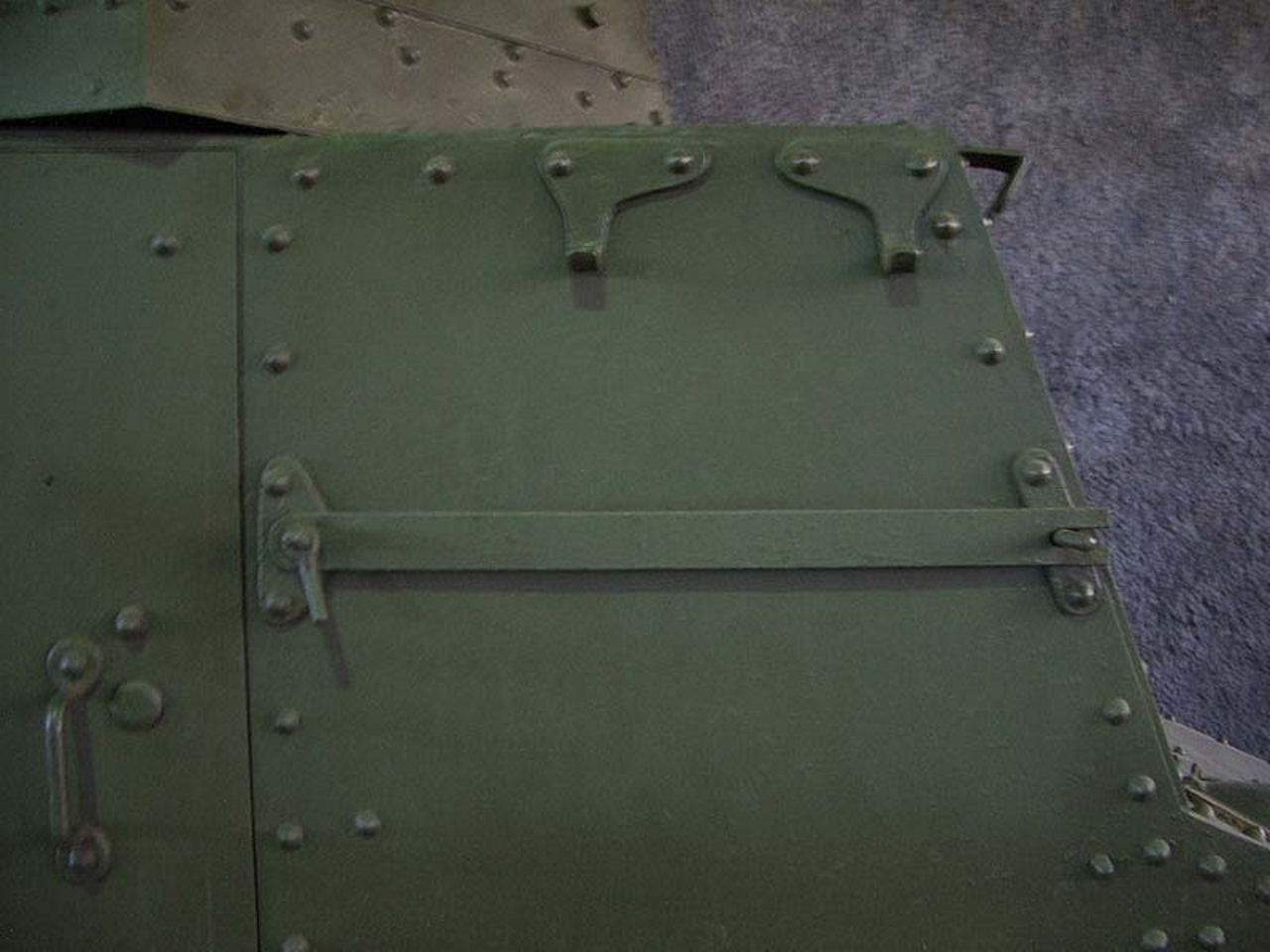
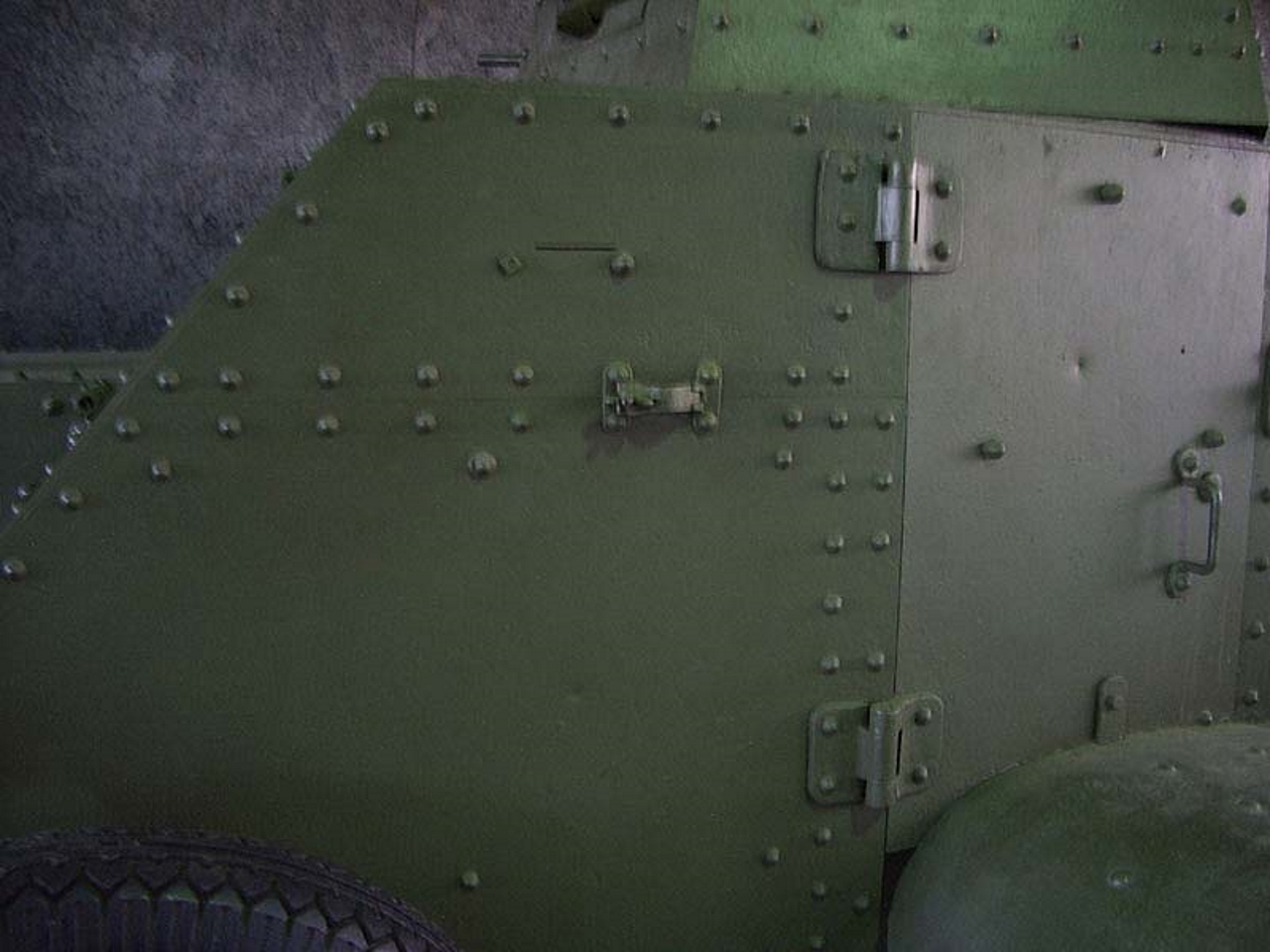
The design of the riveted armored hull was also modified; the explanatory note emphasized that it had « minimal volume » (the hull had indeed been noticeably reduced in size). Crew entry and exit were provided by doors on the right side (next to the driver’s seat) and on the left side (closer to the rear wheel). Two spare wheels were mounted on the rear hull extension. « Tools are stored in compartments between the front seats and under the rear seat. Bulky tools (jack, shovel, crowbar) are stowed on the outside of the hull. »
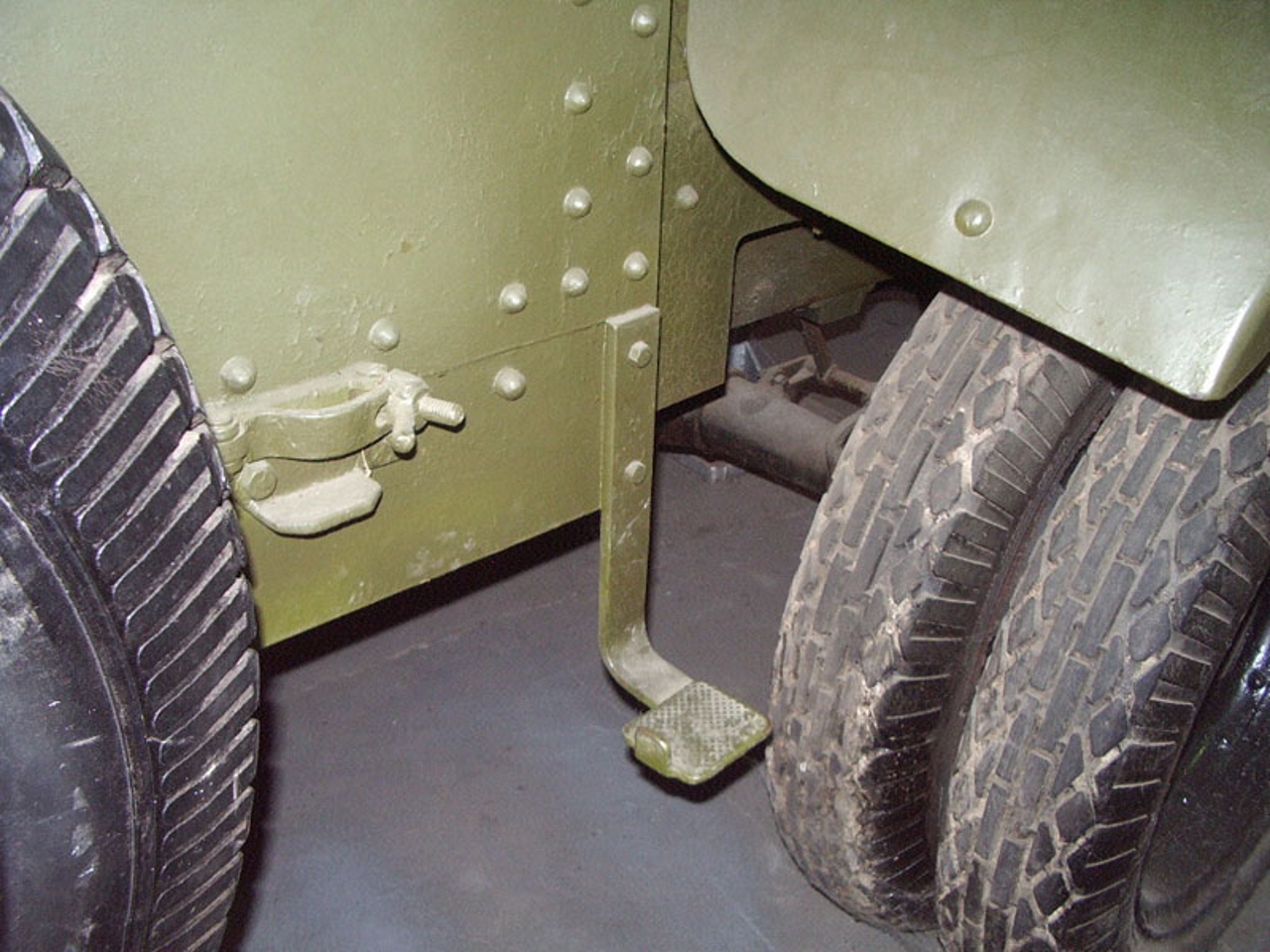
As with the first variant, the front driver’s seat was lowered, the mounting and dimensions of the control pedals were altered, and the steering column angle was increased, the pedal shaft was relocated downward and mounted on special brackets, all pedals (clutch, brake, and accelerator) were newly fabricated, the steering wheel was tilted to 28°, the gear shift and brake levers were shortened, a rear steering wheel with a clutch pedal was additionally installed. The rear-station steering system was engaged and disengaged from the front driver’s position. The design modifications corresponded to the configuration known as the « AMO F-15SP » chassis (AMO engineers B.D. Strokanov and E.I. Vazhinsky are credited with leading the development of this special chassis). The powertrain remained unchanged, with the sole exceptions of the dynamo (generator) and the electric starter. A reserve tank was provided for use in the event of a vacuum fuel system failure; this tank was to be filled « from a can, » located in a box beneath the floor (a manual pump was later introduced for this purpose). The armoring of the engine compartment and the access to the engine, “via side doors located on the hull sides”, underwent only minor changes. However, the design did call for, based on test results, additional radiator shutters in the engine compartment roof (an “upper radiator”) controlled from the driver’s position. The exhaust pipe and muffler were routed to the left side of the hull. The wheelbase remained unchanged at 3,070 mm. The calculated turning radius was 6.4 m. Changes to the layout and armament altered the calculated axle loads: the load on the front axle decreased slightly, while the load on the rear axle increased compared to the initial version. Equipping the vehicle with an electric starter and electric lighting gave it a distinct advantage over the base chassis. A novel feature was the plan to equip the armored vehicle with a radio transceiver. The generator (dynamo) output and battery capacity were calculated accordingly. However, the design submitted by the Technical Bureau mentioned only a « box » to house the future radio set. The issue of the antenna was also left unresolved; the proposal merely stated that, based on « discussions with representatives of the Scientific Research Institute of Communications », the plan was to use an armor plate measuring « approximately 0.75 m » as the antenna, by insulating the selected section from the rest of the armored hull. This highly unconventional proposal was never implemented. In any case, radio sets did not appear on domestic armored vehicles until significantly later.
The Artillery Committee duly appreciated the submitted design.
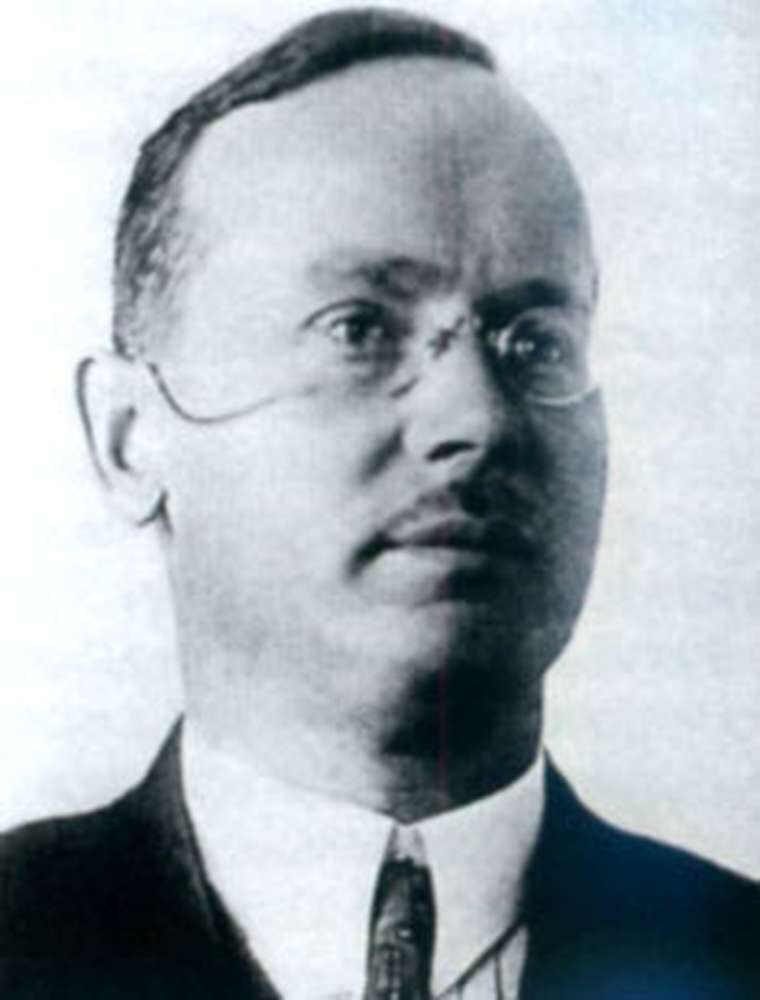
IV – The final project :
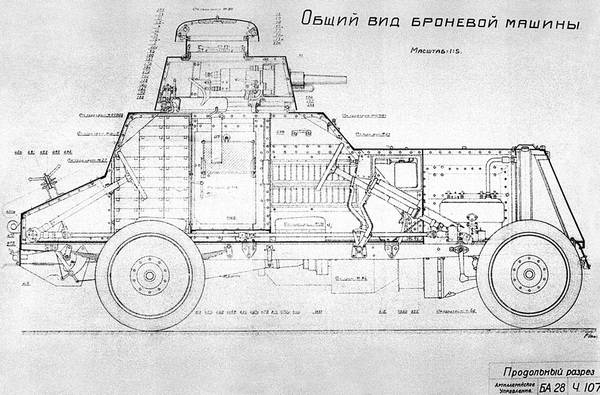
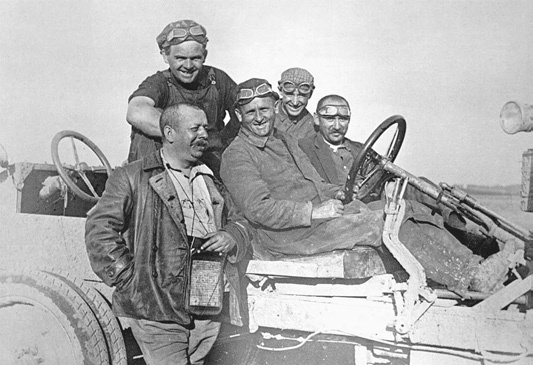
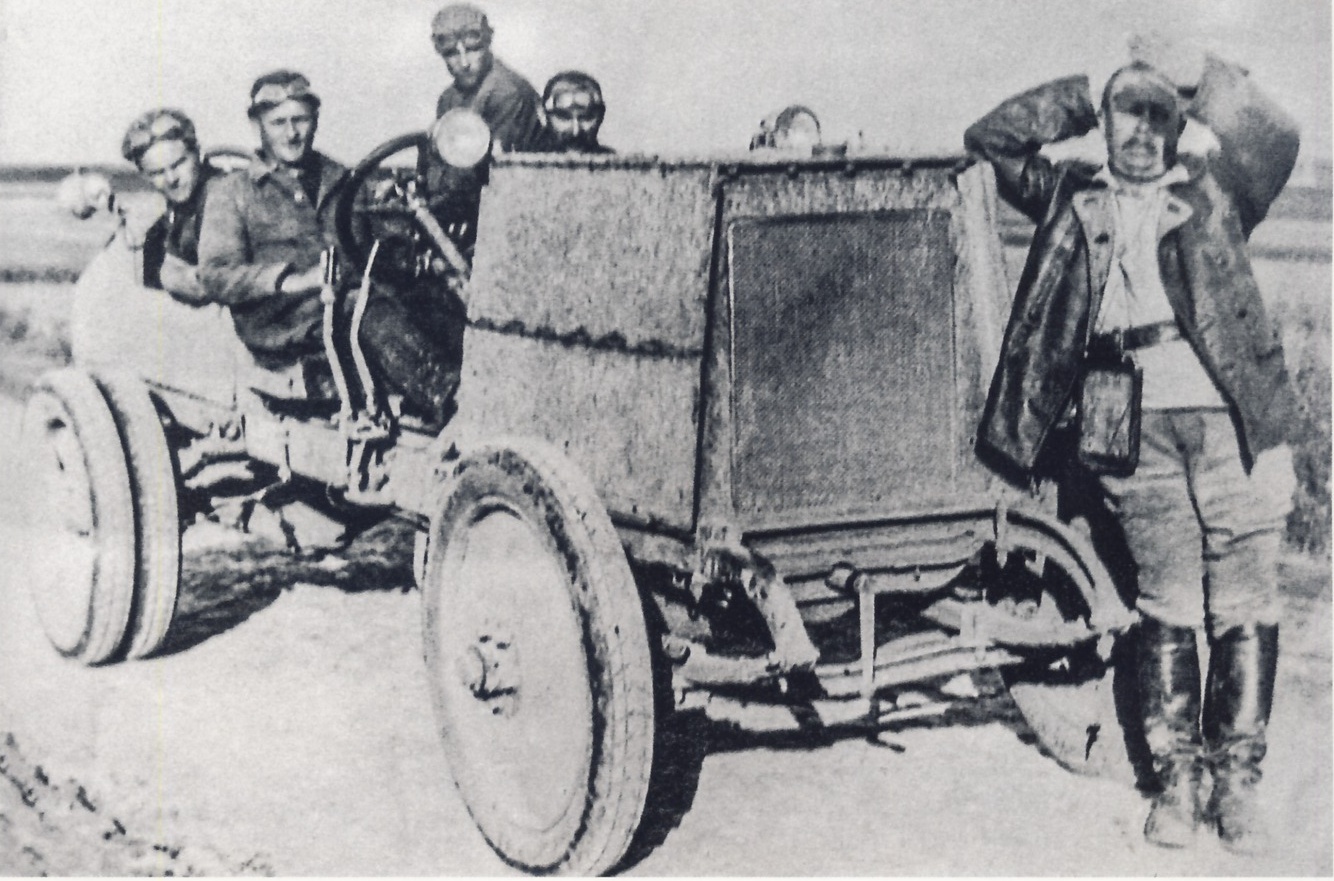
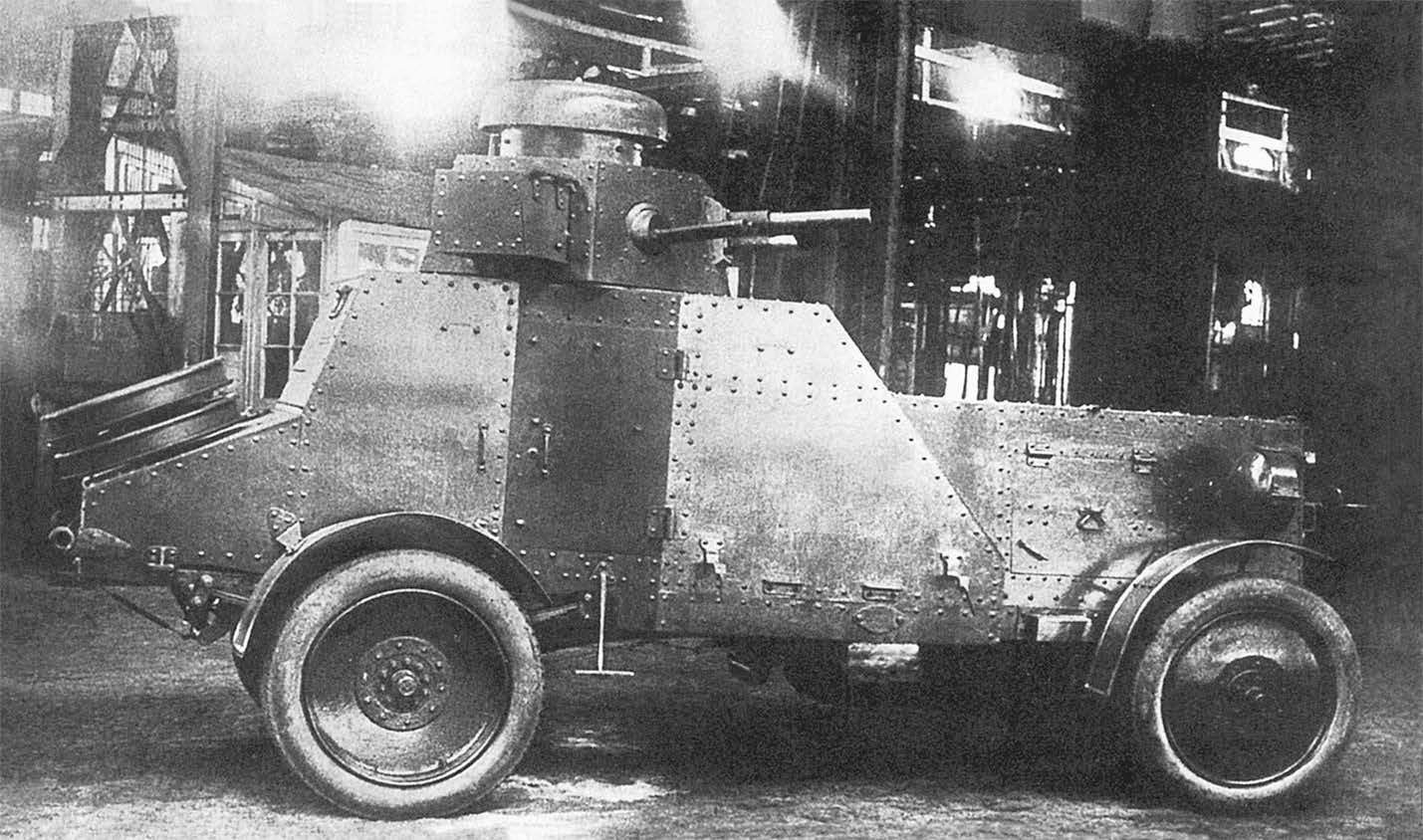
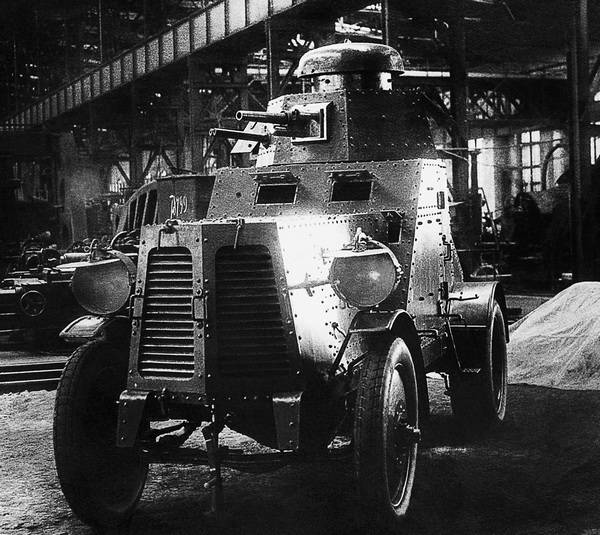
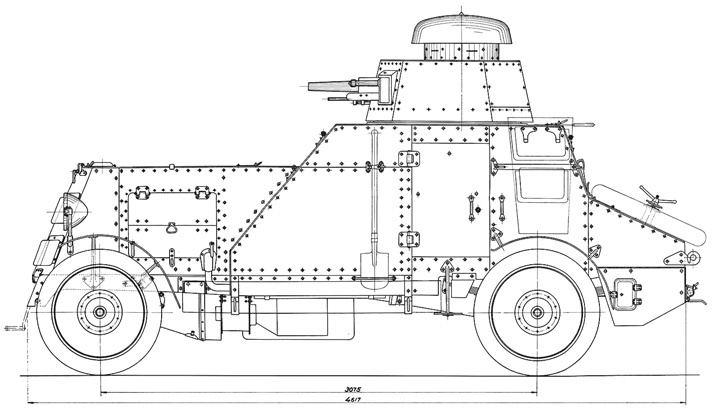
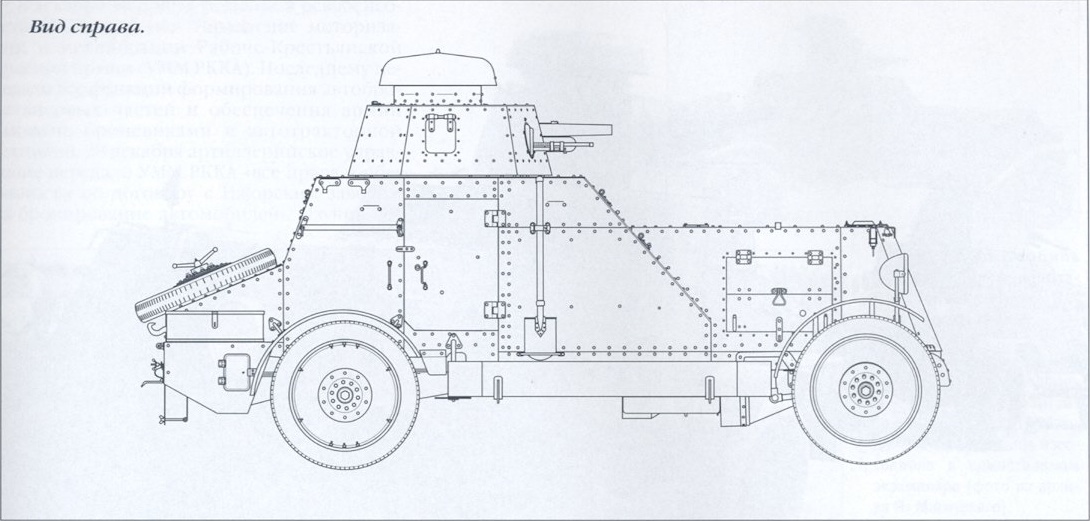
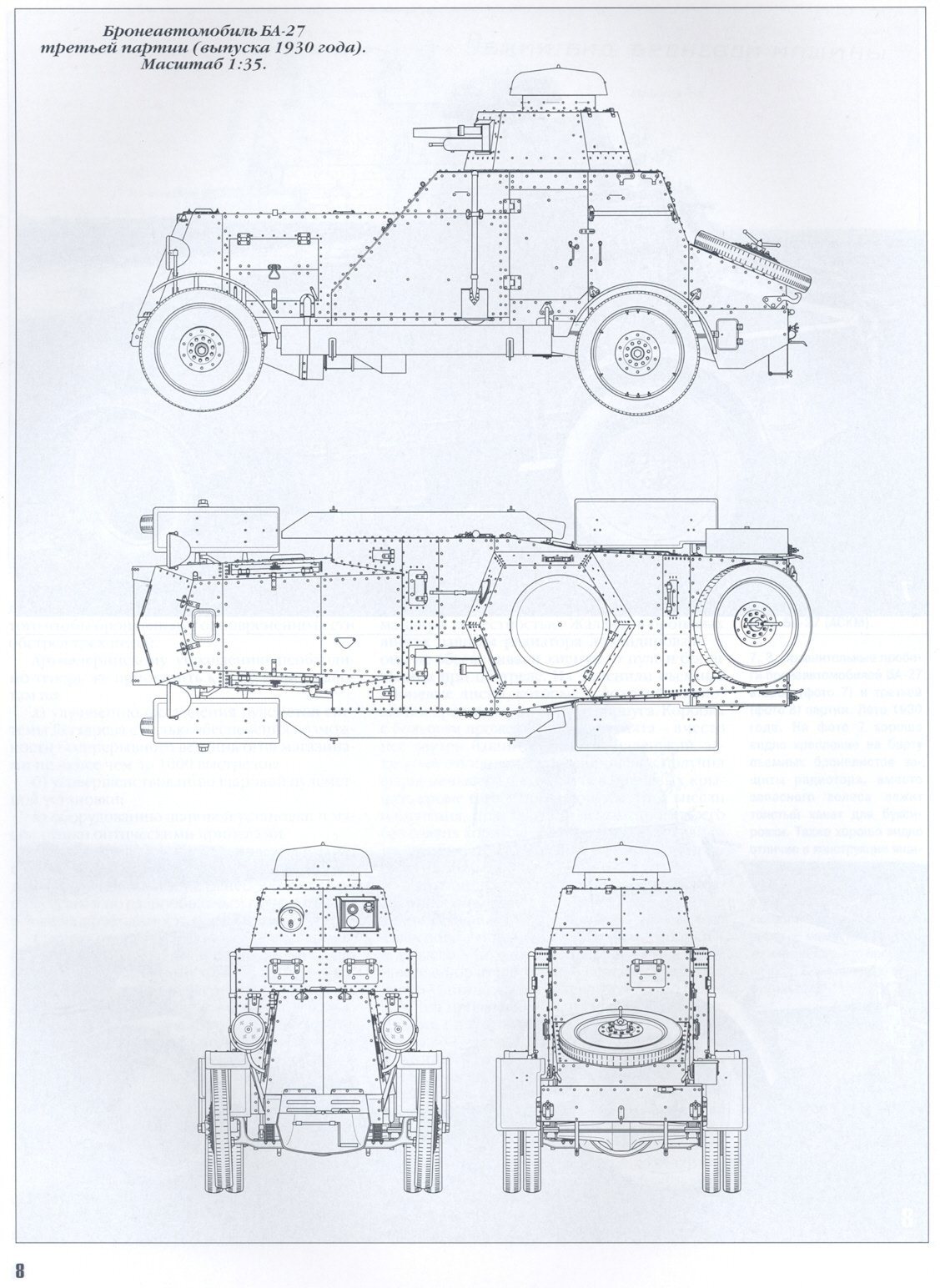
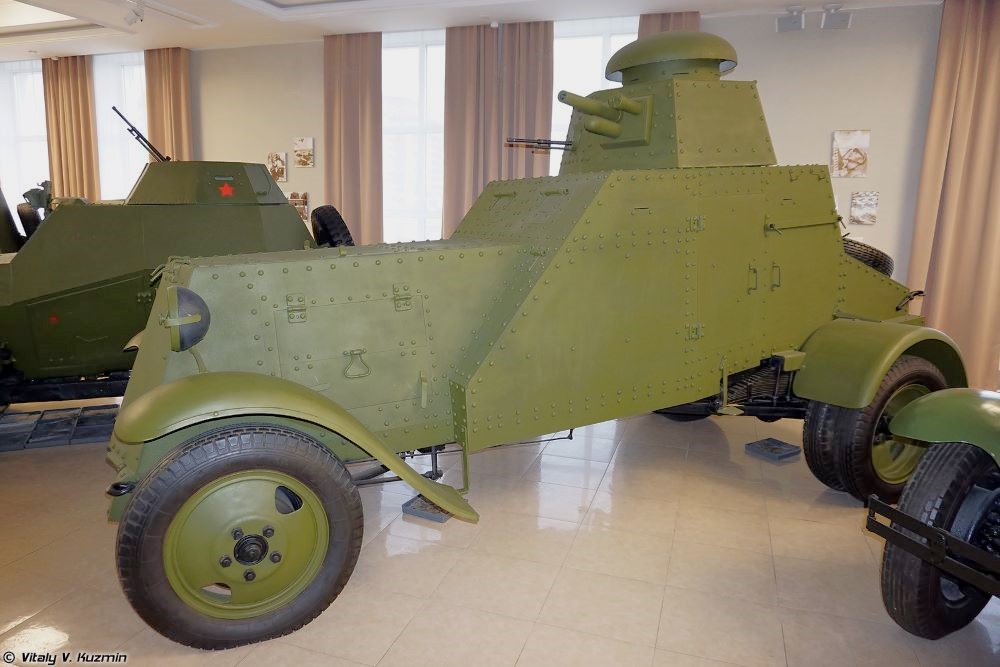
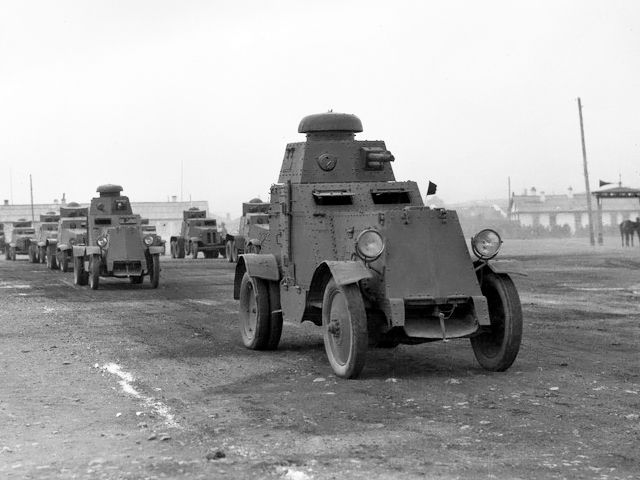
In early 1927, A. Rozhkov, a permanent member of the Artillery Committee, was tasked with continuing the design of a “cannon- and machine-gun-armed” armored car based on the same AMO F15 SP (special) chassis. Refinement of the design was handled by a joint team from the T-Bureau and the AMO design department (where the aforementioned B. Strokanov and E. Vazhinsky were working). The Izhora Plant took charge of the armored hull. During summer 1927, the AMO SP chassis prototype was manufactured and tested near Moscow. In the autumn, the blueprints were transferred to the Ordnance and Arsenal Trust of the Main Military-Industrial Directorate of the Supreme Council of the National Economy (VSNKh), where further development was carried out by a team led by V. Zaslavsky. There was pressure to produce results quickly, especially given the « war scare » of 1927, which involved the anticipation of an imminent conflict with Great Britain, Poland, and possibly other nations. The issue of a « mobilization-ready » armored car, one suitable for rapid entry into mass production, became increasingly urgent. Therfore, by a decree of the Revolutionary Military Council (RVS) of the USSR dated October 24, 1927, and before any production and tests, the armored car was officially adopted for service under the designation B-27. Subsequently, the blueprints for the vehicle, then designated B-27 in official documents, were sent to the Izhora Plant for the fabrication of the armored hull. On December 19 of that same year, the Artillery Directorate signed a contract (No. 5666/95) with the Izhora Plant for the armoring of the first batch of 54 vehicles. In early 1928, the first prototype hull was transported from Leningrad to the AMO plant in Moscow, where assembly of the armored car began under the supervision of Rozhkov, Stroganov, and Vazhinsky. Assembly was completed in March, after which the B-27 entered testing. The armored car had a hull riveted from 3-8 mm armor plates on a frame made of angle iron. The hexagonal turret was modeled after the MS-1 tank turret. It was topped with a mushroom-shaped cap with viewing slits for observing the battlefield.
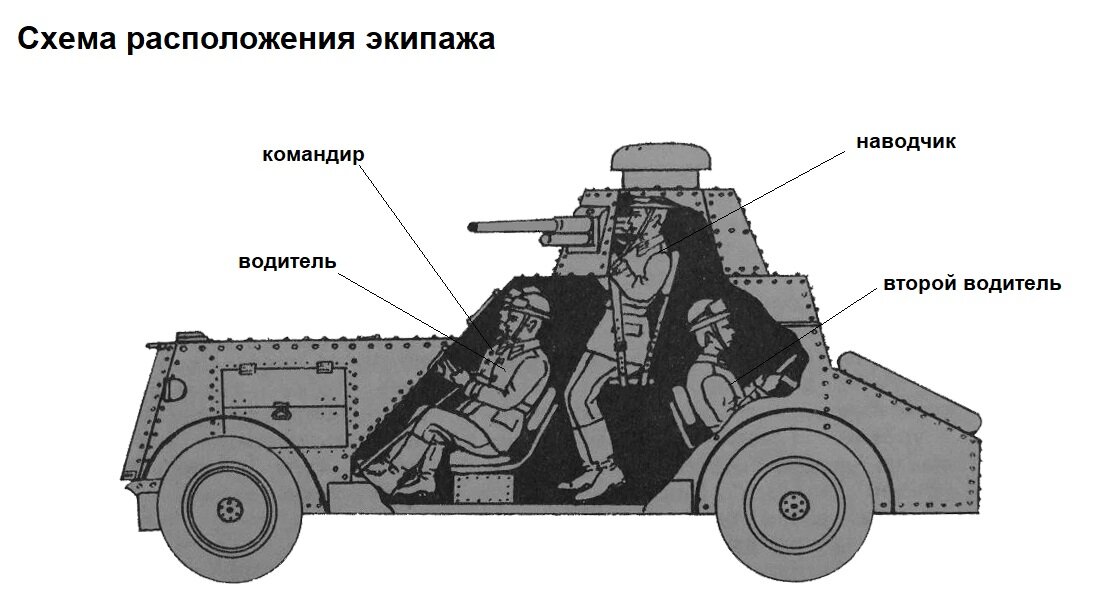
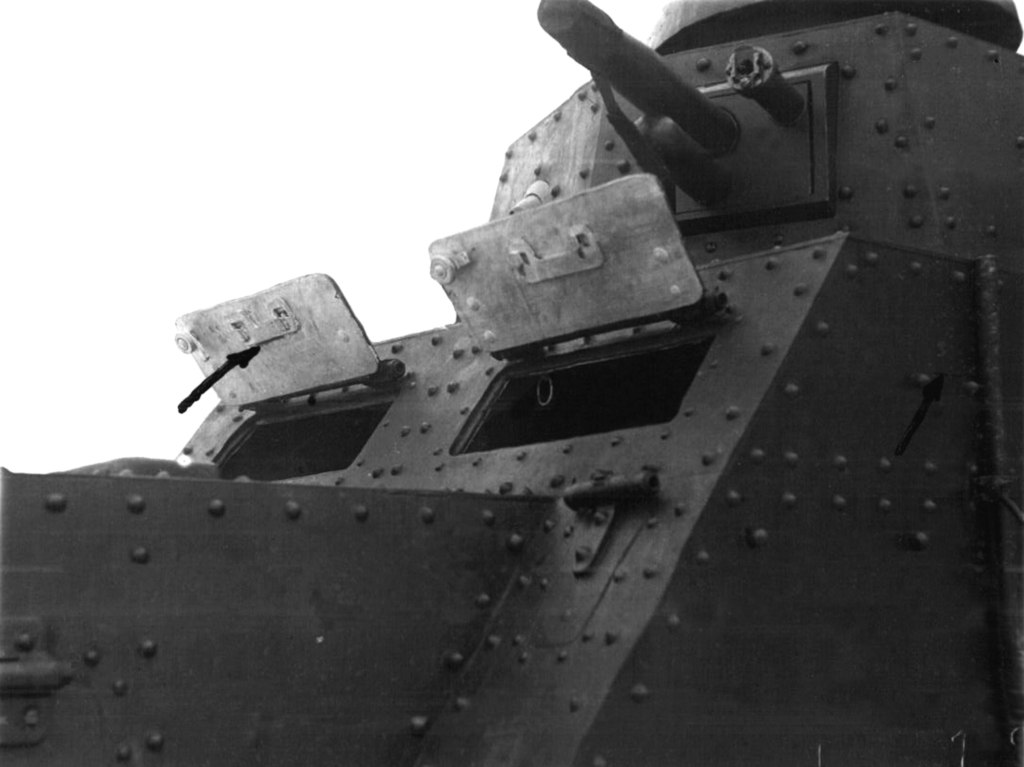
The four-man crew had two doors in the sides. Observation of the road from the forward control station was through two hatches with viewing slits, and just below them were two small hatches located in the frontal hull plate. The driver in the aft control station had a similar hatch in front of him. In addition, there were viewing slits with armored latches in the sides of the hull.
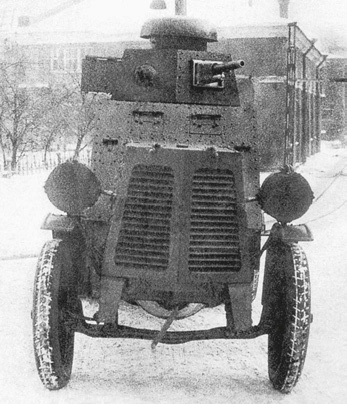
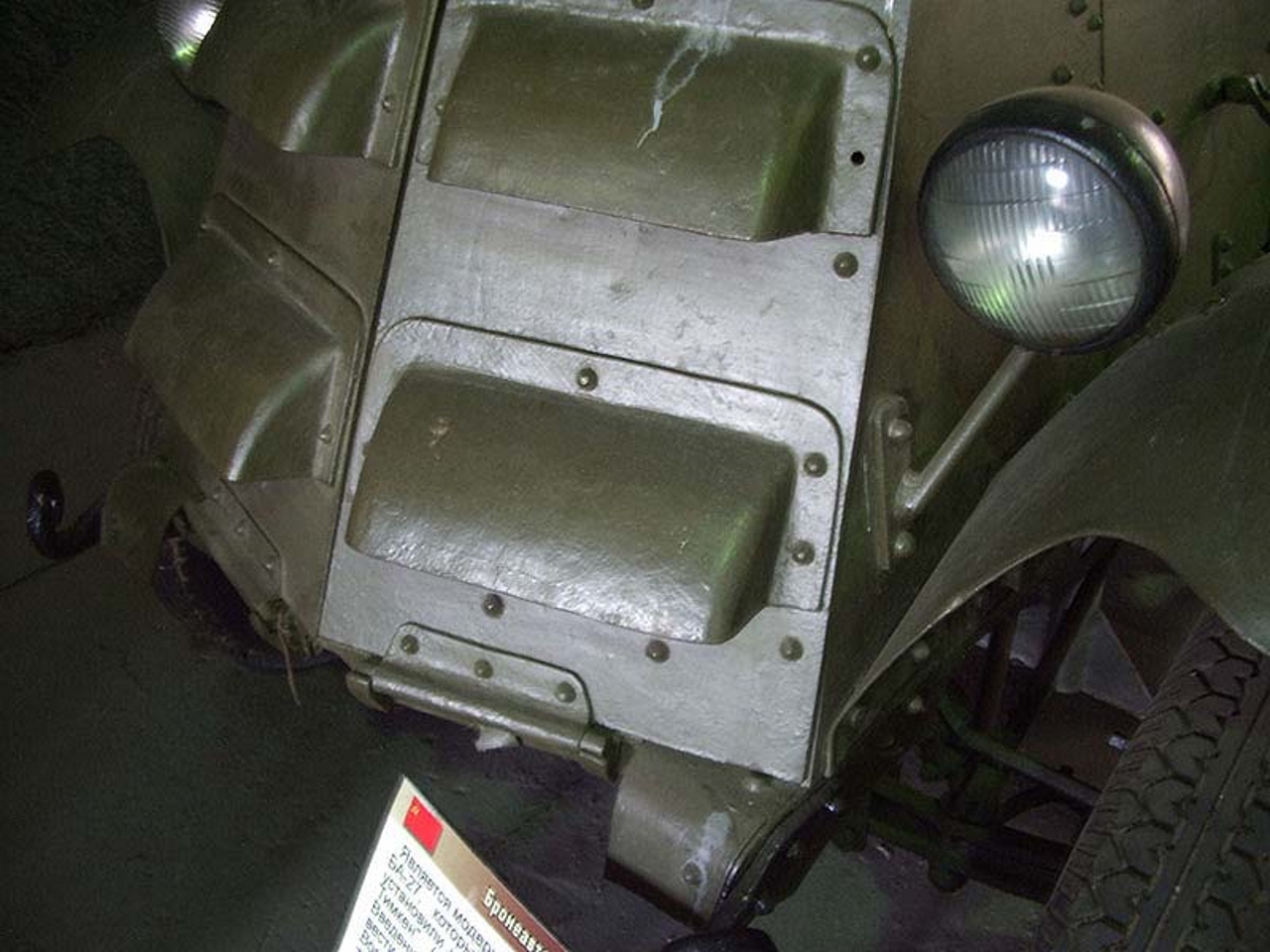
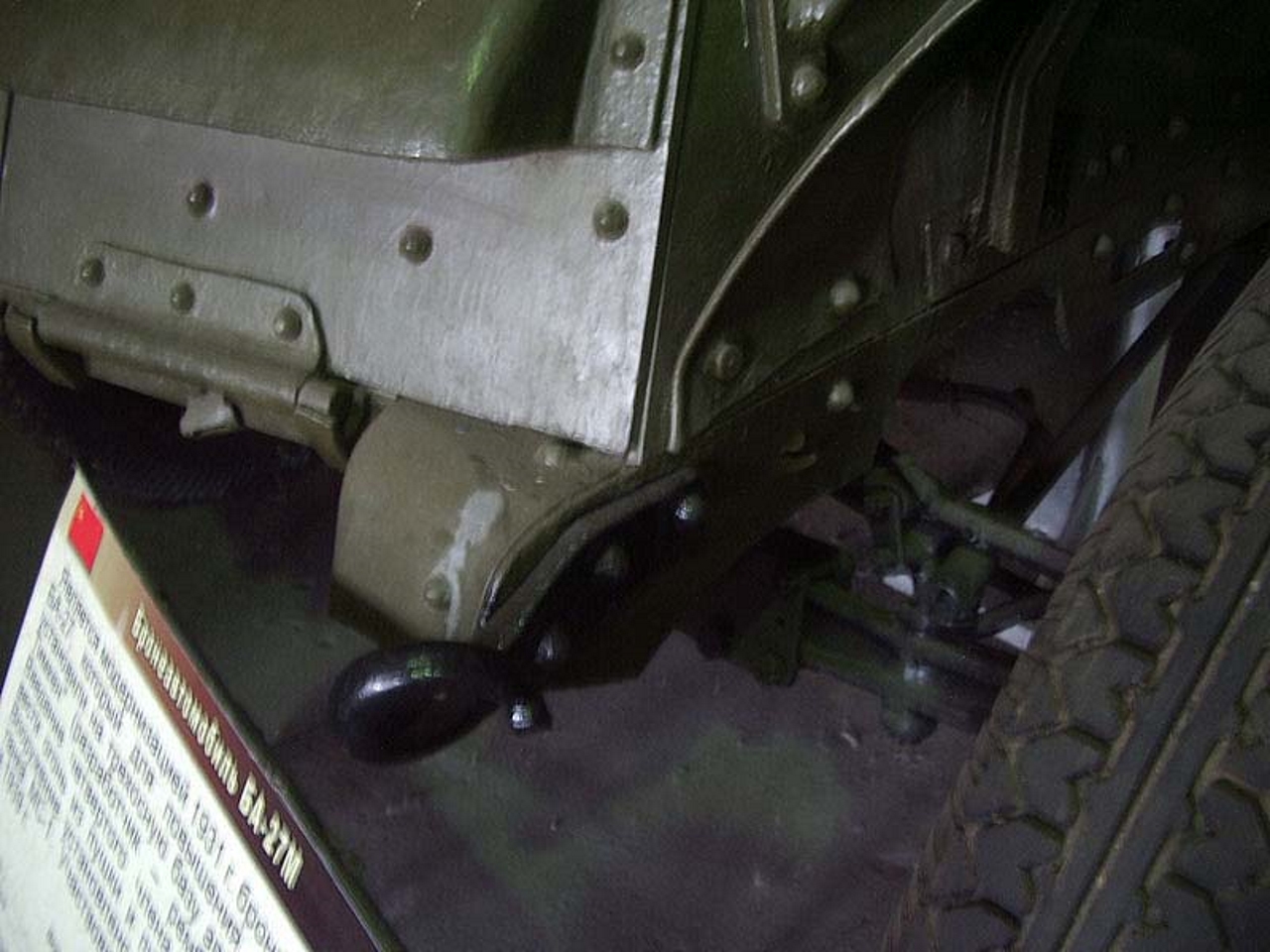
The armored car’s armament consisted of a 37mm Hotchkiss cannon (PS-1) and a 6.5mm Fedorov machine gun in separate mounts on the two front walls of the turret. Additionally, a searchlight was mounted in a special armored box on the right side of the turret. Ammunition consisted of 40 shells and 2,775 6.5mm rounds. The armored car was equipped with a standard AMO engine producing 35 hp. Engine cooling air entered from below through a special sump and louvers in the front armor plates. The vehicle had fairly large headlights, which were covered by folding armored covers in combat situations. The battery was mounted in a special compartment underneath the right side of the vehicle, accessible through a special armored cover. The combat weight of the armored vehicle with a crew of four was 4,450 kg.
The B-27 tests were conducted on March 24, 27 and 31 by a commission appointed by order No. 47/1 of March 20, 1928 for the Autonomous Inspectorate of the Red Army supply, consisting of the chairman of the 7th section of the Artillery Committee Ozerov, the chairman of the 6th section of the Artillery Committee Boyno-Rodzevich, permanent member of the Artillery Committee Rozhkov, assistant to the permanent member of the Artillery Committee Ivanov D., the head of the 6th department Valkash, the chairman of the acceptance committee of the artillery acceptance of the Autonomous Inspectorate of the Red Army at automobile plants Bige, assistant to the head of the 5th department Topilov, the commander of the 3rd armored division Sheremetyev and representatives: from the infantry and armored forces inspection Derevtsov, from the cavalry inspection Vertogradsky and from the 2nd department of the Red Army Headquarters Smirnov. The preliminary inspection report for the “B-27 armored vehicle, built according to the design of the permanent member of the Artillery Committee, Rozhkov, at the AMO and Izhorsky State Plants” stated the following:
“1. The changes made by the Ferraro State Automobile Plant to the standard transport and military chassis of the AMO F-15 are expressed in the modifications of the front steering wheel, front control pedals, gear shift and brake levers, and the installation of a rear control post.
2. The armored hull, manufactured by the State Izhora Plant, can accommodate four people: the vehicle commander, who is also the gunner, two drivers, and one assistant.
3. The armored body in the rotating turret carries: a 37-mm Hotchkiss tank gun with modifications and a shoulder rest, made according to the design of the assistant permanent member of the art committee Ivanov D. at the Moscow Ordnance Plant and a Degtyarev automatic gun, installed together with a ball mount in a nest device of the Shpagin system, made by the Kovrov machine gun plant.
4. According to Rozhkov’s design, the machine gun armament was to consist of twin inverted 2.5-line Fedorov machine guns, as suggested by D. Ivanov, manufactured at the Kovrov Machine Gun Plant. However, in order to transition to a standard type, a Degtyarev machine gun was subsequently installed in a temporary ball mount with a temporary shoulder rest.
5. The armored body racks are equipped to hold 2,775 rounds of ammunition, stored in magazines for the Fedorov assault rifle and 40 rounds for the 37mm cannon. The vehicle can hold approximately 2,000 rounds of ammunition for the Degtyarev machine gun, in 63-round magazines.
6. Fuel is supplied by vacuum from the main 80-liter fuel tank, protected from the crew by a 4-mm armor wall, or from an additional 8-liter tank using gravity. Gasoline is transferred from the main to the additional tank using a double-acting pump.
7. The electrical equipment consists of a starter and dynamo installed in their proper place. »
On March 21, 1928, during the first test run over a distance of 56 km along the route 2nd House of the Revolutionary Military Council of the USSR – Ilyinka – Solyanka – Khitrov Market – Vorontsovo Pole – Taganka – Smolensky Market – Borodinsky Bridge – 25th kilometer of the Mozhaisk Highway and back to the AMO plant, the commission established:
“1. A car on a straight section of a wet highway develops a maximum speed of 45 km/h, the average speed on a highway with large sections in very poor condition is 30 km/h, the speed in reverse is 13.5 km/h.
2. The machine is capable of overcoming climbs of up to 4% in direct gear and climbs of up to 9% in third gear.
3. The car is easy to control in both forward and reverse. The right front wheel is visible through the side hatch to the right of the front-wheel drive driver.
4. The use of the turret and weapons is straightforward.
5. The team’s existing headgear (helmet or cap) is inconvenient, as it doesn’t protect the head from impacts during jolts. The long overcoat also interferes with the team’s ability to enter the vehicle, as well as control it and its weapons. »
On March 27, 1928, the armored vehicle was delivered to the Kuntsevo firing range of the Higher Rifle School, where it was tested with target shooting. The commission’s report assessed the firing results as follows:
“1. The Degtyarev machine gun with a temporary shoulder rest gives a dispersion when firing for accuracy (distance of 100 steps with 100 rounds) in bursts of 3-5 rounds, a dispersion area of 24 x 32 cm, and with magazines, a dispersion area of 23 x 21 cm.
1. A 63-round magazine is fired continuously in 5–7 seconds.
2. The bag for catching spent cartridges with a neck made for Vozdukhoflot does not cause delays when emptied in a timely manner.
3. The machine gun is not mounted in the ball successfully.
4. The field of view in the machine gun ball mount and gun mantlet is not sufficient and requires increasing by using an optical sight.
5. The transition from the cannon to the machine gun and back is carried out without hindrance and takes 15 seconds when the vehicle is in place.
6. Firing from a cannon and machine gun from a stationary position is convenient; firing from a moving position was not carried out. »
On March 31, the vehicle underwent another short test run and was then returned to the factory for inspection of its components and assemblies. This concluded the B-27’s preliminary testing. Based on its findings, the commission compiled a report, which was sent to the heads of the Artillery Directorate and the Supply Directorate. The report concluded as follows:
“Based on the preliminary tests conducted, the commission notes:
1. The choice of the 1.5-ton AMO F15 truck chassis for armoring from among the vehicles manufactured domestically for transport and military purposes provides the most advantageous means of organizing supplies, repairs, replenishment of personnel, and deployment of armored vehicle units.
2. The modifications made to the standard chassis ensure ease of maintenance of the vehicle and do not entail high costs for adapting this chassis for armor.
3. The body of an armored vehicle, with a fairly rigid design, can be prefabricated separately from the chassis and is large enough to accommodate the crew, weapons, and ammunition. With the designated placement of observation slits and hatches, the armored body provides satisfactory observation of the battlefield.
4. The size of the machine gun ammunition is sufficient for firing short bursts for 35–40 minutes, and the cannon ammunition is sufficient for successfully firing at 5–6 targets at a distance of up to 1 km.
5. The fuel supply allows the vehicle to travel a distance of up to 350 km.
Recognizing, on the basis of the above, that the vehicle meets its purpose, the commission finds it necessary to produce the following additions and weapons:
The assistant driver and the rear wheel driver are to be armed with submachine guns so that the armored vehicle can simultaneously fire at three targets.
The Artillery Directorate must now begin the following work:
a) improving the cooling of Degtyarev machine guns in order to ensure the possibility of continuous firing from magazines of at least 1000 rounds;
b) improvement of the ball machine gun mount;
c) equipping the ball mount and gun mask with optical sights.
The artillery department should, after the snow melts, organize a long-distance test of the vehicle, at least 500 km, both on the highway and on various dirt roads, to test its cross-country ability and endurance. »
It should be noted that not all commission members agreed with this assessment. Some considered the reverse speed insufficient, others pointed to the chassis being overloaded, and still others noted the weakness of the machine gun fire and the small ammunition capacity compared to the twin-turret Austin and Fiat tanks, which could carry up to 10,000 rounds. However, all these disagreements did not hinder further work on the B-27.
The artillery directorate’s leadership scheduled the main technical test of the new armored car for early June. An order dated May 25, 1928, appointed a commission chaired by Topilov, head of the 5th Department of the Red Army Artillery Directorate (he was later replaced by Rozhkov).
By this time, the B-27 had undergone a number of modifications. For example, the mushroom-shaped turret cap now opened rearward, allowing the commander to more easily observe the surrounding area. The louvers in the radiator armor plates were removed, as they provided no protection from bullets or lead splashes during gunfire. They were replaced by removable armor plates that were attached to the hull sides during stowage. The box housing the large searchlight was removed, replaced by a small one inside the turret, covered by a hinged hatch. The armored car received smaller headlights without armor covers. Furthermore, the engine armor was modified to allow for its removal without removing the hull. The fuel lines were split into two lines, and the driver’s seat was raised by 50 mm.
The armored car was tested intermittently from June 6 to July 3, 1928, along the route: Yudino railway crossing – Lapino village – Saloslovo turnoff – Seleznya River bridge – Borki village – Buzayevo village – Kolchuga – Razdory – Rublevskoye Highway – Borki – Buzayevo – Usovo-Odintsovo and Buzayevo-Kolchuga road junction. The vehicle traveled a total of 627 km, 567 of which were on the highway and 59.4 km on unpaved roads. The B-27’s cross-country ability was found to be equivalent to that of a loaded 1.5-ton truck: on poor dirt roads, it often got stuck and had to be extricated by manpower or a truck. The vehicle’s fuel range was 180-200 km on the highway and 100 km on unpaved roads, and visibility was satisfactory. Overall, the B-27 performed well, and the commission recommended in its conclusion that it be adopted into service by the Red Army.
The reports of all tests were presented to the Chief of Supplies of the Red Army, N. Dybenko, who, after studying them, sent a letter to the Chief of Staff of the Red Army with the following content:
« Due to the fact that the existing armored vehicle materiel in the Red Army was obsolete and had long since reached its depreciation point, and was becoming almost completely unusable, the Artillery Directorate of the Red Army’s Armed Forces began designing a new armored vehicle in early 1927. Its design, based on tactical and technical requirements, was based on a vehicle type being built in Soviet industrial plants. The most suitable vehicle for armoring turned out to be the 1.5-ton AMO F-15 truck from the Avtotrest plant, which is in large numbers in use in state, cooperative and industrial enterprises of the Union. Thus, by using the standard chassis produced in the USSR as an armored vehicle, the issue of providing the Red Army with armored vehicles during mobilization and spare parts for them in wartime is resolved in a positive sense. Based on the above, at the end of 1927, the AU US RKKA implemented a project for a new armored vehicle and built a prototype, which was thoroughly tested by a commission with the participation of representatives of the AU, the RKKA Headquarters, the Inspectorate of Infantry and Armored Forces, the Inspectorate of Cavalry of the armored division. Based on the above, I request that you submit a proposal to the Revolutionary Military Council of the USSR regarding the adoption of the AMO armored car, model 1927, into service with the Red Army, assigning it the designation BA-27 (AMO armored car, model 1927), and regarding the provision to the Artillery Directorate of the right to make subsequent improvements to the design of the vehicle, depending on the results of long-term testing and the experience of armored cars serving in units of the Red Army.
APPENDIX: photographs, table of basic data, draft order of the Revolutionary Military Council of the USSR. »
On October 24, 1927, by decree of the Revolutionary Military Council of the USSR, the armored car was accepted into service with the Red Army under the designation BA-27. Production was entrusted to the Izhora Plant, and the chassis was supplied by the AMO Plant.
On December 19, 1927, the Red Army Artillery Directorate signed contract No. 5666/95 with the Izhora Plant for the armor plating of 54 BA-27 vehicles in the first batch.
On January 6, 1928, another contract was signed with the AMO Plant for the supply of 54 special chassis for these vehicles. The contract with the Izhora Plant was subsequently revised to include the 55th vehicle, an unpaid prototype, and 20 armored vehicles were to be transferred to OGPU units. This order was completed in December 1928.
It’s worth noting that more than half of the first batch of armored vehicles were produced using 4-7 mm thick armor plates manufactured at the Izhora Plant back in 1922. To test their quality, two firing tests were conducted, a large and a small one, during which the plates were fired at with armor-piercing and pointed bullets from a distance of 375-600 meters.
The assembled armored hull was also accepted according to specially approved specifications: gaps up to 1.5 mm wide were allowed at the joints of armor plates for a total weld length of no more than 200 mm. On the first seven vehicles, local gaps in the joints were allowed to be no more than 2 mm wide for a total weld length of no more than 100 mm. Initially, the gap width was stipulated to be no more than 1 mm, but, given the Izhora Plant’s complaint about significant wear on the edge-grinding machine, the military accepted the plant’s proposal to allow this value to be 1.5 mm, corresponding to 200 mm.
On January 10, 1929, the Artillery Directorate signed Contract No. 549/86 with the Izhora Plant for the production of an additional 74 BA-27s. However, production of the second batch was delayed. Both the Artillery Directorate and the Izhora Plant lacked the necessary equipment, tools, and materials, and there was a severe shortage of skilled workers. The dynamics of armored car production during this period can be traced in the military representative’s report dated December 8, 1929: « The first 20 vehicles were manufactured in October, 12 in November, 11 by December 8, for a total of 43. 11 are 90% complete, 8 are 80% complete, 8 are 70% complete, 11 are 50% complete, and 3 chassis are available, for a total of 73 vehicles. »
In December 1929, the Revolutionary Military Council of the USSR established the Directorate of Motorization and Mechanization of the Workers’ and Peasants’ Red Army (UMM RKKA). It was given full responsibility for forming armored units and supplying the army with tanks, armored cars, and tractors.
On December 28, the Artillery Directorate transferred to the UMM RKKA « all rights and obligations under the contract with the Izhora Plant for armored vehicles. » After reviewing the situation, the leadership of the Directorate of Motorization and Mechanization signed Contract No. 9022170 with the Izhora Plant on February 21, 1930, for 105 BA-27s in the third batch, with the order due in December. However, the plant’s capacity did not allow for the delivery of such a large number of armored vehicles to the troops.
On May 13, the military representative of the Red Army’s UMM reported in his report « On the inspection of the fulfillment of orders by the Izhora Plant »:
1. Order 1927/28 for 55 vehicles: 55 delivered;
2. 1928/29 order for 74 vehicles: 70 delivered, 4 at the factory. According to plant administration engineer Obukhov, they will be delivered by May 20–25. The delay in delivery was due to a lack of parts: gas tanks, valves, etc.
3. The 1929/30 order was for 105 vehicles, of which not a single one was delivered by May 8. Fifteen airframes were under construction, and 30 chassis had arrived at the factory by May 8. »
Nevertheless, in September of the same year, a contract was signed with the Izhora Plant for another 65 BA-27s of the fourth batch with the following delivery dates: 20 in October, 20 in November, and 25 in December.
In the summer of 1931, production of the BA-27 ceased. By this time, only 86 of the 170 armored cars ordered by the Red Army’s UMM had been completed. Thus, the total production of BA-27s from 1928 to 1931 amounted to 215 armored cars, including the prototype. However, the latter was de-armored in 1930.
It should be noted that the only external difference between the third-batch BA-27 and the first and second-batch vehicles (the fourth remained only on paper) was the battery compartment cover. Since the battery compartment was raised, the size and configuration of the cover were reduced.
According to documentation, the armored cars were painted as follows: « …Protective color on the outside and white on the inside. Each vehicle bore markings on the inner side of the doors reading ‘AB-27 GIZ,’ along with the year of manufacture and the military serial number. A copper plate bearing the aforementioned inscriptions was affixed to the front internal bulkhead. »
V – The Ford-AA chassis experience :
The period from 1918 to 1927 can be characterized as a time of extensive experimentation in tank and automotive design. In the 1920s, the Red Army also faced the challenge of rapidly developing and organizing the production of its own armored vehicles, operating under conditions where it was impossible to either maintain existing foreign chassis in combat-ready condition or purchase new ones. The development process, as evidenced by the available records, demonstrates an accelerated approach to solving this problem. Unfortunately the vehicles that had been produced soon ceased to meet the army’s rapidly changing requirements. As early as June 1929, a report by the USSR Revolutionary Military Council noted: « A Soviet-made armored car built on an AMO chassis has been manufactured and adopted for service. The vehicle has a speed of 45 km/h, weighs 4.4 tons, and is armed with a 37mm cannon and a light machine gun. Its cross-country capability matches that of a loaded 1.5-ton truck but is deemed insufficient. A directive has been issued this year to improve off-road performance by designing a three-axle chassis. »
By the mid-1930s, the BA-27 armored cars had suffered significant wear, and almost all required a major overhaul. Since spare parts for the AMO chassis were no longer in production by that time, a decision was made to use a different chassis for these vehicles.
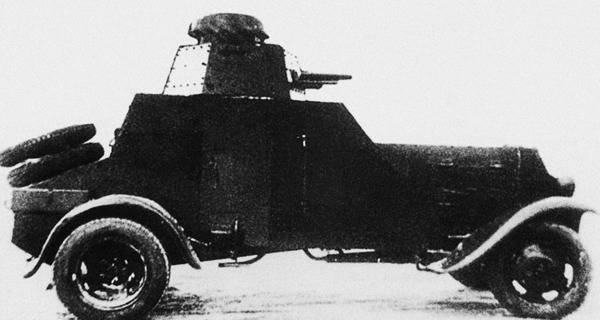
In the spring of 1930, one armored car from the second batch was sent to the 2nd Automobile Assembly Plant in Moscow, which assembled Ford-AA trucks arriving from America. There, the BA-27 body was mounted on a Ford-AA chassis. Tests showed that the more powerful engine increased the armored car’s speed and range. However, for a number of reasons, using the American chassis was deemed impractical, and the BA-27 on the Ford AA chassis remained the only example.
VI – The BA-27M :
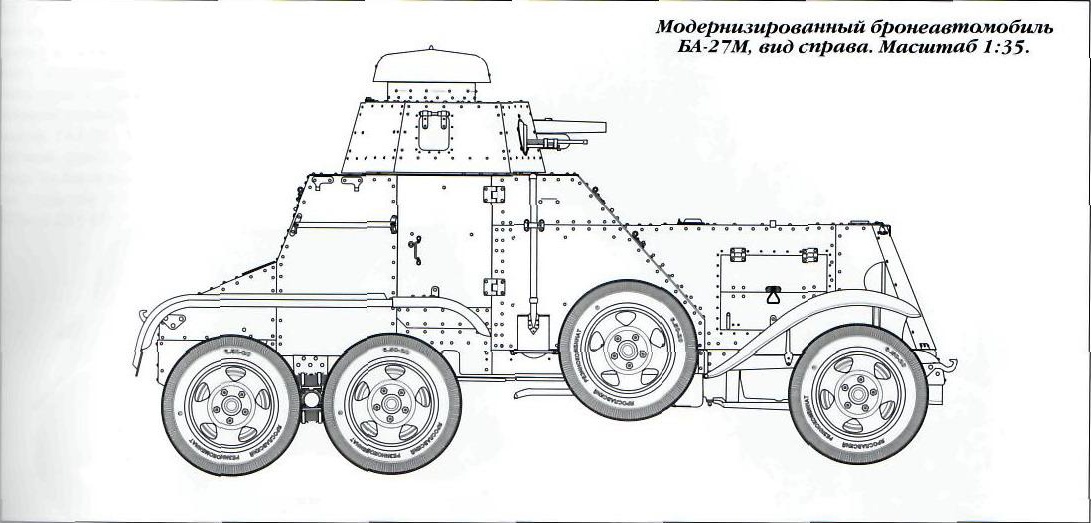
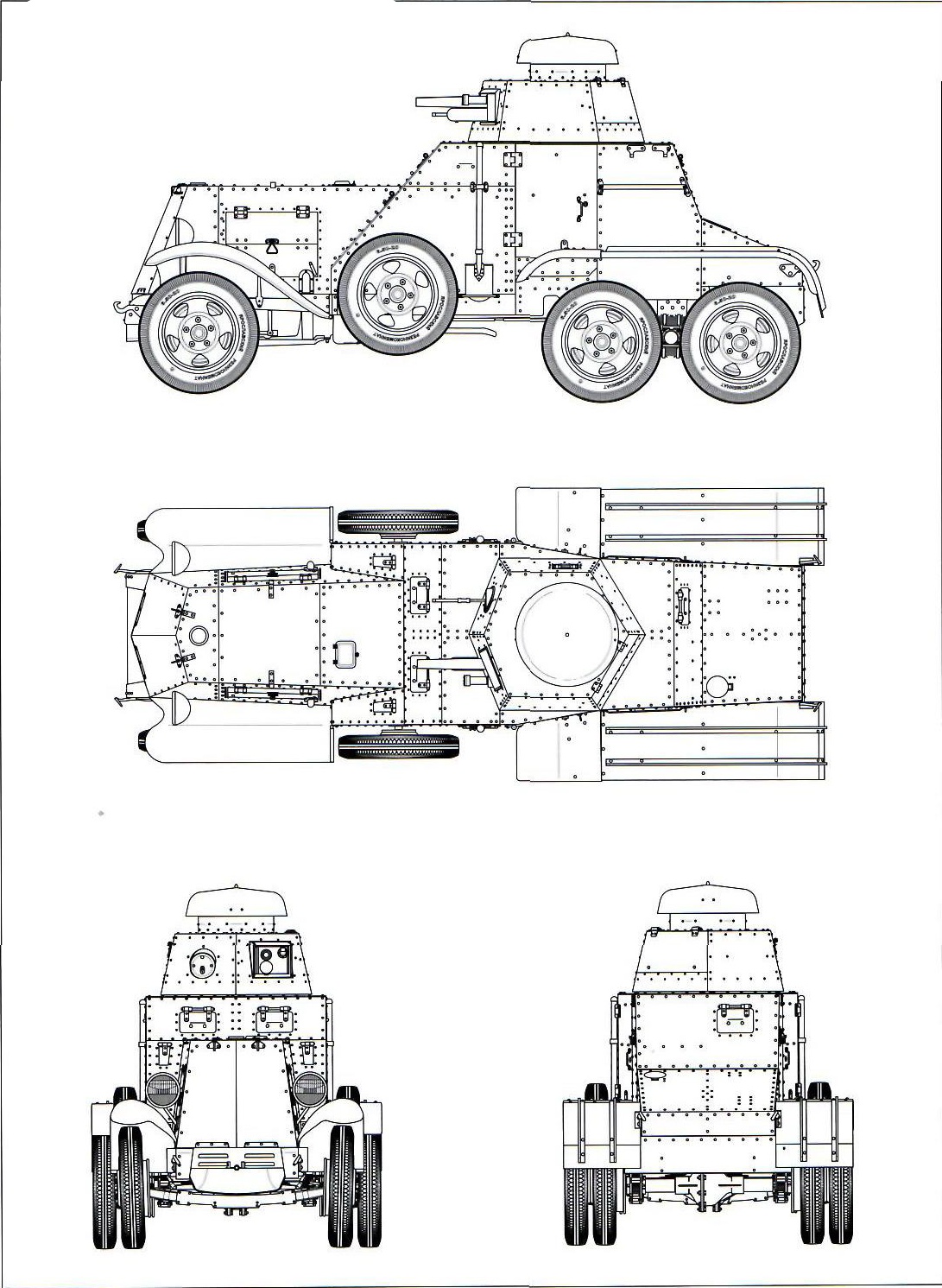
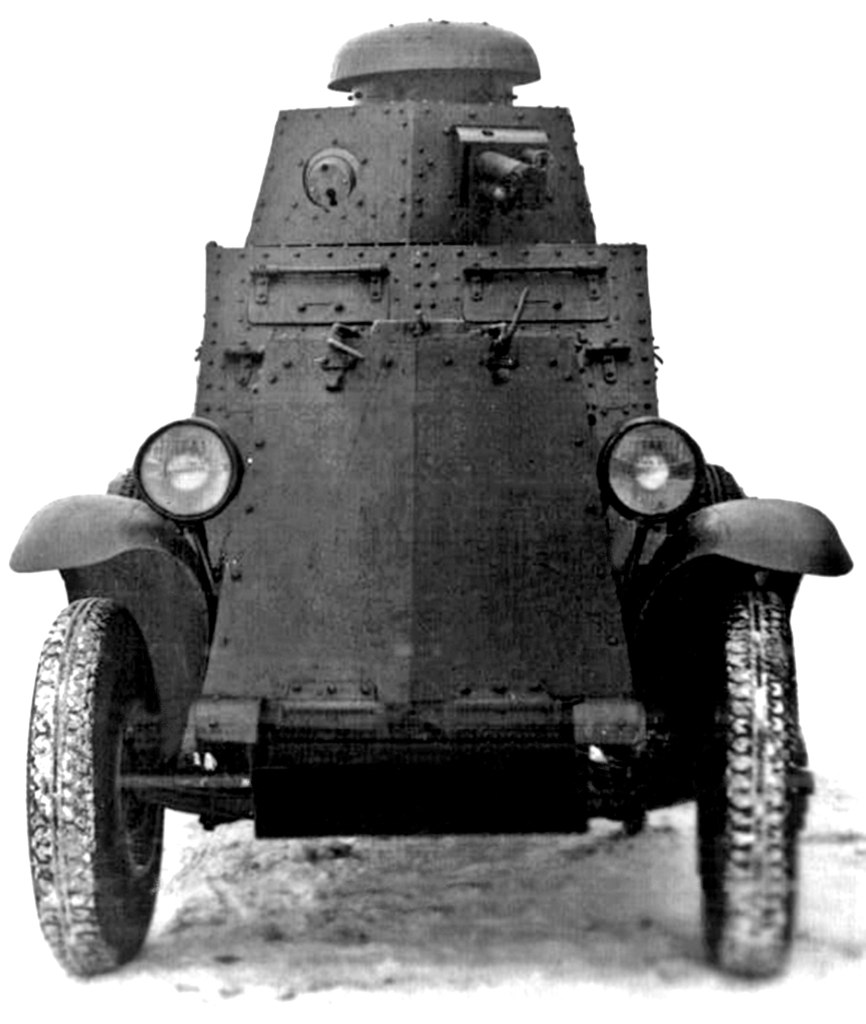
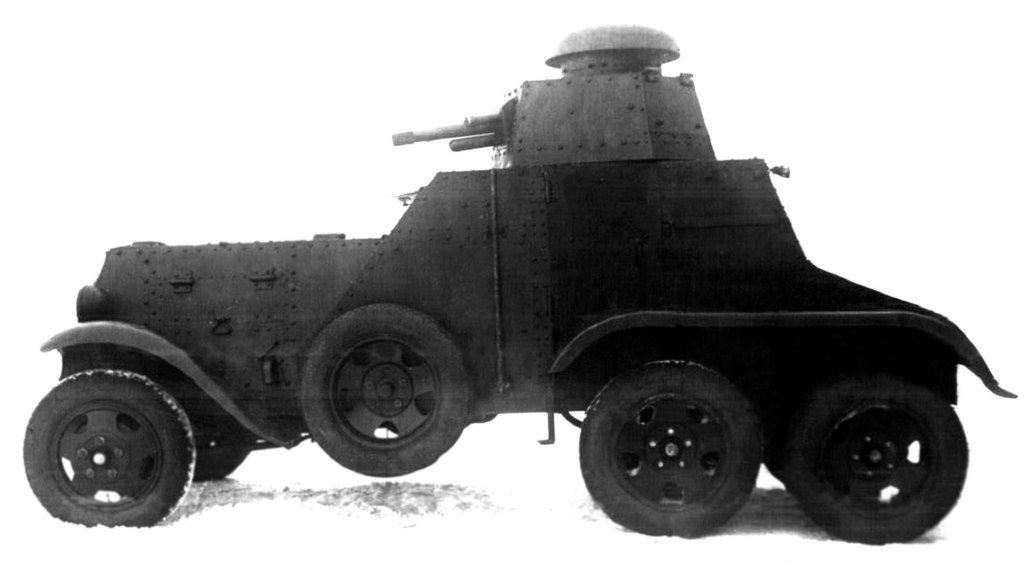
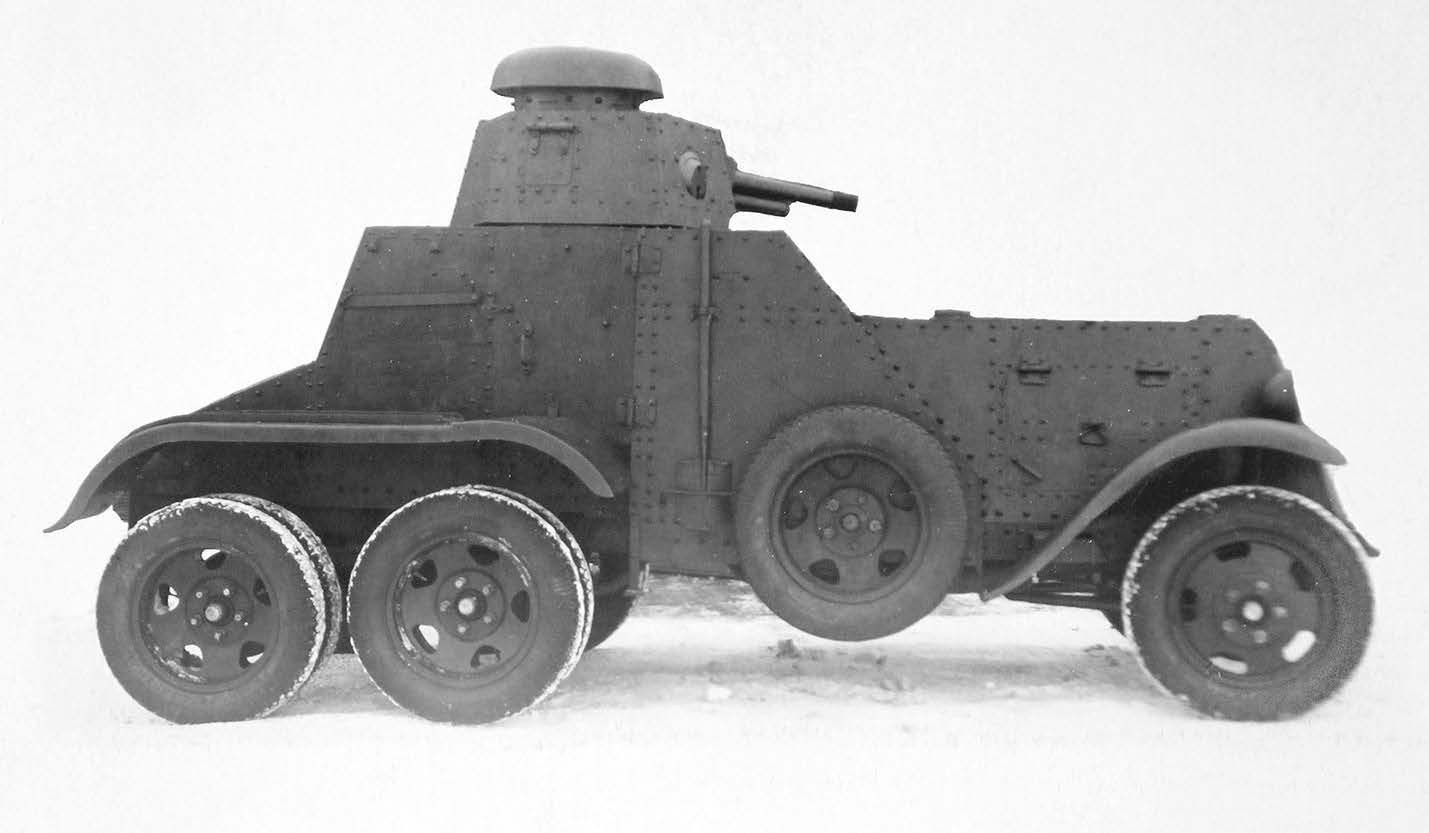
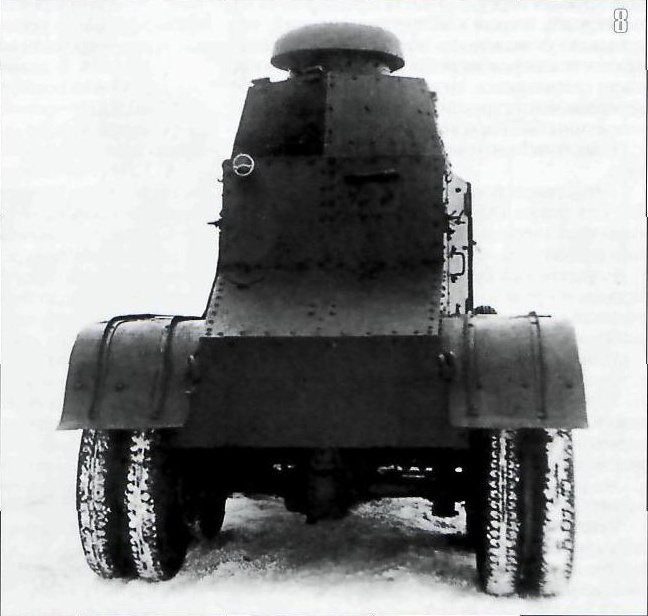
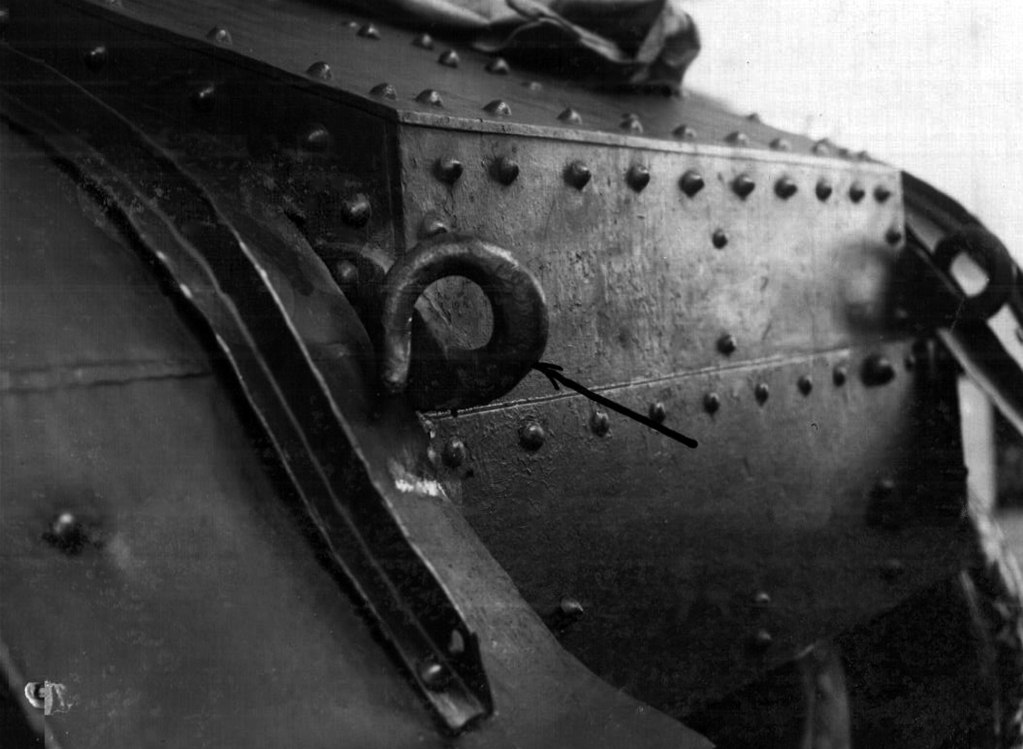
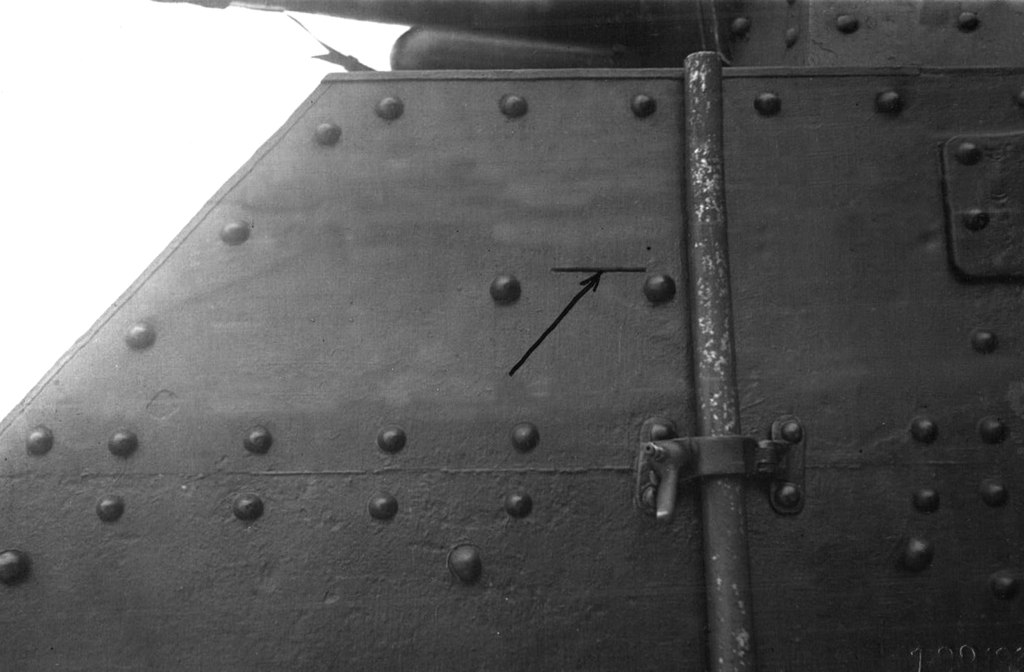
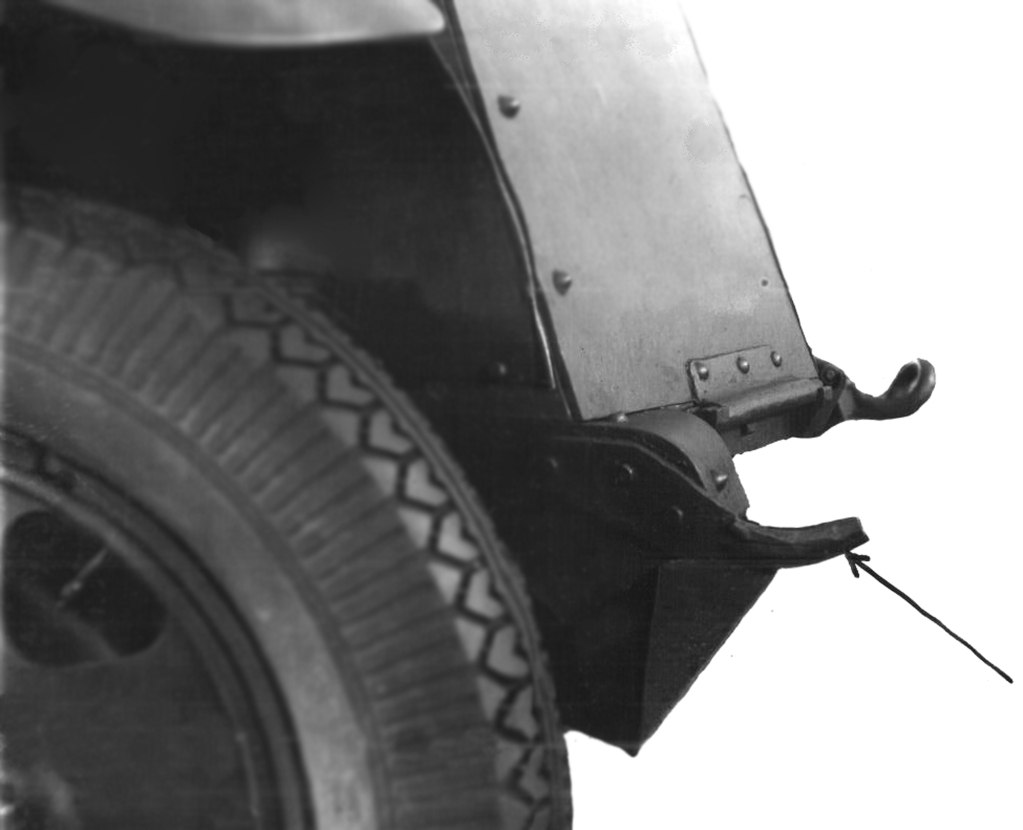
In September 1937, at Armored Vehicle Repair Base No. 2 (Mitkovo), a BA-27 armored hull was mounted onto a GAZ-AAA chassis under Engineer Ashimikhin’s supervision. The new vehicle, designated the BA-27M (M for modernizirovannyy—modernized), successfully passed trials; consequently, between 1937 and 1938, all BA-27s still in service were converted to the BA-27M standard. In September, Armored Repair Base No. 2 manufactured 24 BA-27Ms, which were sent to the 3rd, 30th, and 41st Rifle Divisions of the Kharkov Military District (8 each), and 25 each in October (they were delivered to the 75th and 80th (8 each), 7 to the 23rd, and 2 to the 25th Rifle Divisions) and November (7 each to the 14th, 49th, and 84th, and 4 to the 25th Rifle Divisions). In December 1937 – January 1938, another 64 BA-27Ms were shipped to the 6th, 17th, 19th, 23rd, 25th, 53rd, 55th, 61st, 65th, 82nd, and 86th Rifle Divisions (each received from 1 to 9 vehicles). The last BA-27Ms were shipped from Armored Warehouse No. 2 in March 1938. All BA-27Ms were issued to separate reconnaissance battalions (reconnaissance battalions) of rifle divisions; they were not issued to tank units or cavalry. With a combat weight of 4.5 tons, the armored vehicle’s speed increased slightly, while its cruising range increased significantly. Of course, the second control post was lost, but this was not a great loss. The most important thing was that the BA-27-GAZ, as it was originally designated, was extremely quick and easy to produce. So the armored car went into production, designated the BA-27M. Repair Base No. 2, which received the GAZ-AAA chassis, also acted as the « manufacturer. » The first 24 BA-27s were converted in September 1937, and the last left Repair Base No. 2 in March 1938. In total, no fewer than 193 armored vehicles were converted (the number of BA-27Ms in service at the start of the Great Patriotic War).
VI – Combat use :
The Red Army began receiving armored vehicles in production in 1929. By the end of the year, the troops already had over 70 of these vehicles. Judging by shipments, armored vehicles of this type were sent to rifle divisions, at least initially. This is due to the fact that these armored vehicles were obsolete, although they later began to be used by mechanized units. In any case, unlike more modern armored vehicles, the BA-27s remained in reserve for a long time. They did not participate in most of the local conflicts that preceded the Great Patriotic War. One exception was for the OGPU vehicles. It should be noted that In 1930, the OGPU received 28 armored cars, 18 of which were later returned to the Red Army. As of January 1, 1941, the NKVD had 10 BA-27s.
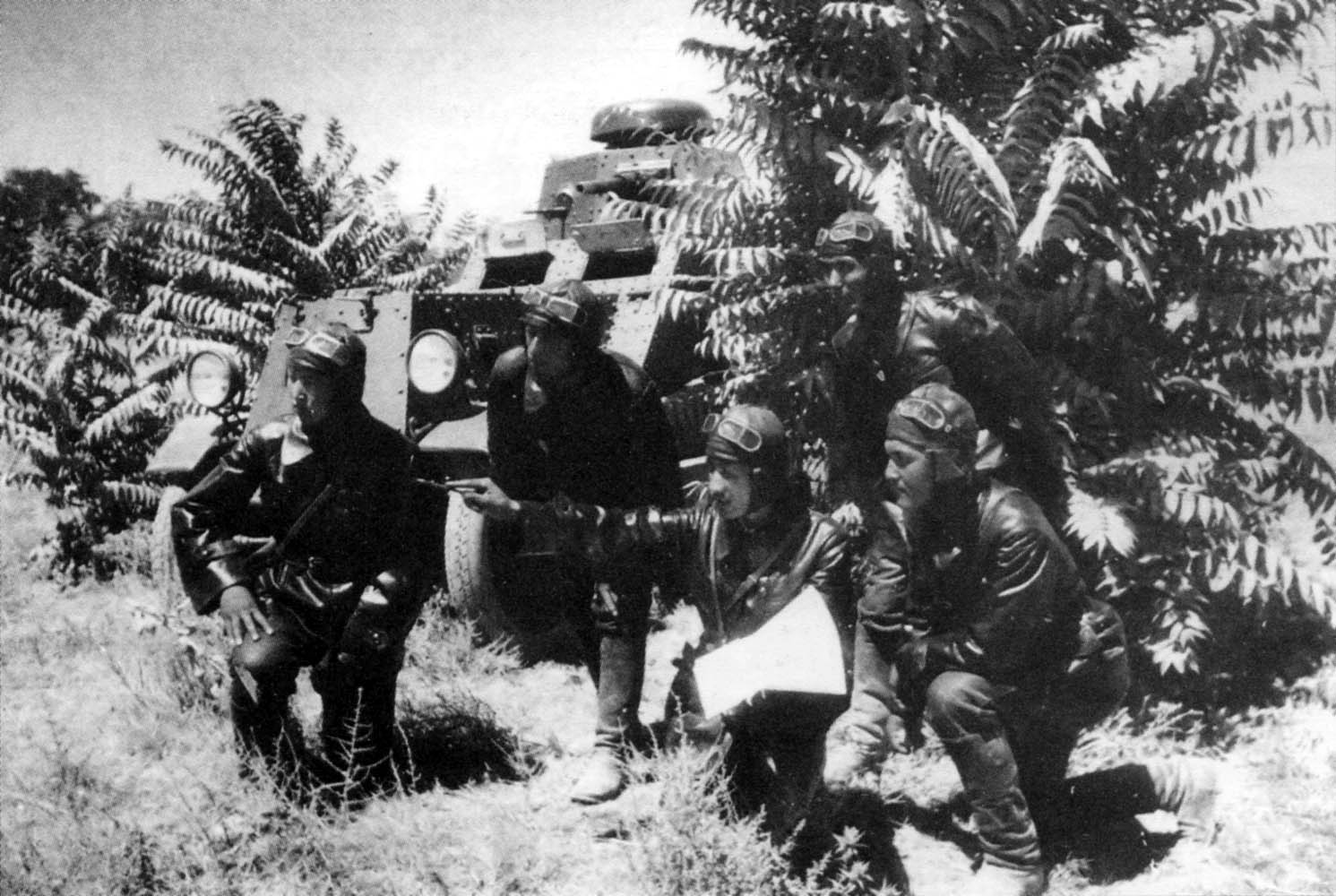
The BA-27 was first used in combat against Basmachi gangs in Central Asia. There, OGPU troops had three armored divisions of 12 different vehicles each. From September 1 to October 20, 1931, one supported units of a separate Uzbek joint brigade conducting an operation to destroy Bekjan Khan’s gang in the Khorezm oasis. Despite the difficult terrain, the BA-27s provided significant assistance to their troops. On September 26, a detachment of three BA-27s and five trucks with machine guns overtook part of the gang at the Shorja well and routed them in a quick battle. In March-April 1933, another armored division participated in the elimination of a large gang of over a hundred people in the Kyzyl-Aravat region.
In the fall of 1929, several BA-27s sent to the Far East took part in combat during the Sino-Soviet conflict on the CER. Ten armored vehicles were transferred to Mongolia, where they fought the Japanese on the Khalkhin Gol River in 1939. In the summer of 1939, two BA-27Ms from the reconnaissance battalion of the 82nd Infantry Division took part in battles near the Khalkhin-Gol River , but, as noted in the documents, these armored vehicles “were training vehicles, the machine guns on the vehicles were worn out, and there were no shells for the Hotchkiss guns.”
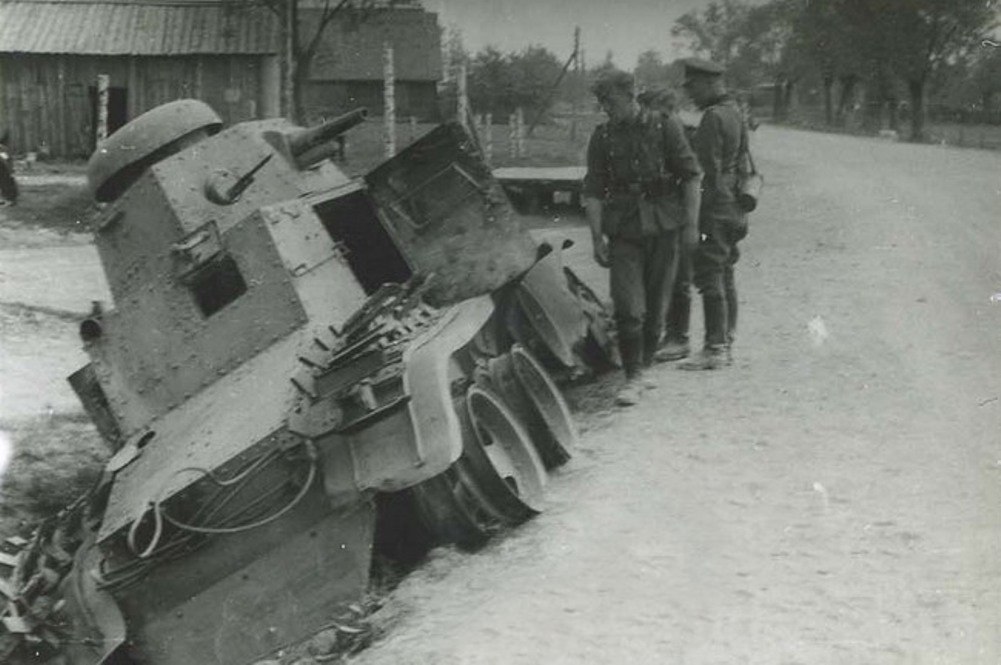
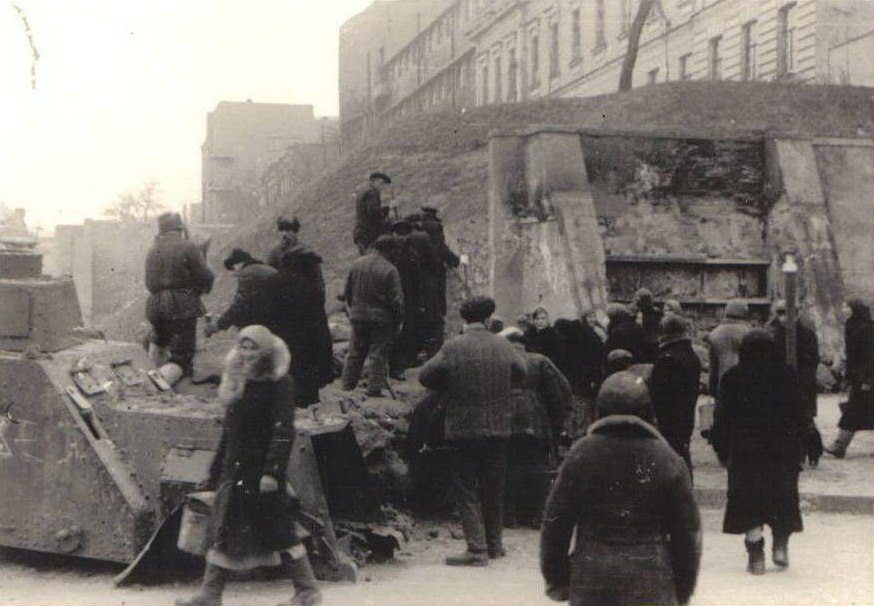
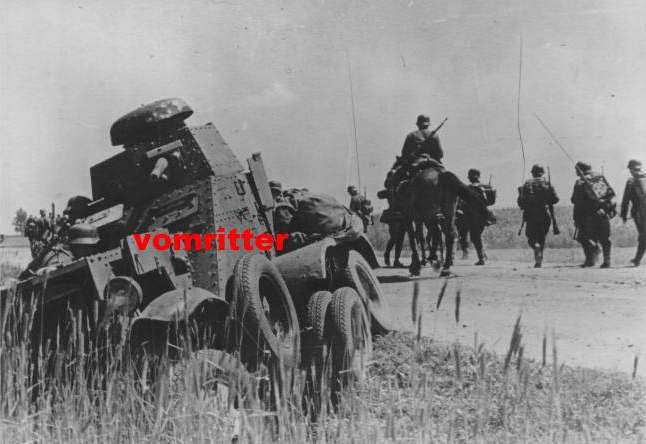
Another exception was the Soviet-Finnish War, during which two BA-27Ms serving with the 177th Separate Reconnaissance Battalion (SRB) of the 122nd Rifle Division of the 9th Army were abandoned during the retreat due to fuel shortages and fell into the hands of the Finns. They repaired one of the vehicles and used it as a training vehicle until the end of 1942. It’s often said that the BA-27Ms were lost in the first months of the war. In fact, this isn’t entirely true. While most Soviet armored vehicles were lost in the summer of 1941, their combat use continued somewhat longer. BA-27Ms, both documented and as fragments found on the battlefield, were encountered in both the fall and winter of 1941, and they saw considerable action near Moscow. A few BA-27Ms appear in inventory reports from 1942. For example, on March 30, 1942, the tank units of the 5th Army of the Western Front had three BA-27s in need of major repairs. By April 1, 1942, only two remained. The BA-27M served in units in the Far East until 1945. However, this service took place in training units.
the BA-27 in the Mongolian army
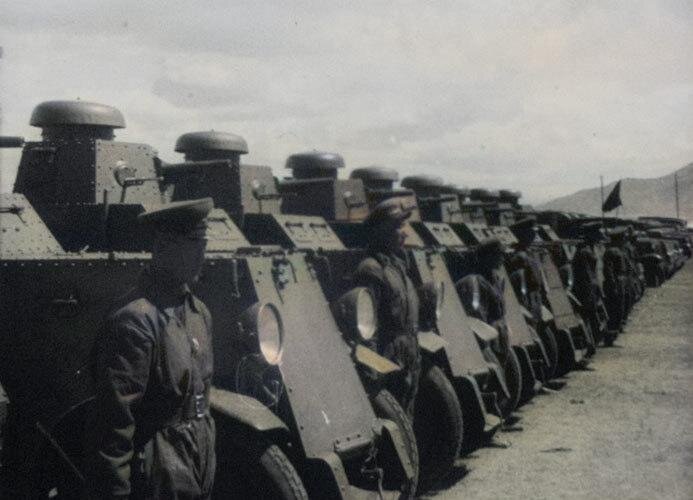
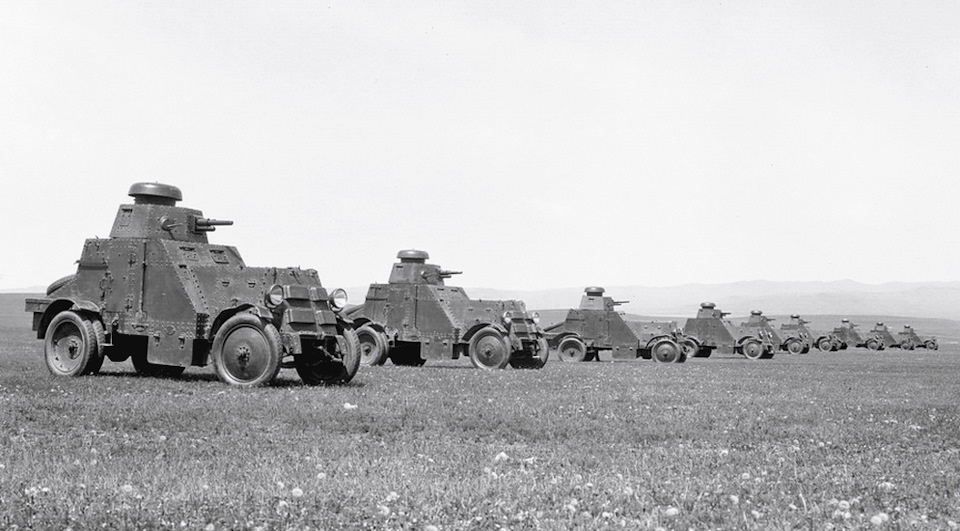
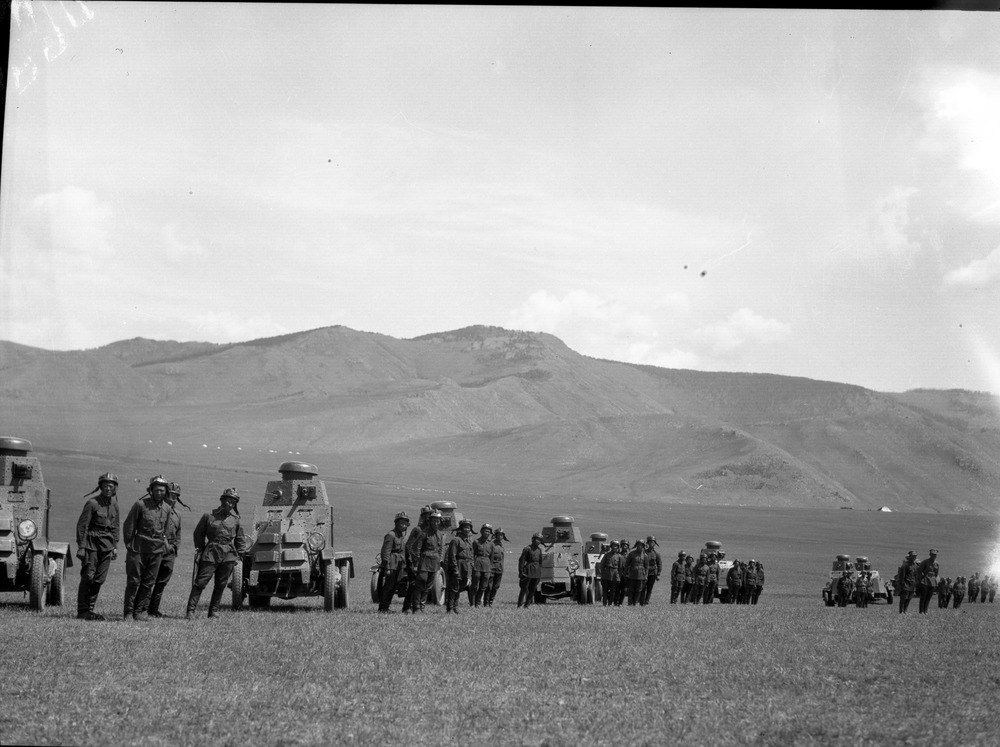
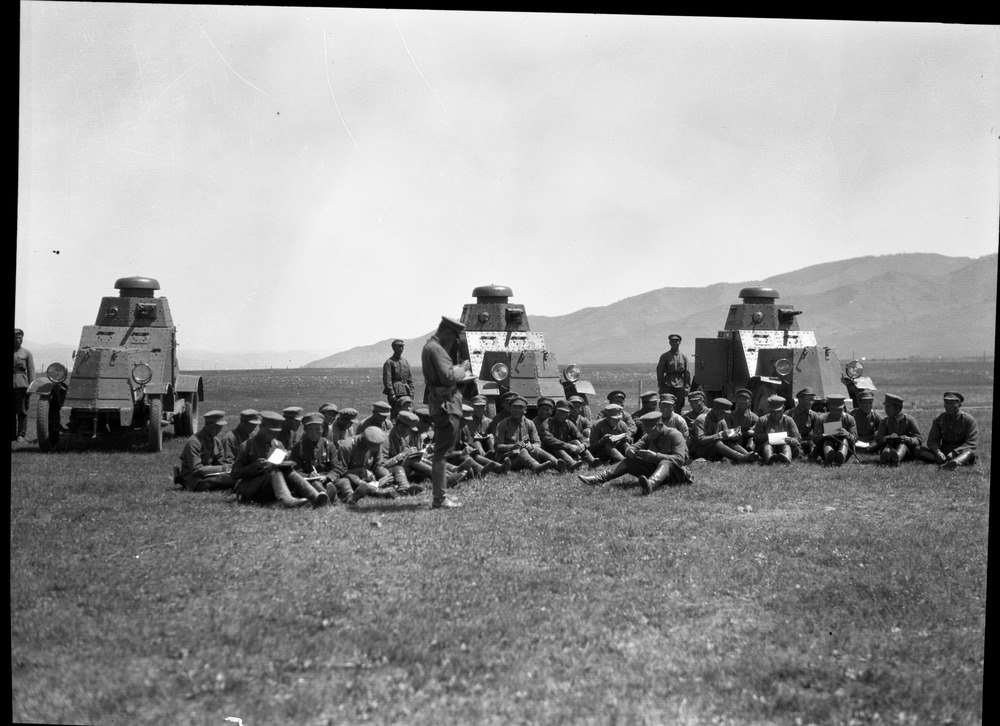
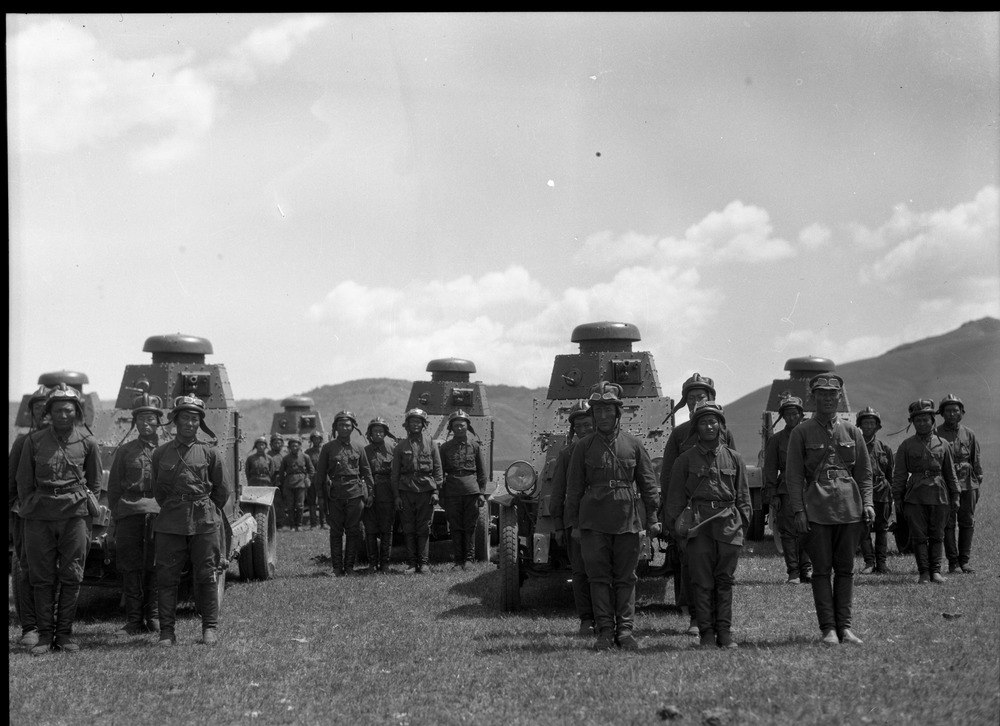
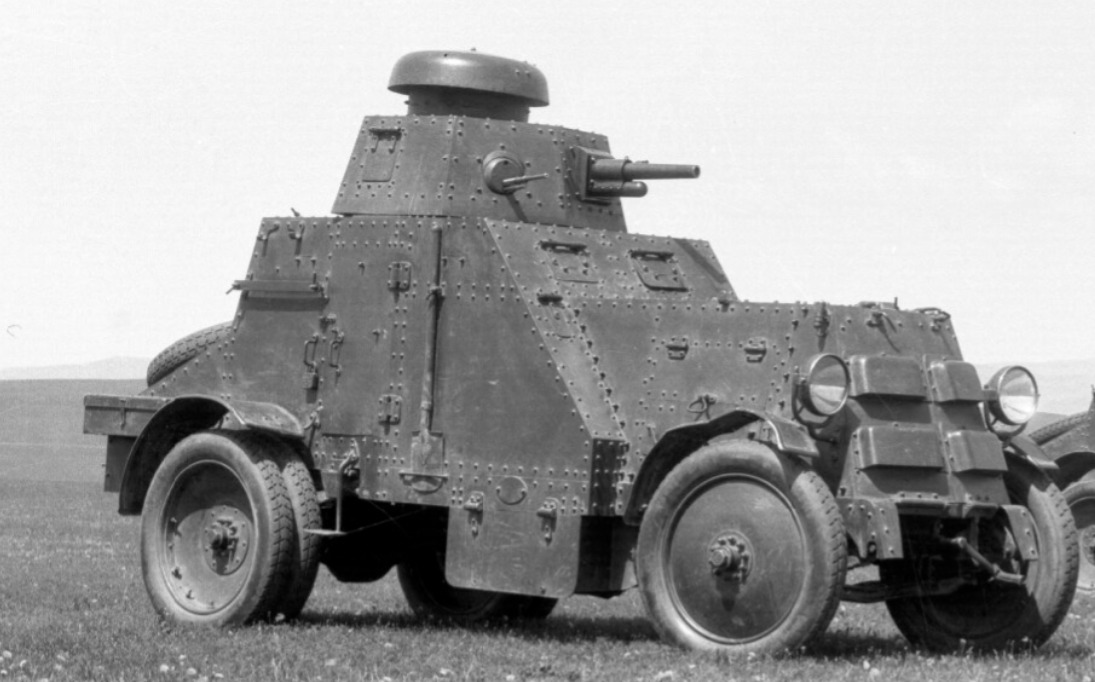
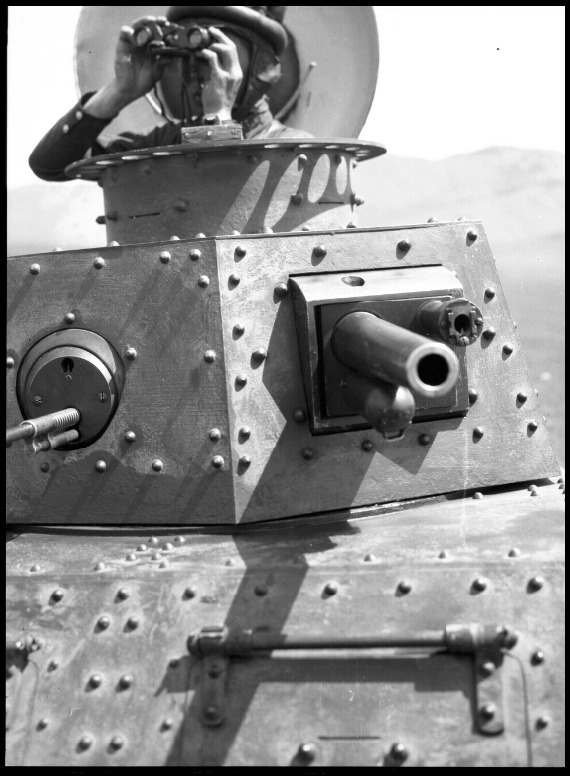
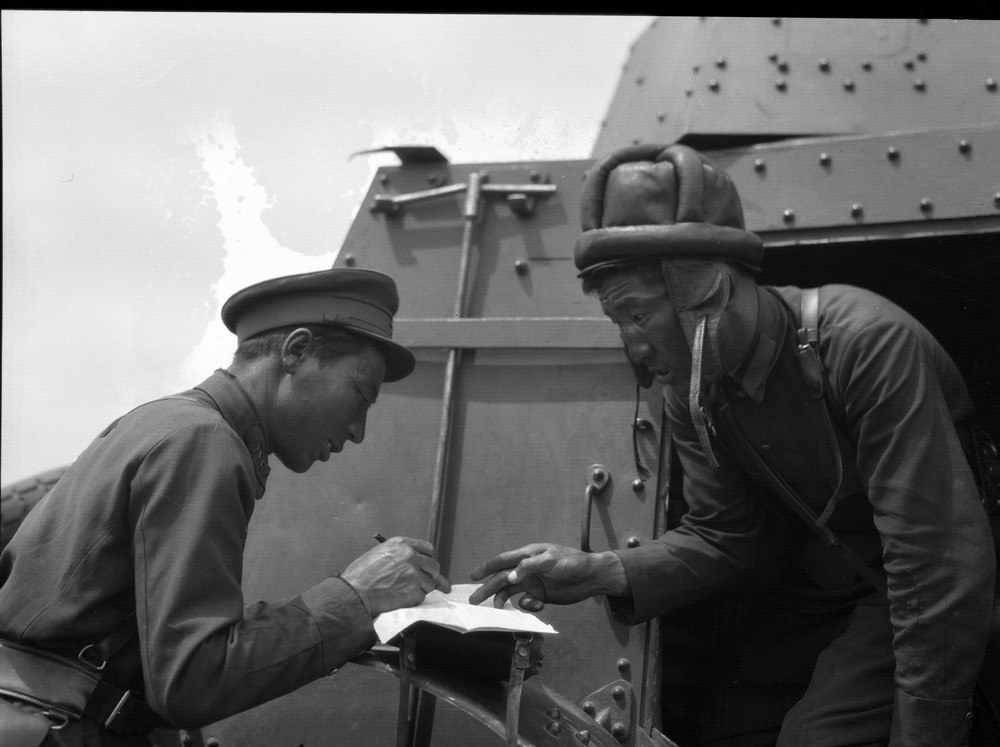
The BA-27 in units
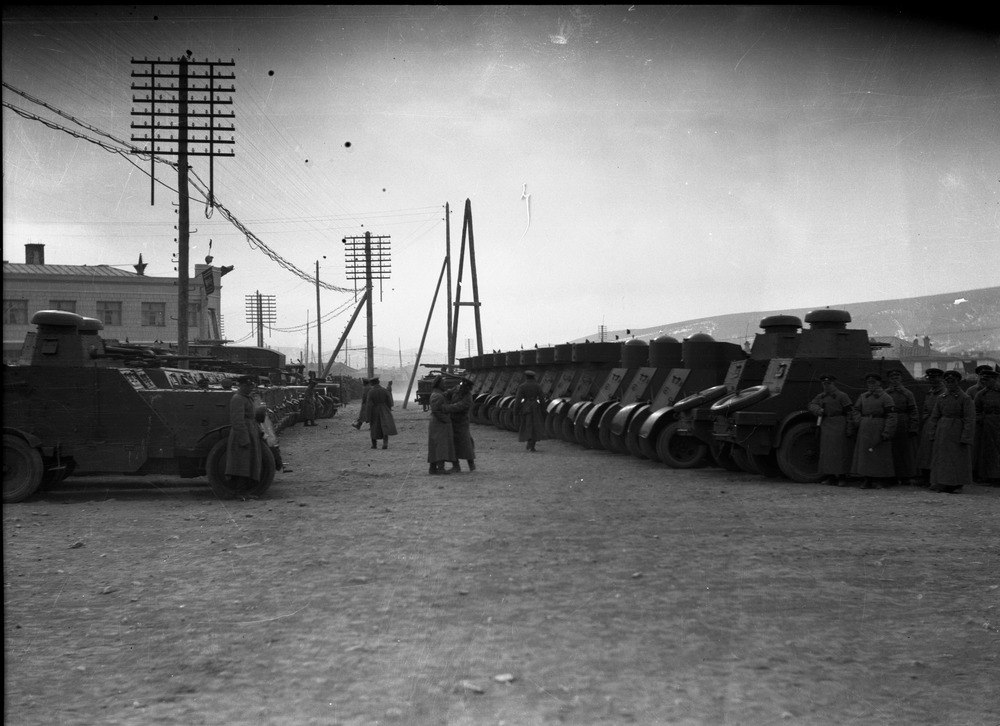
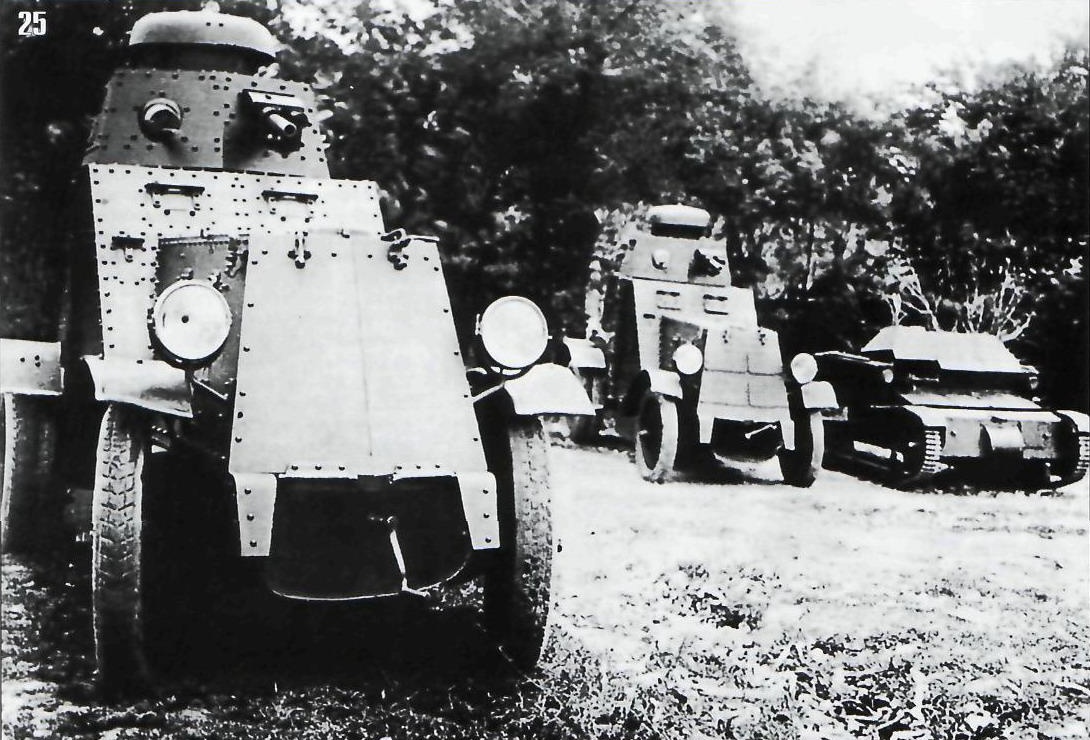
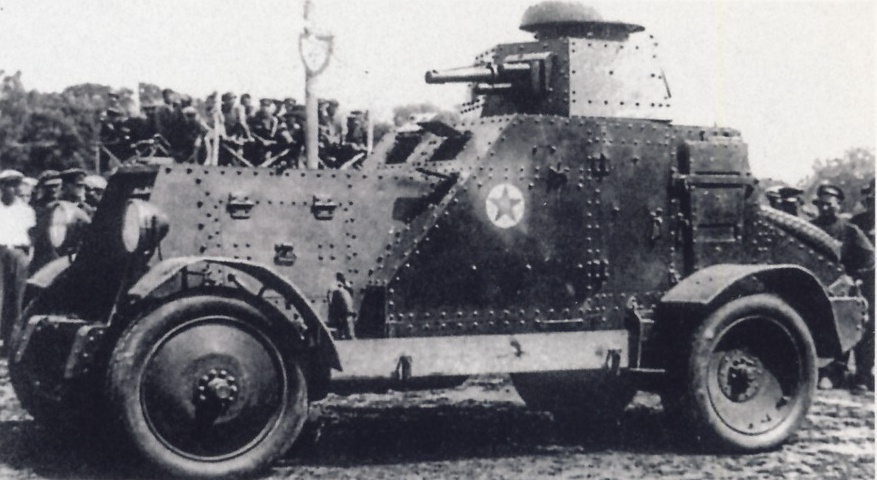
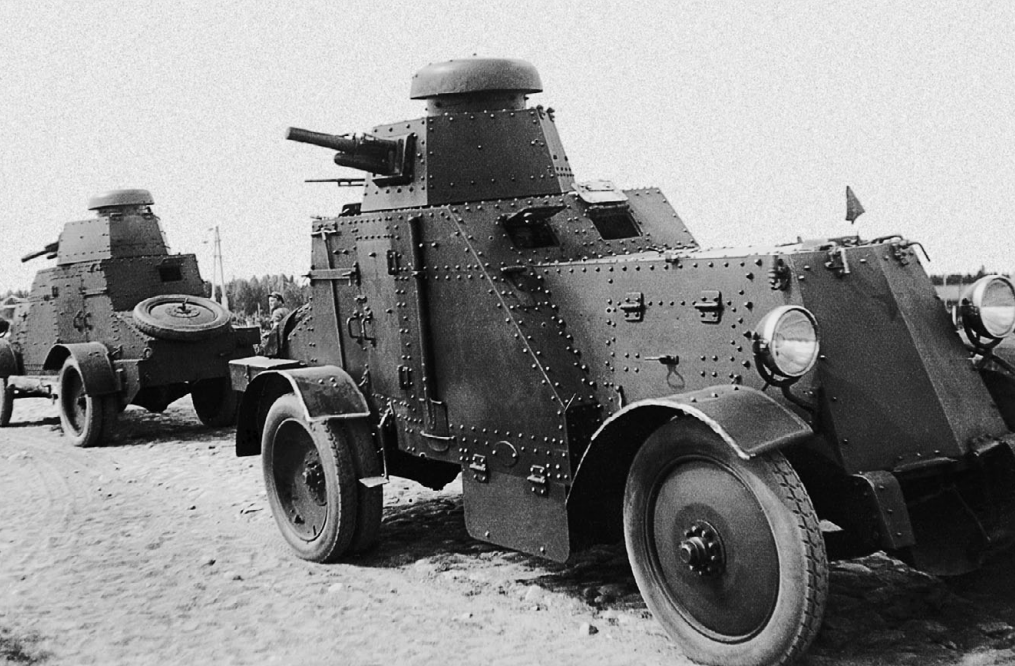
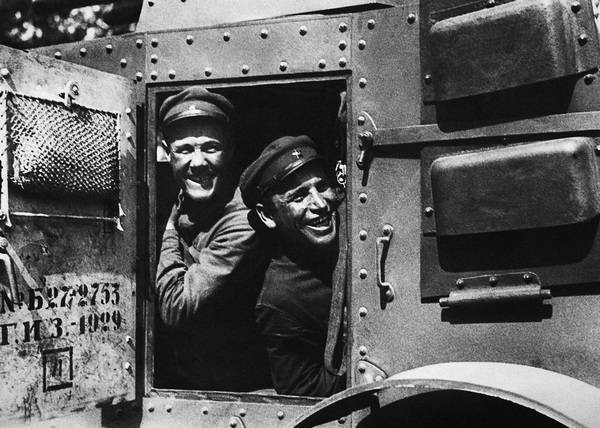
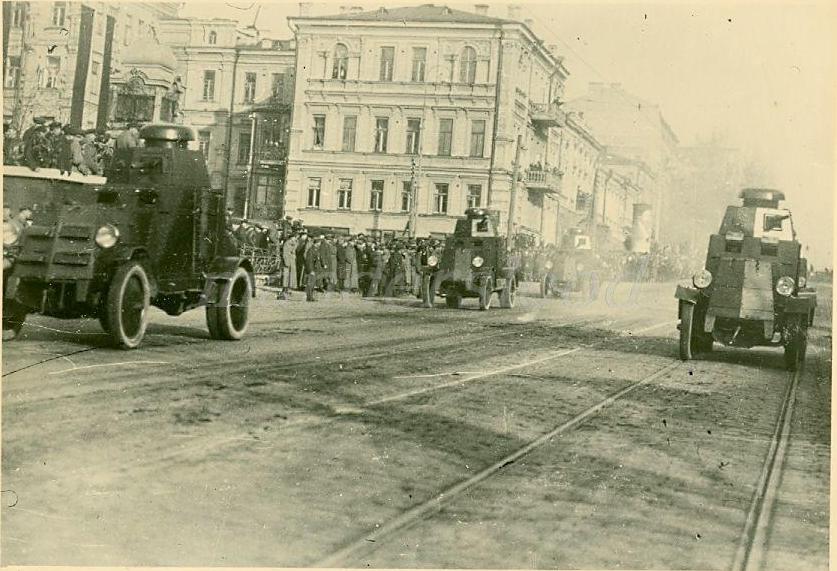
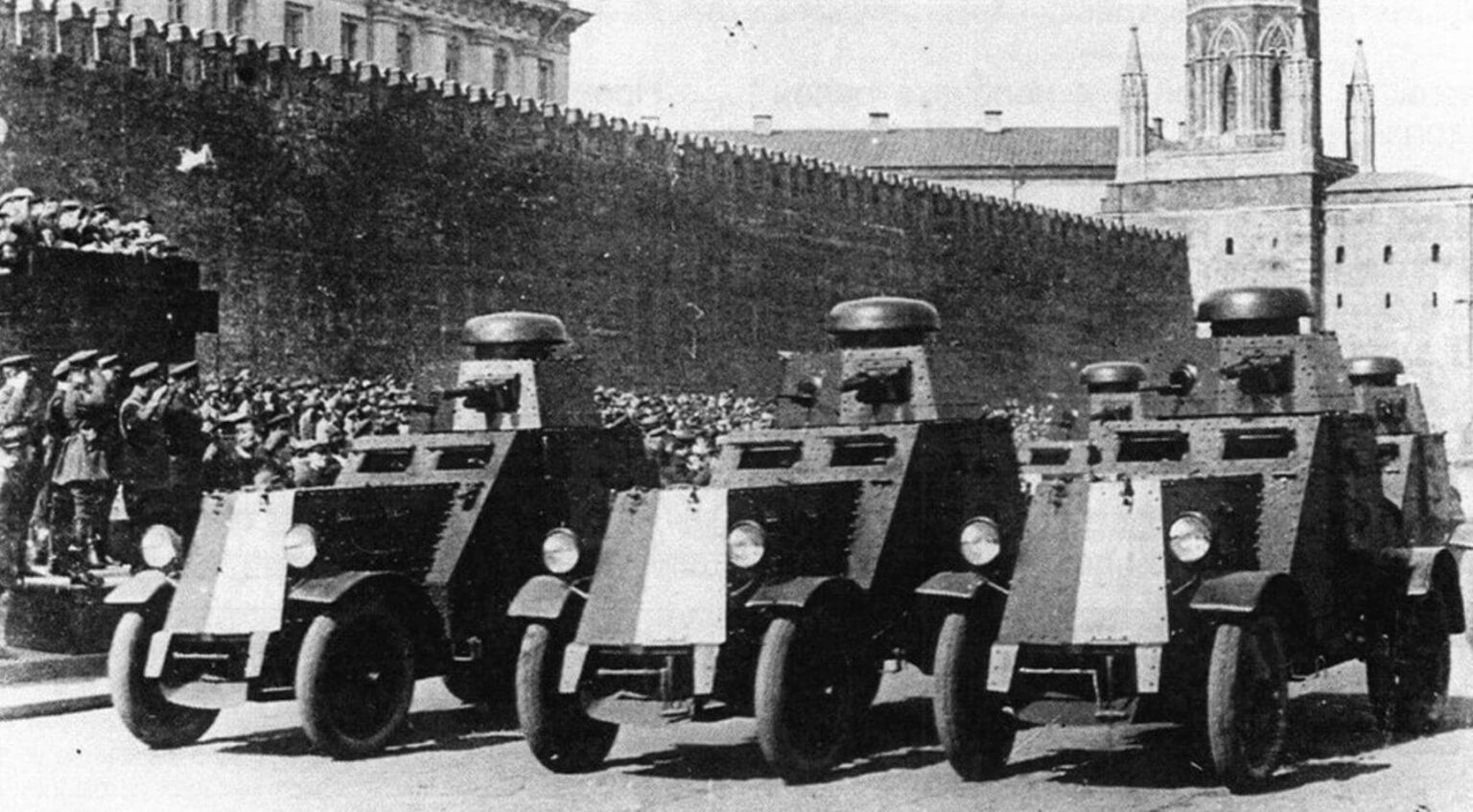
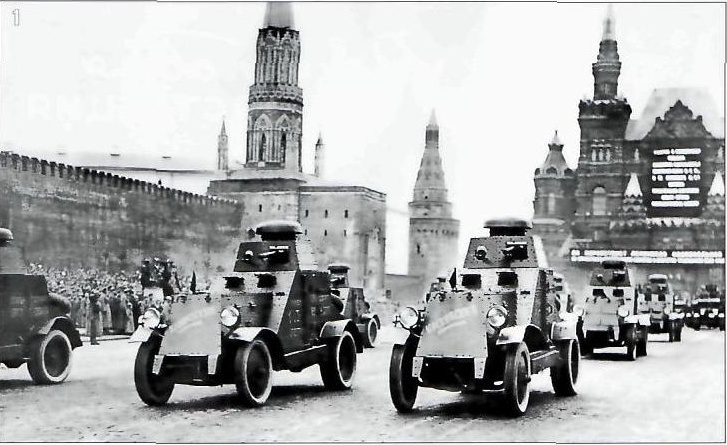
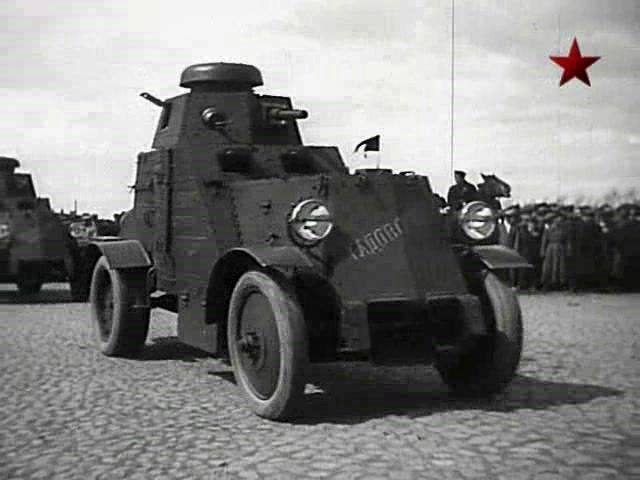
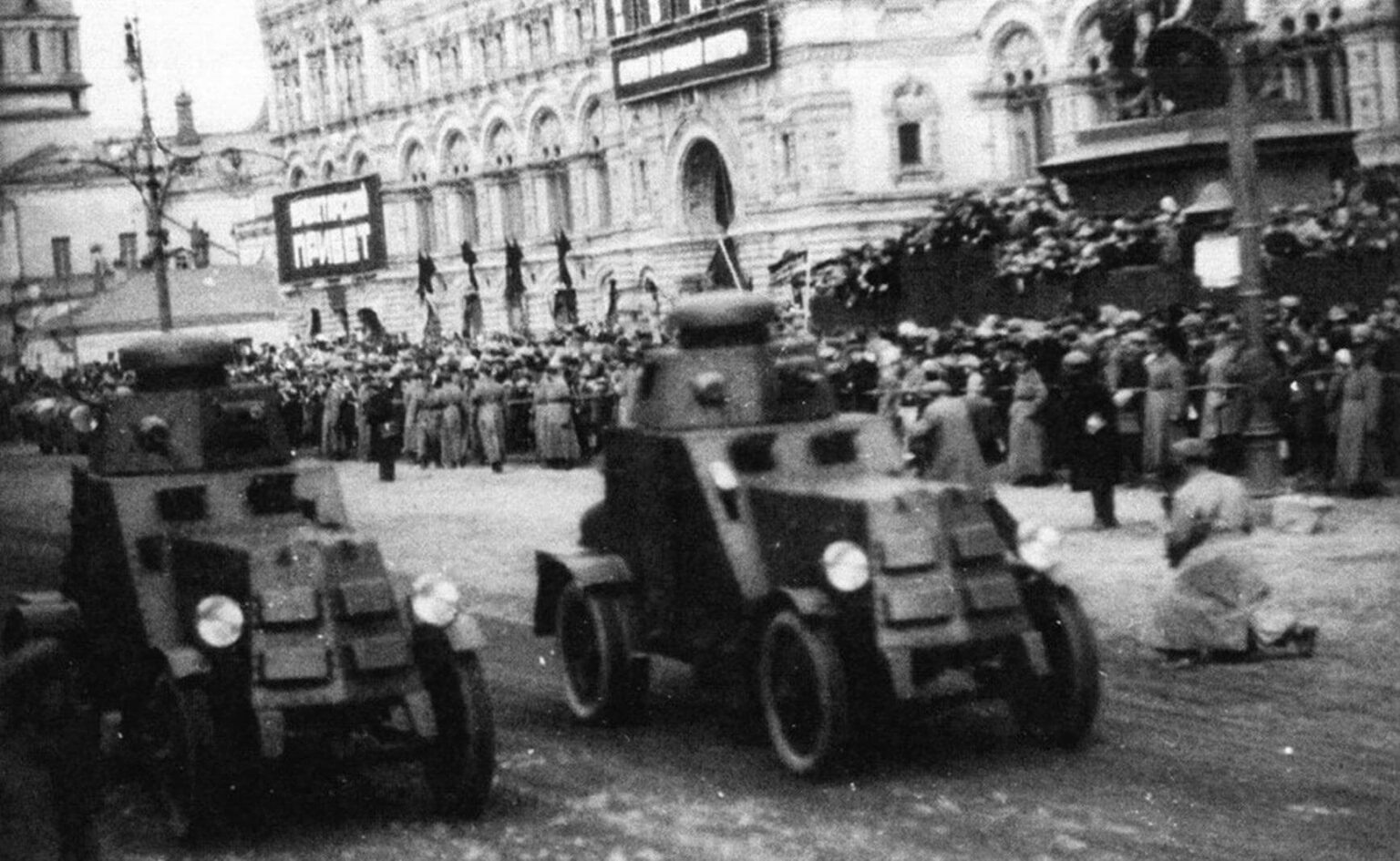
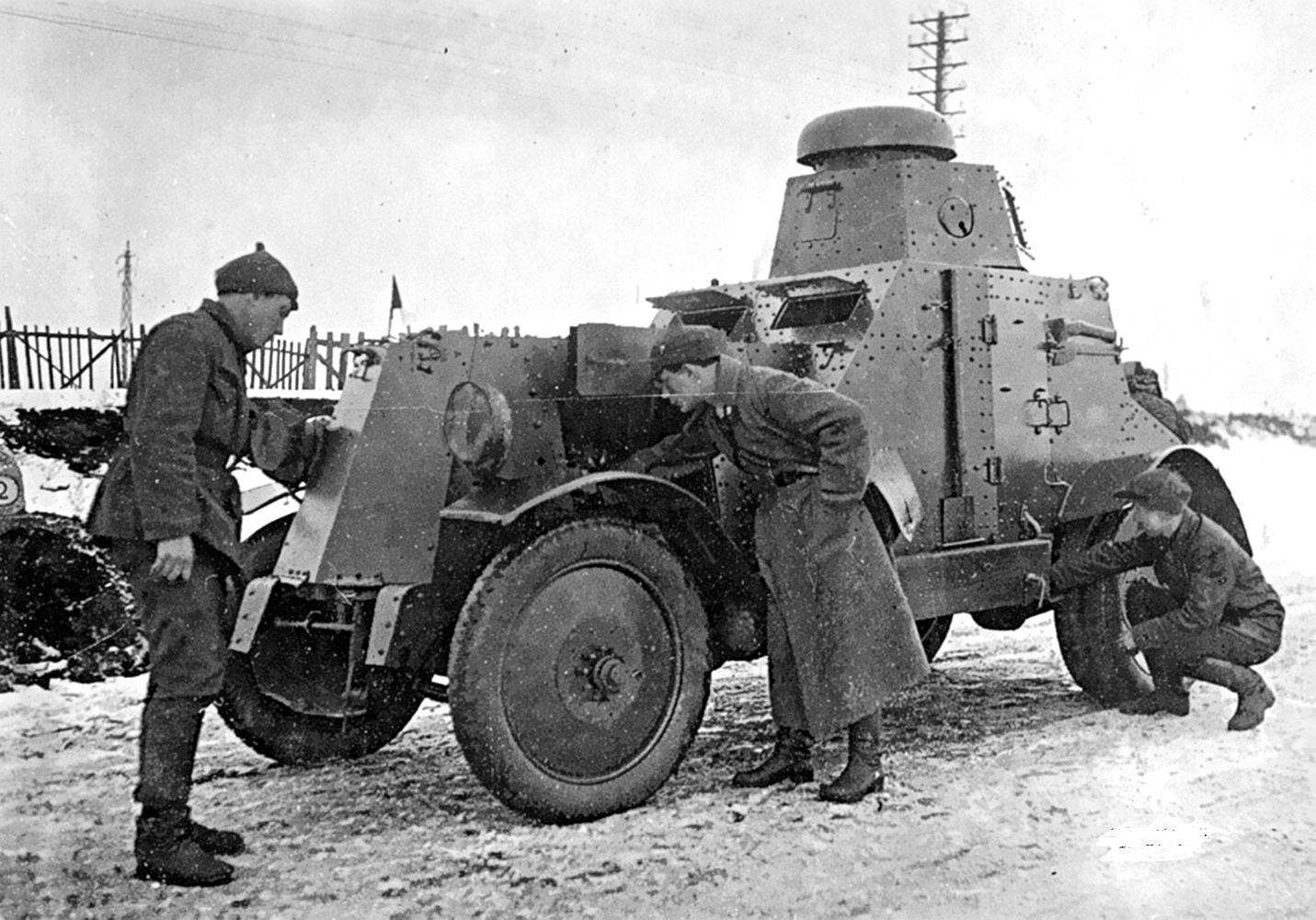
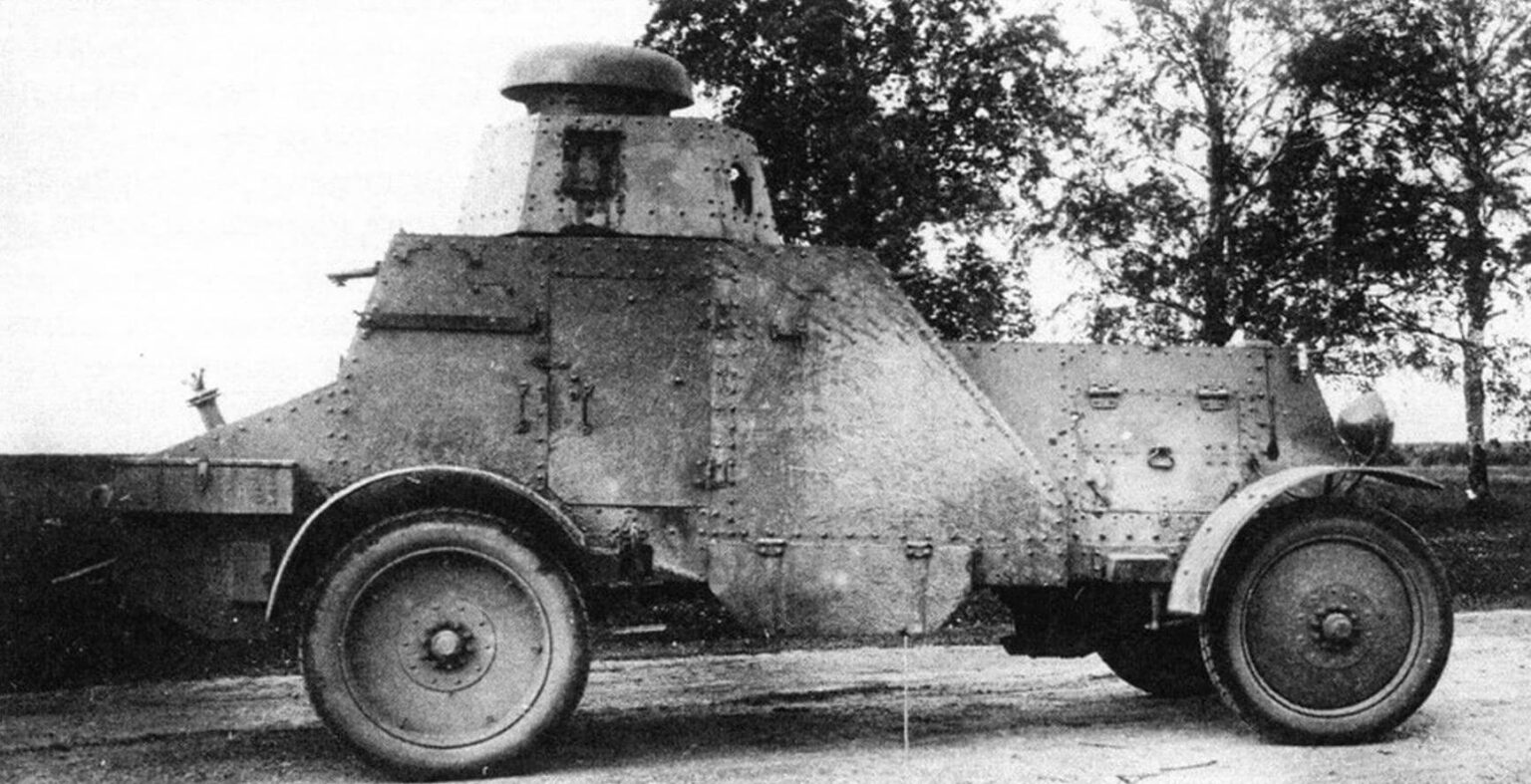
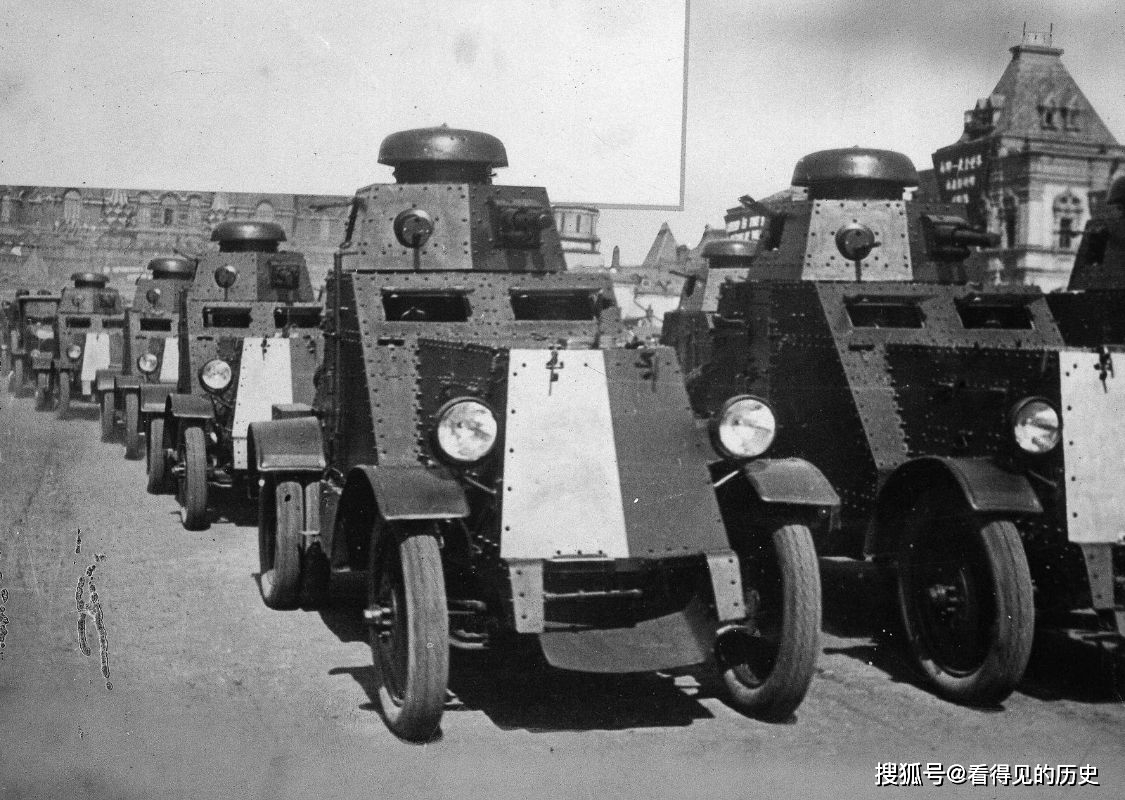
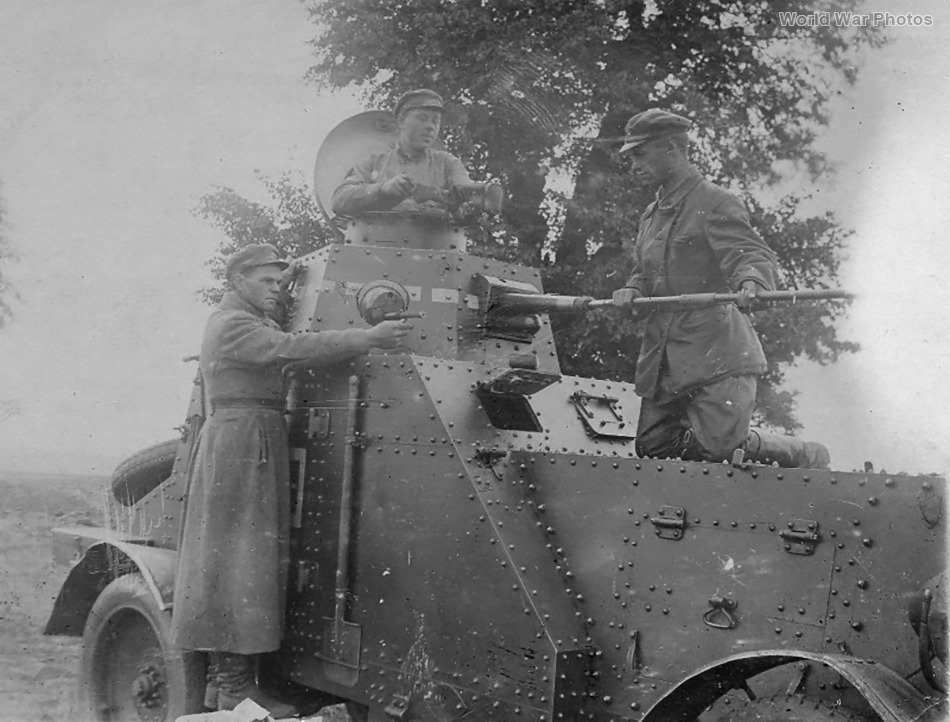
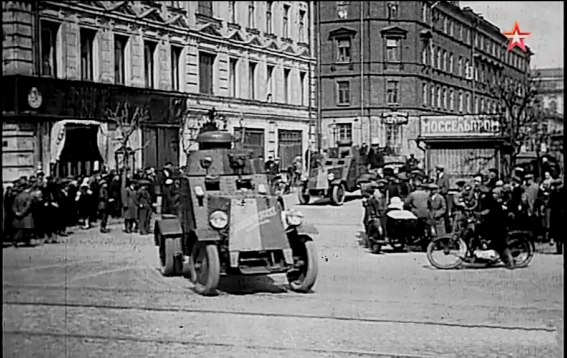
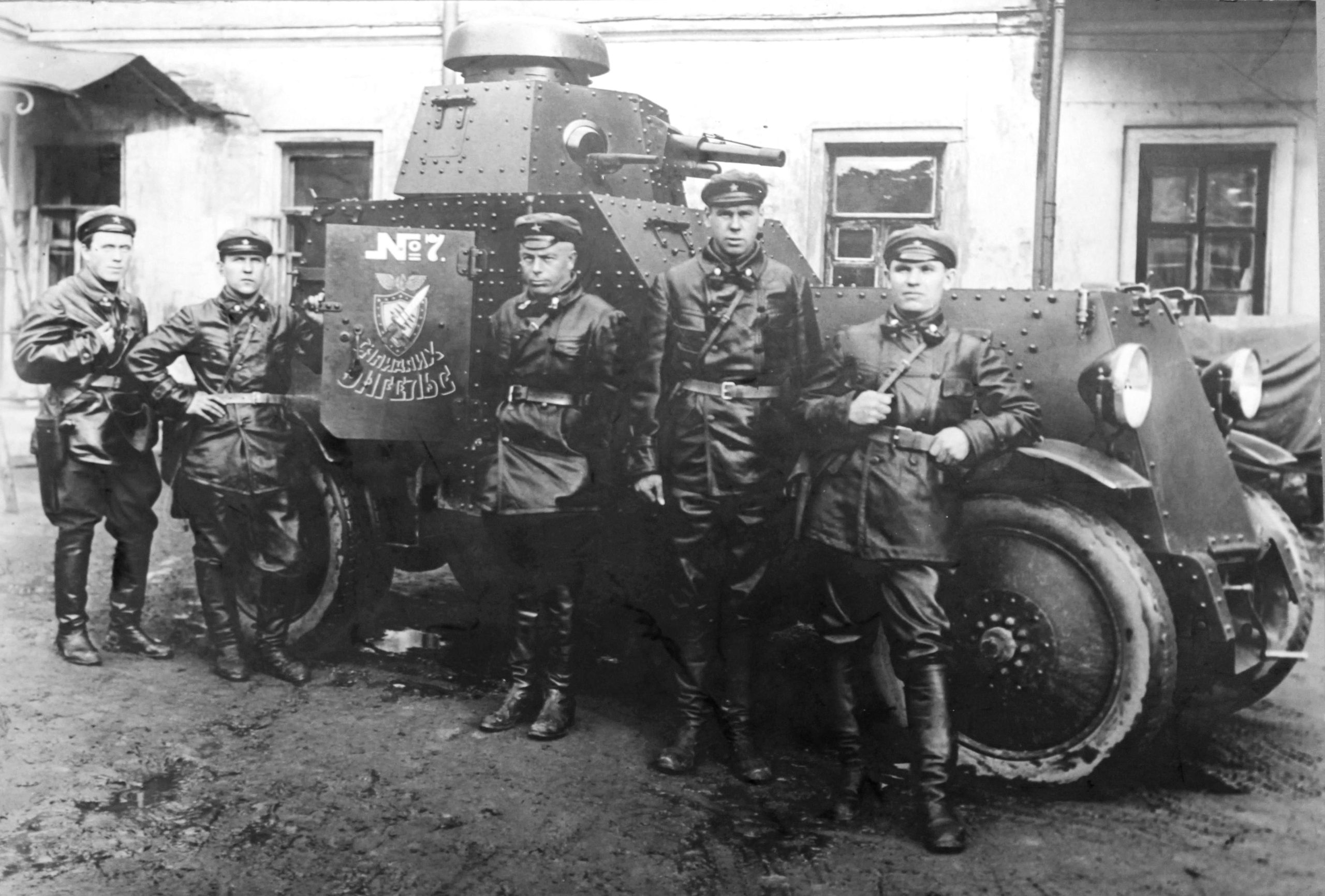
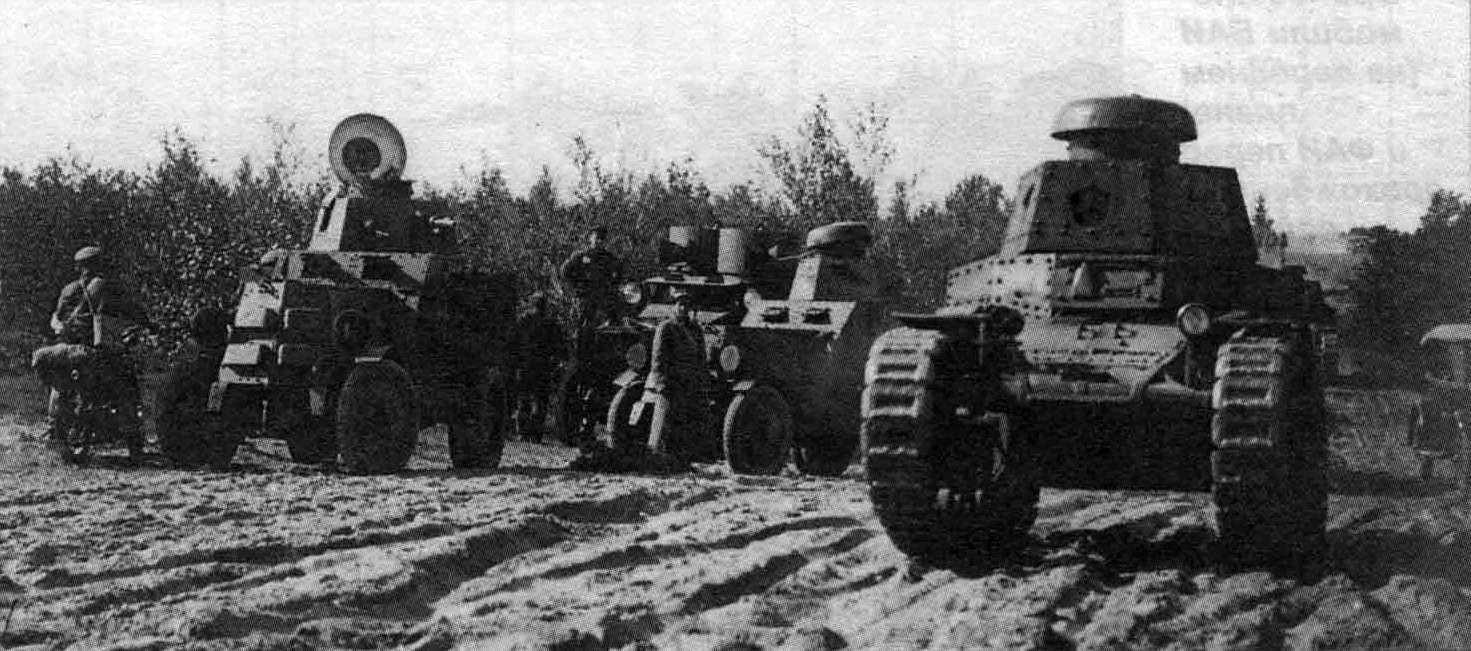
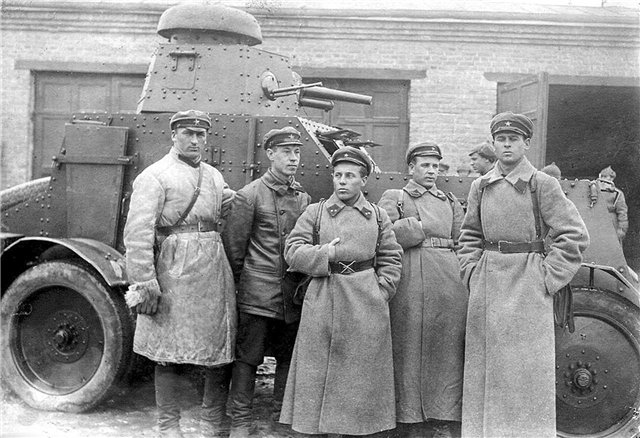
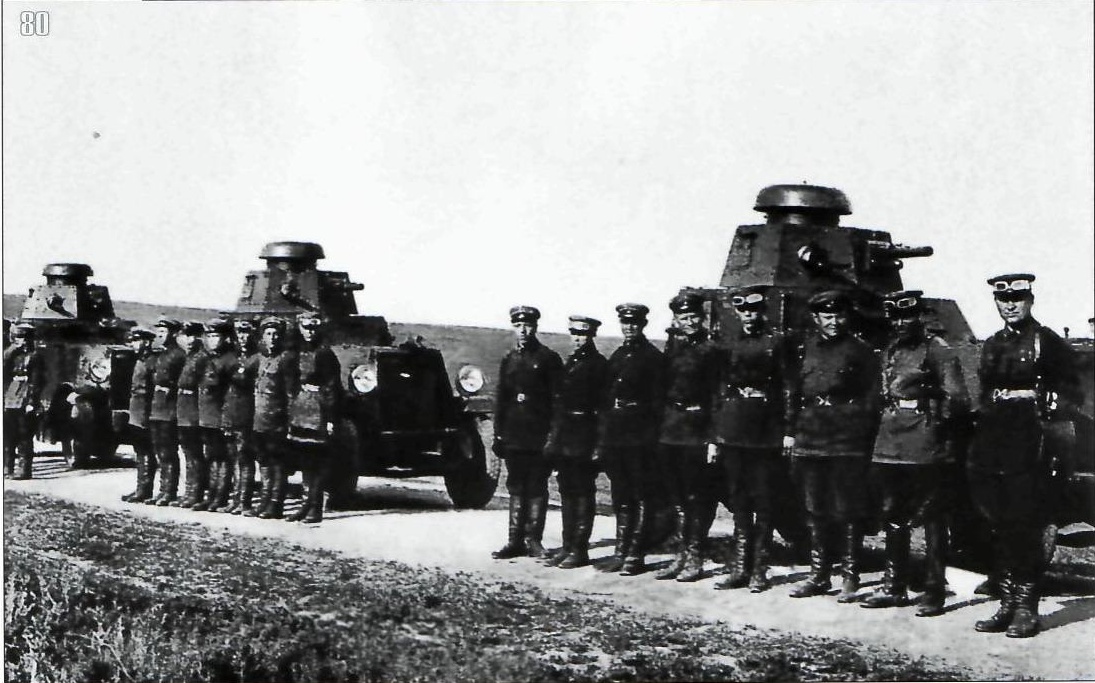
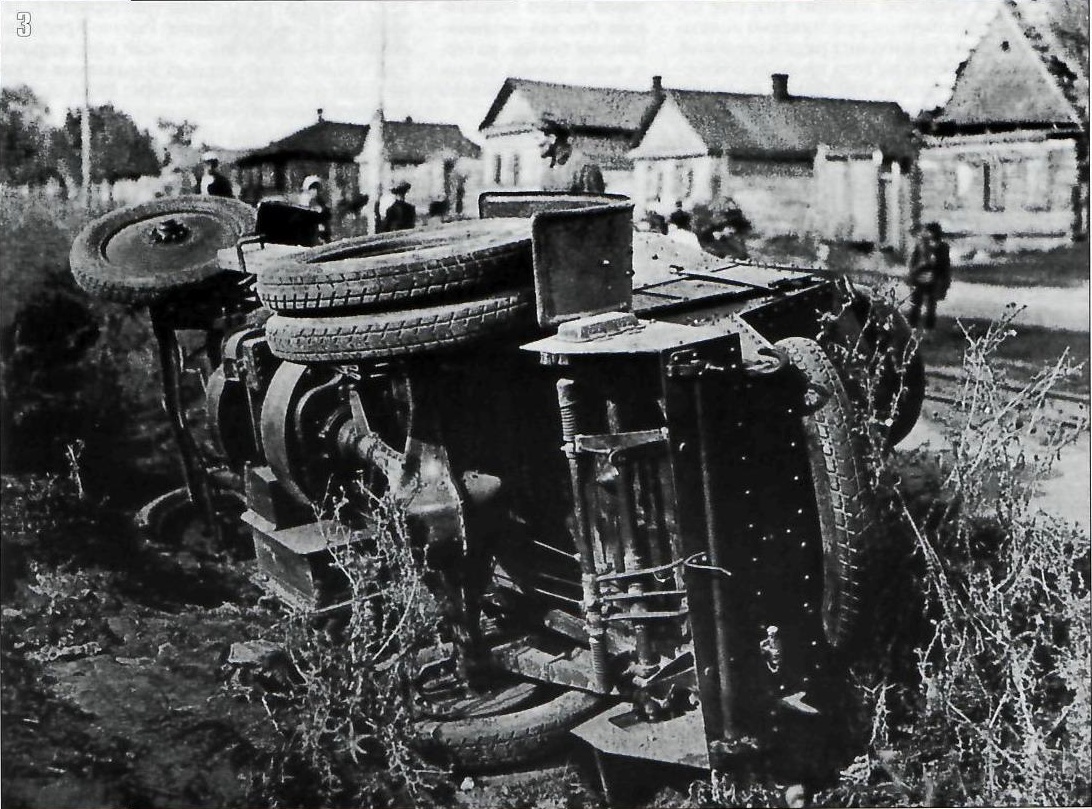
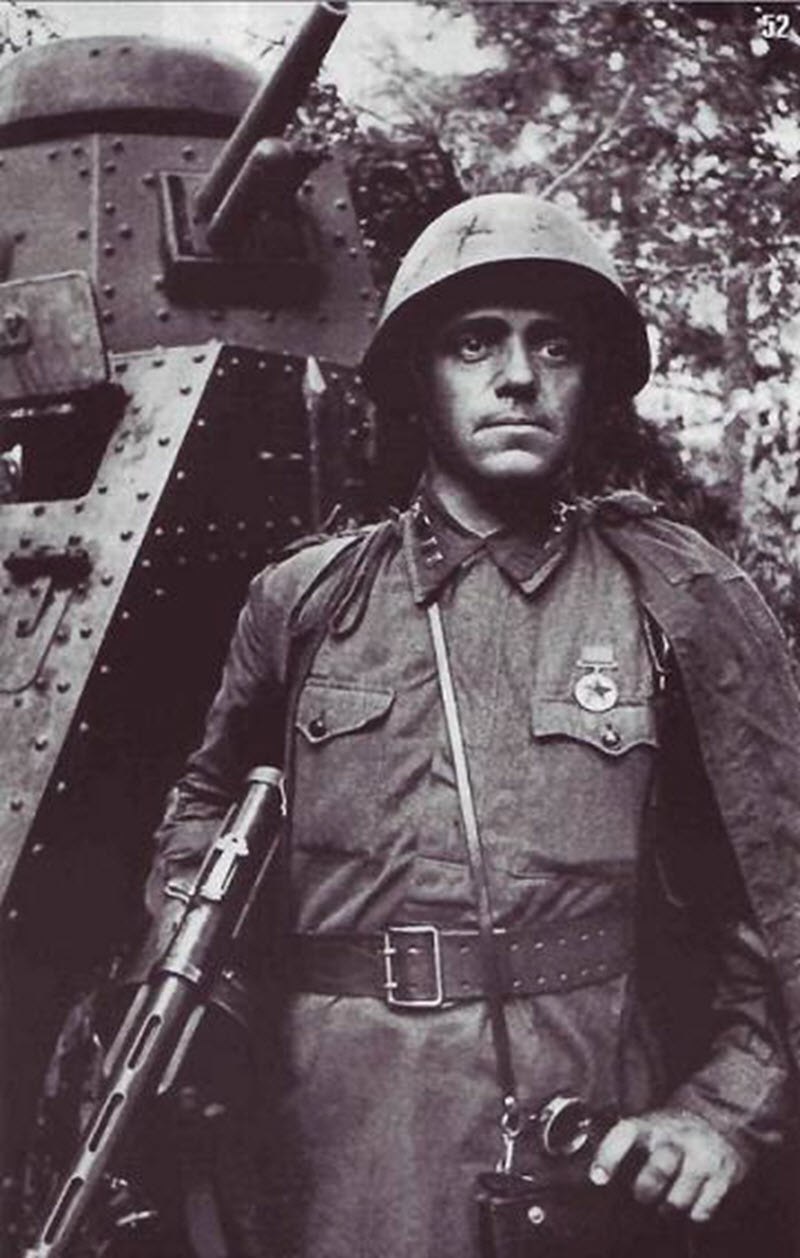
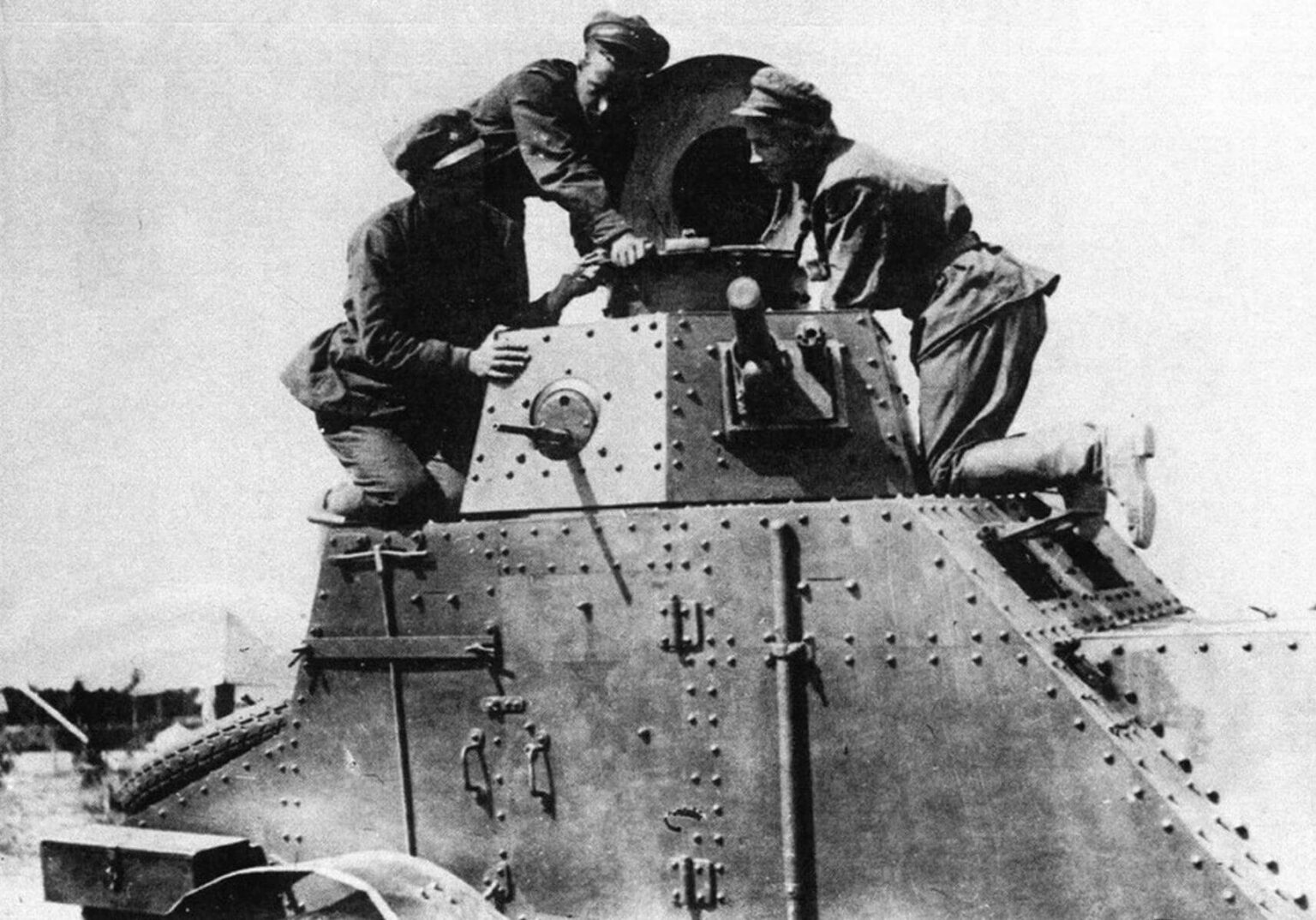
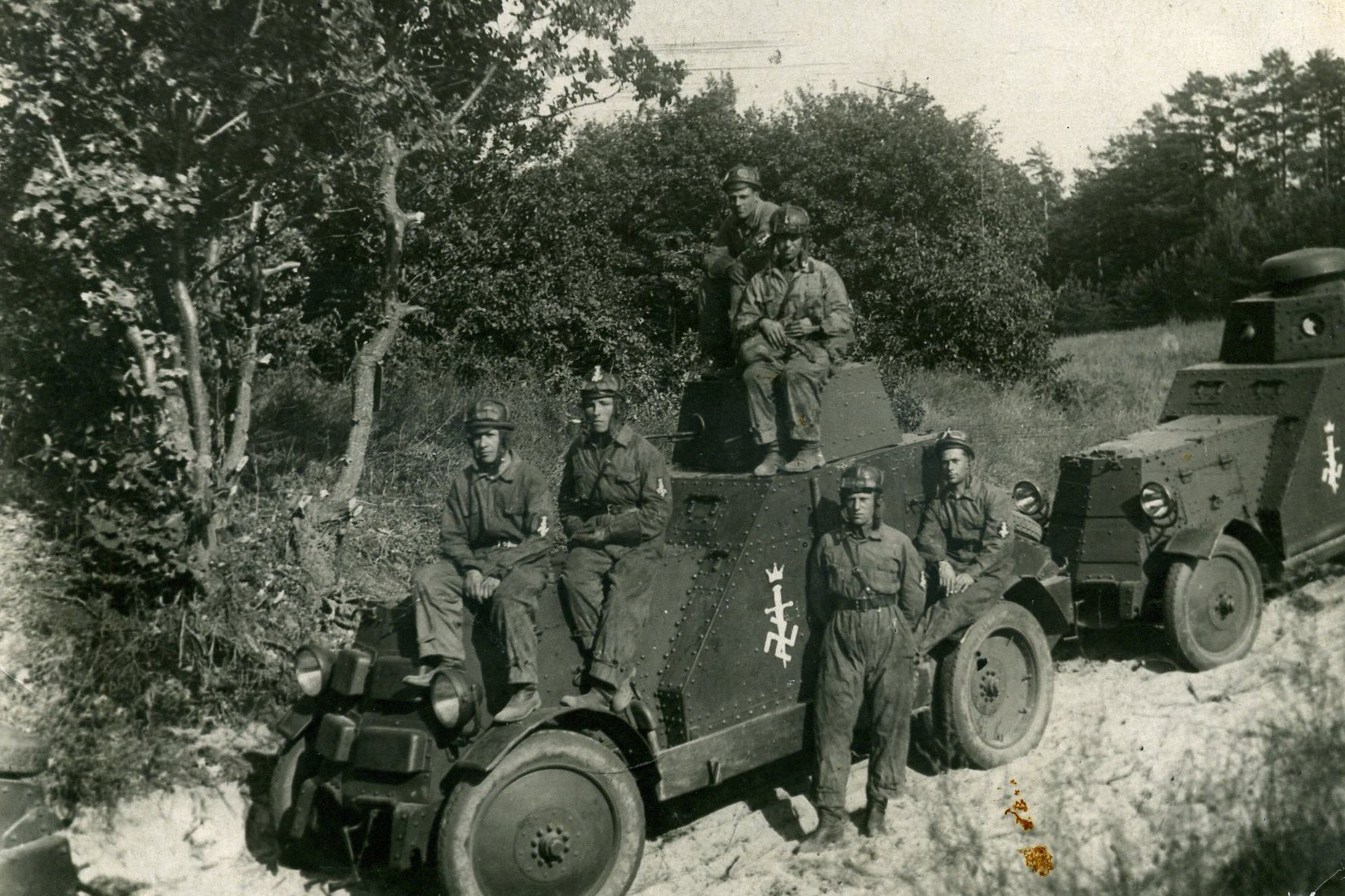
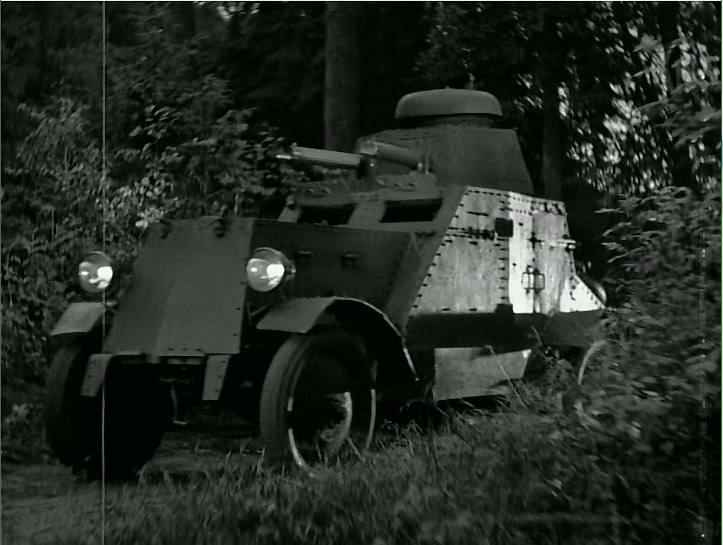
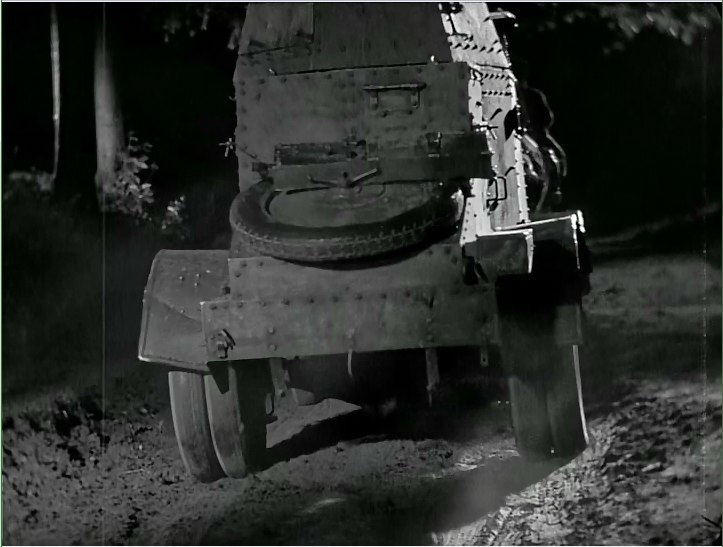
The BA-27M in combat
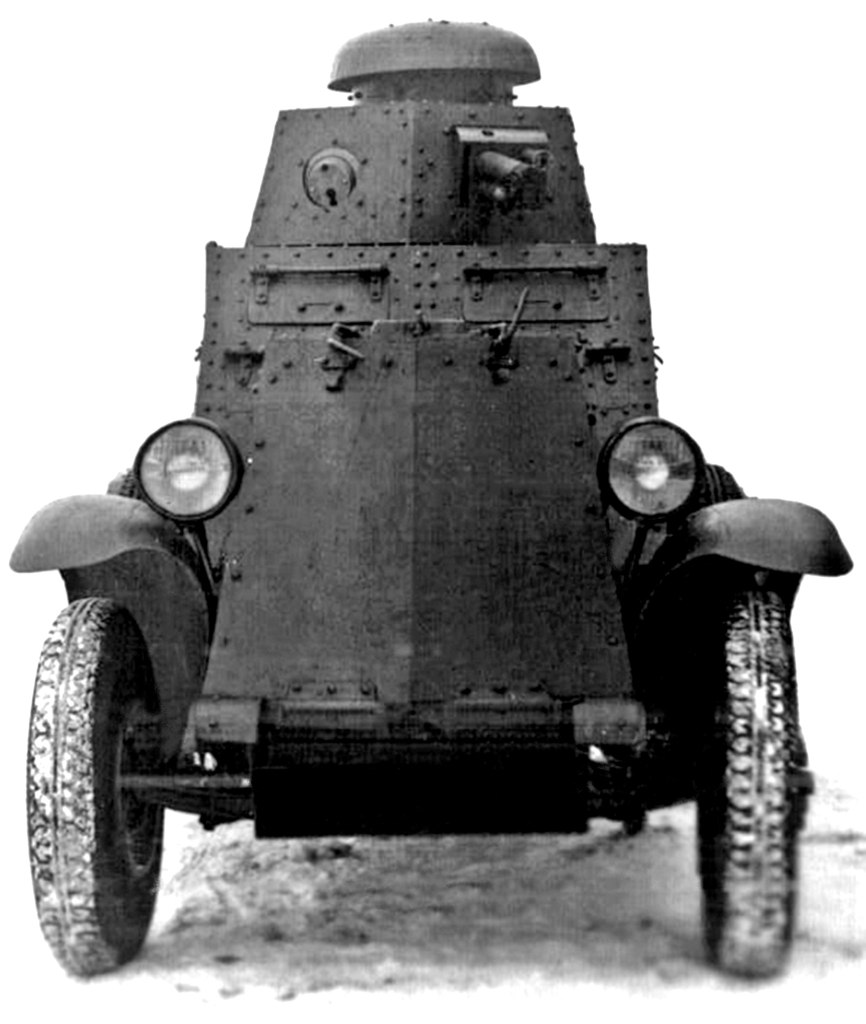
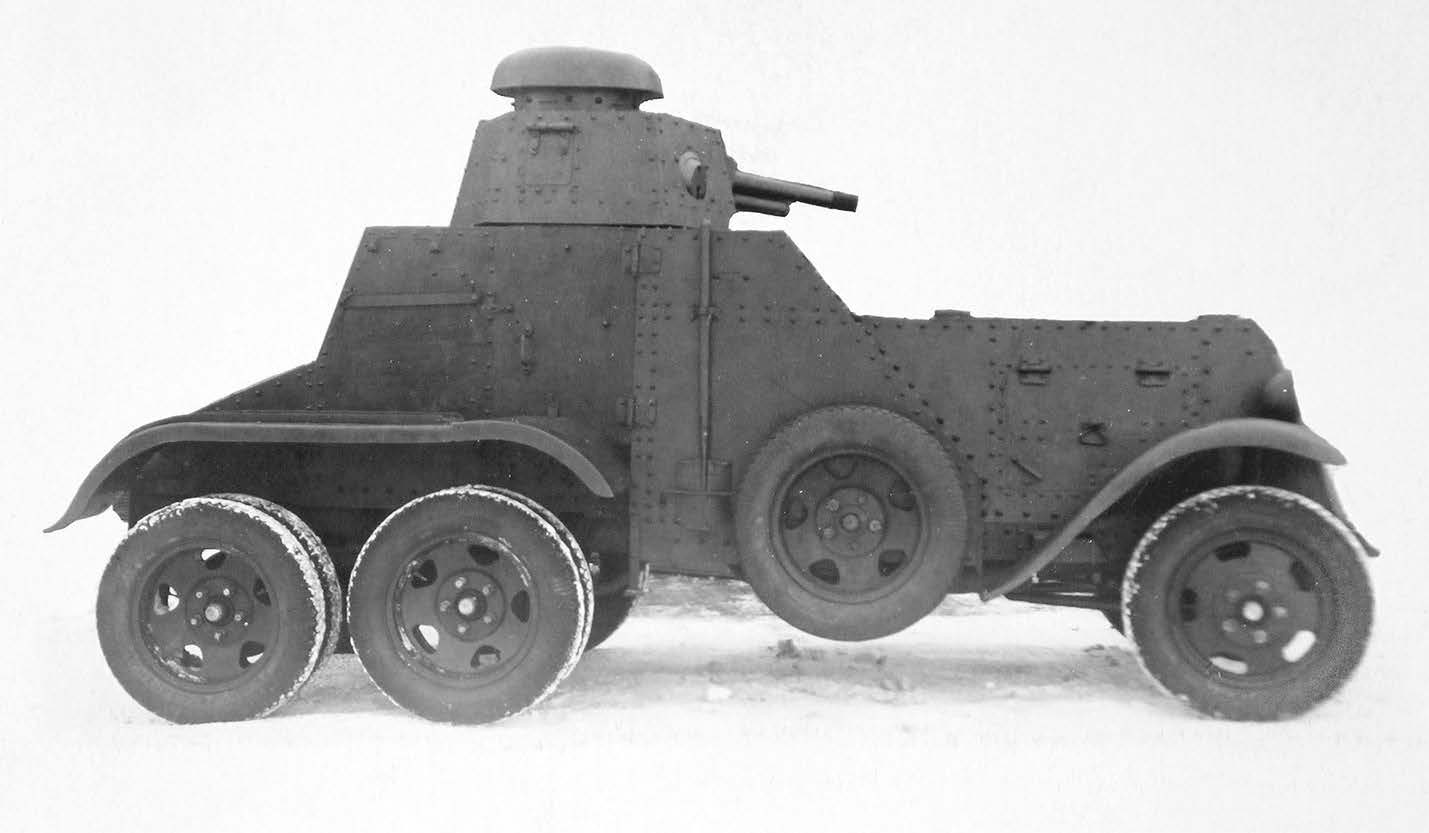
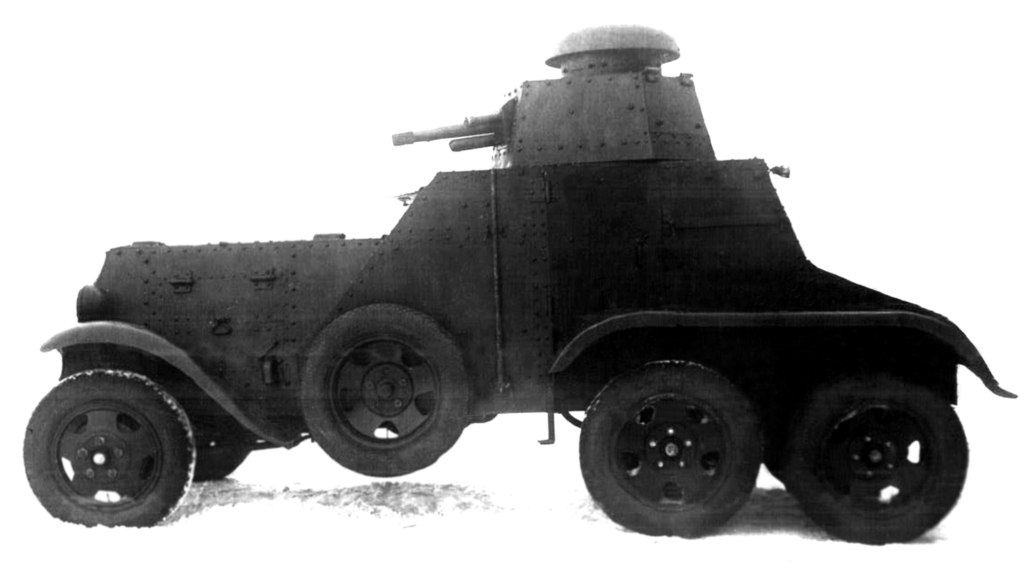
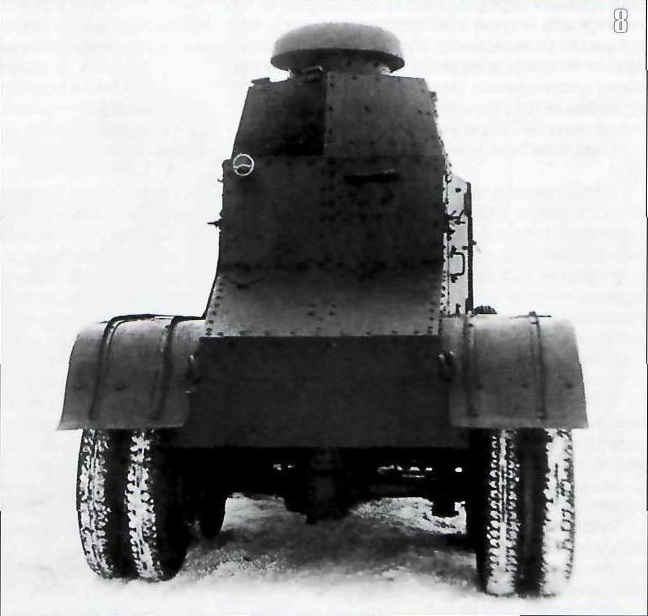
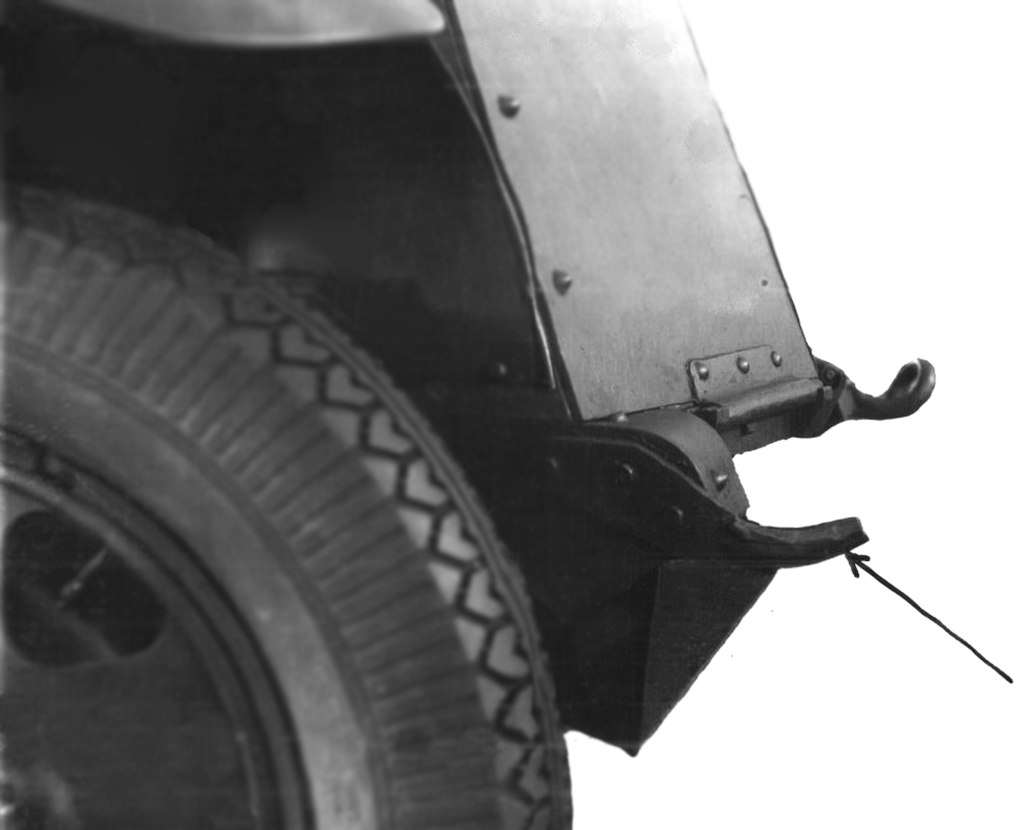
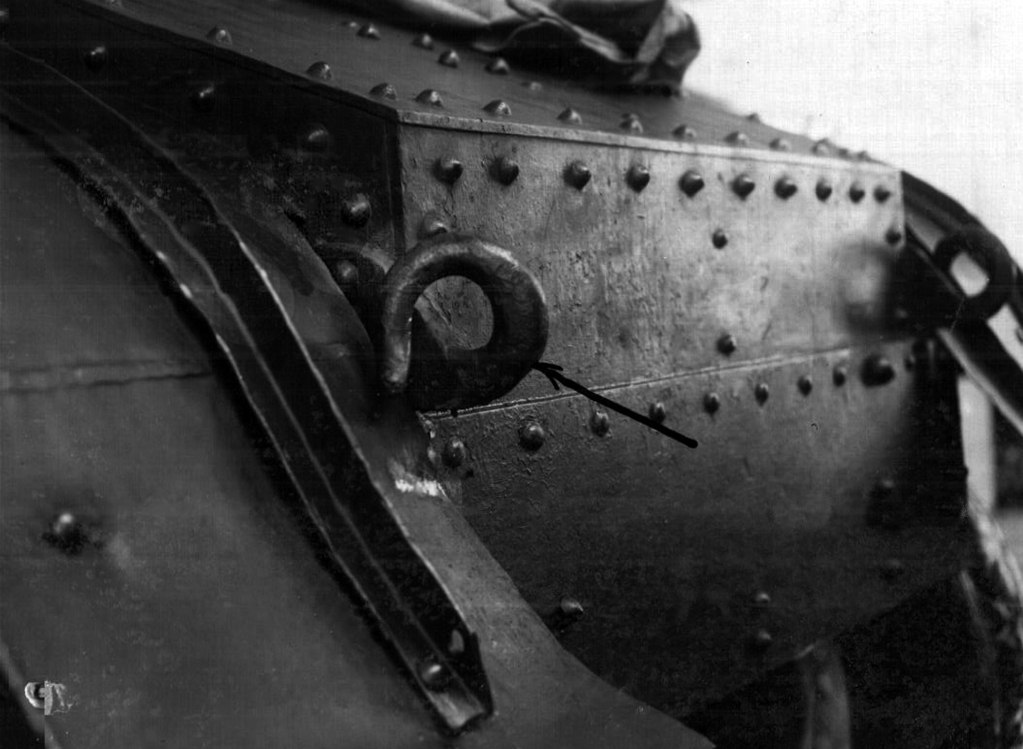
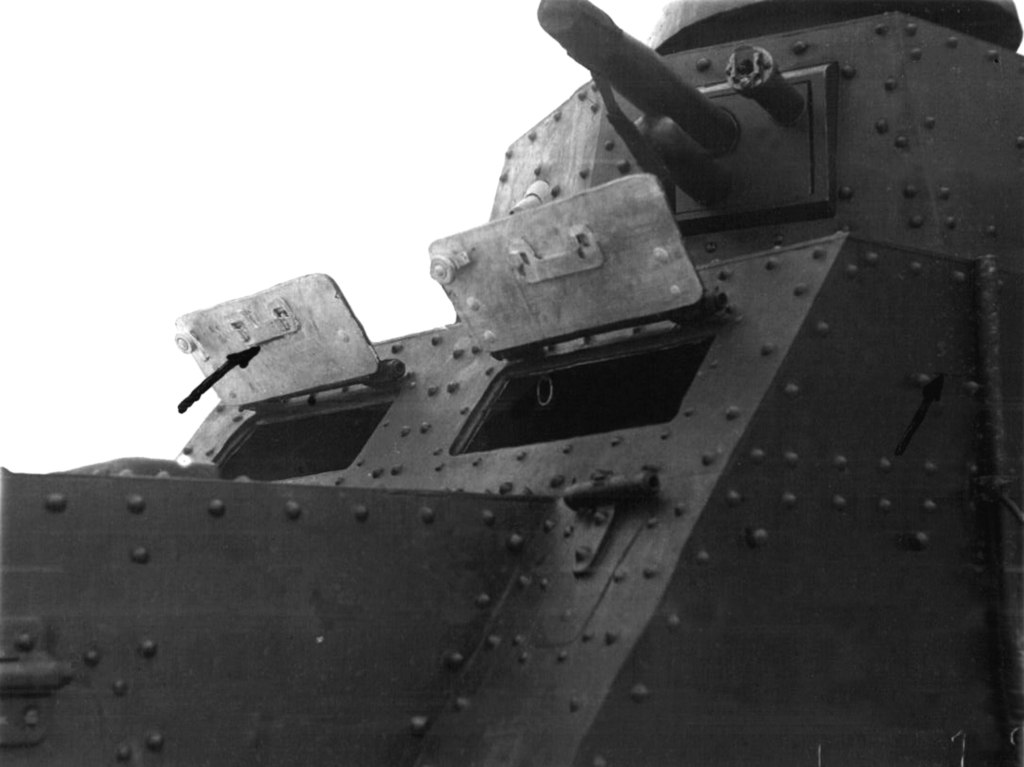
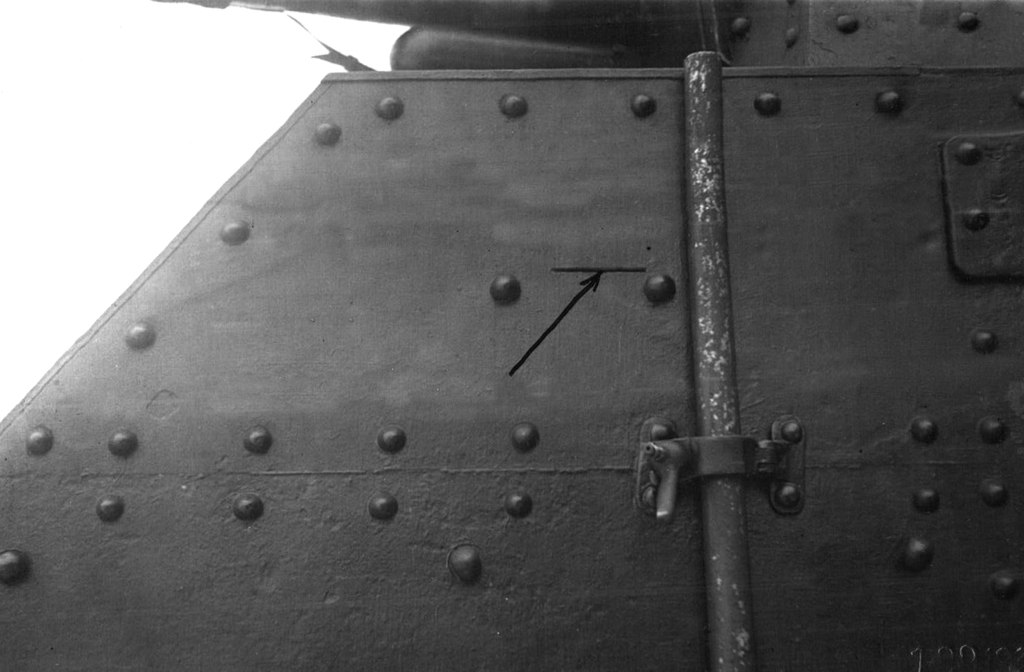
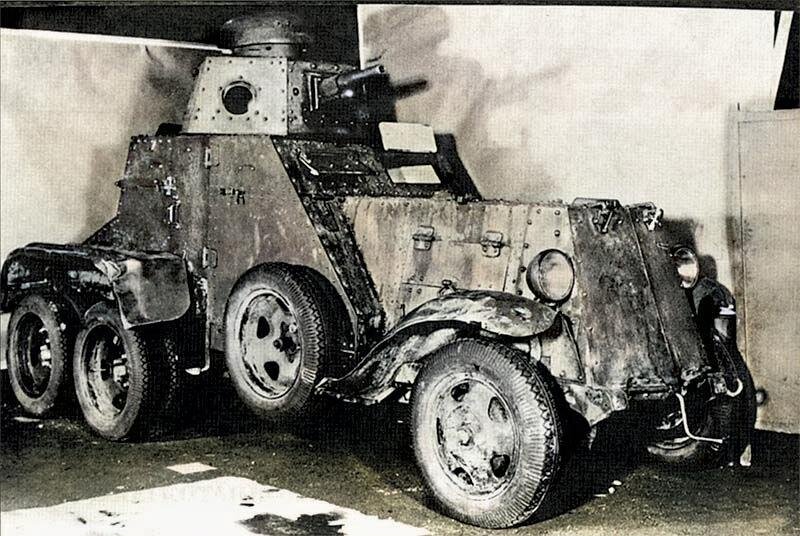
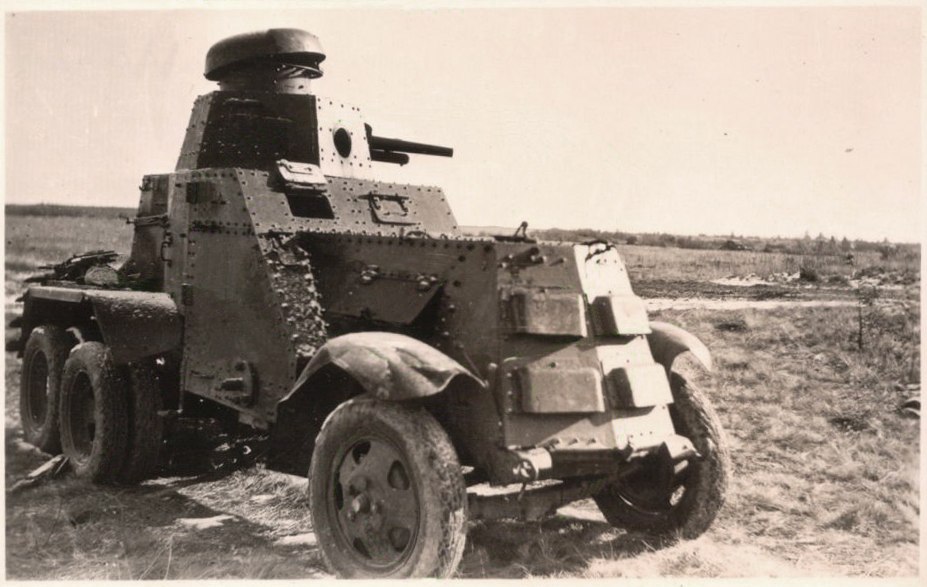
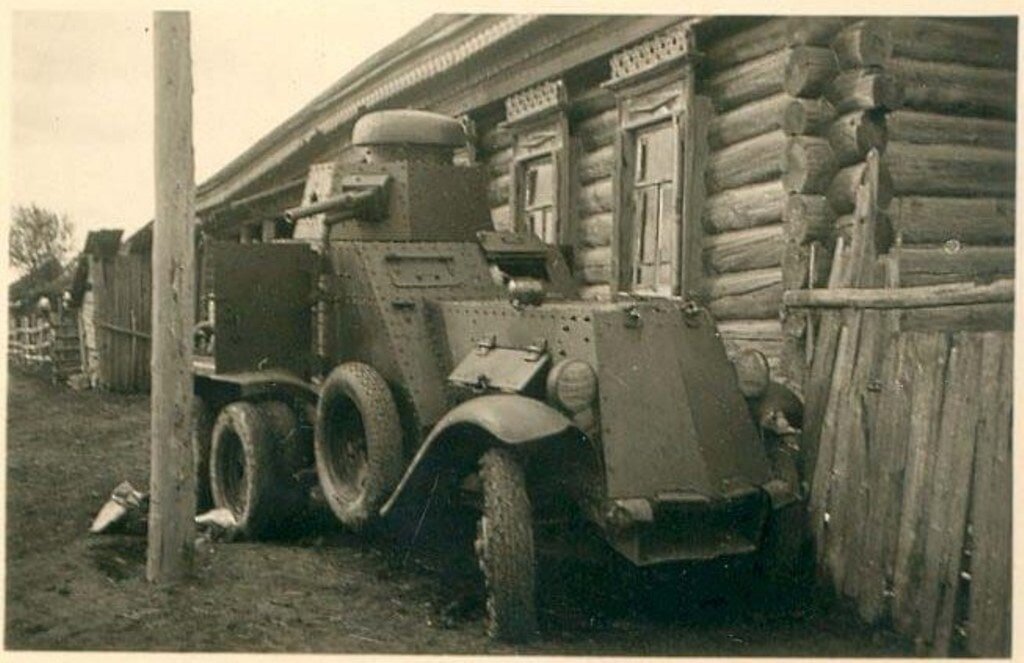
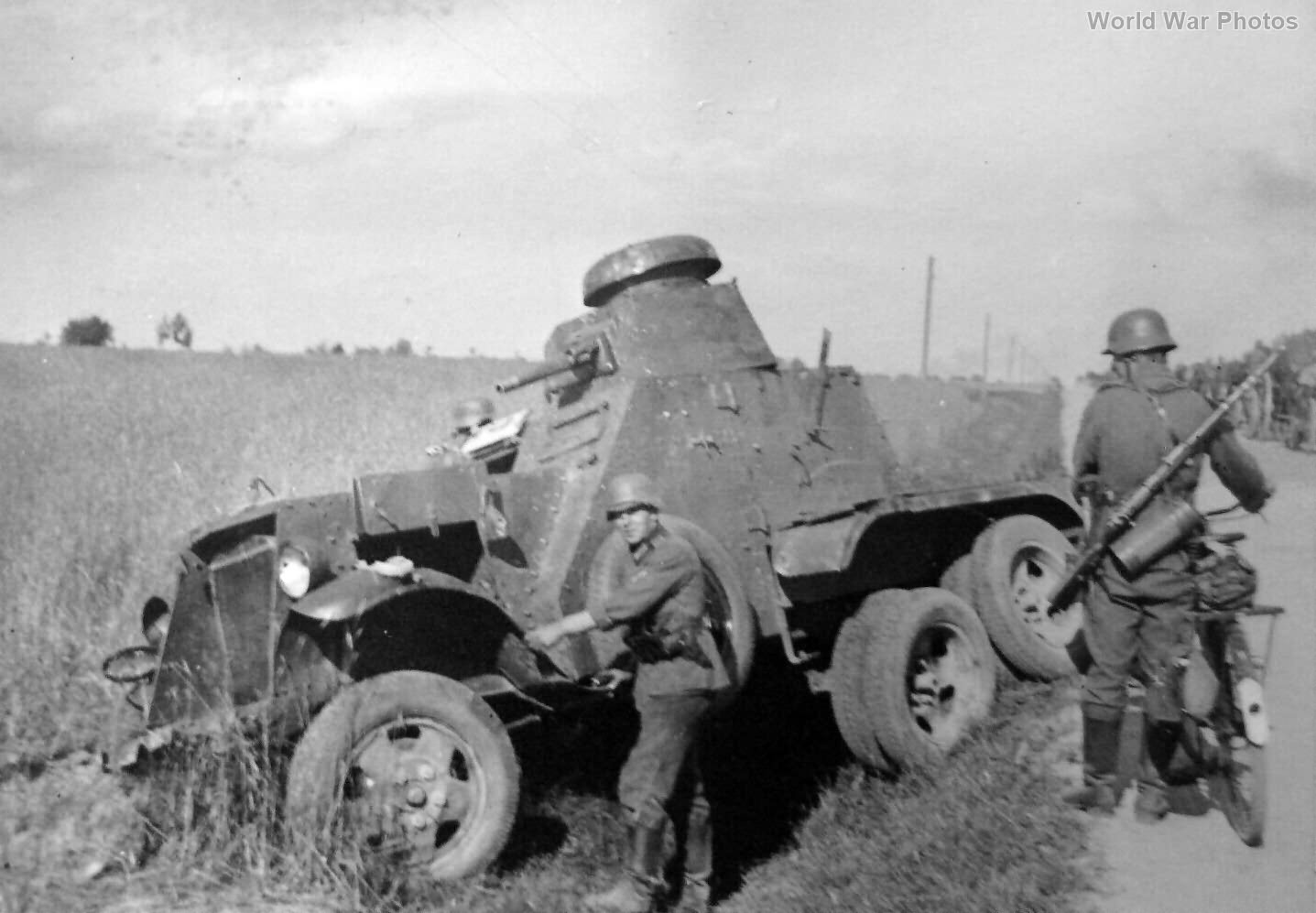
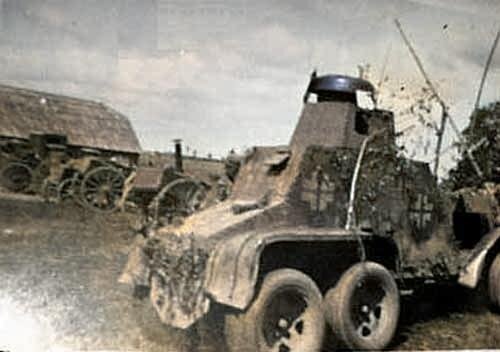
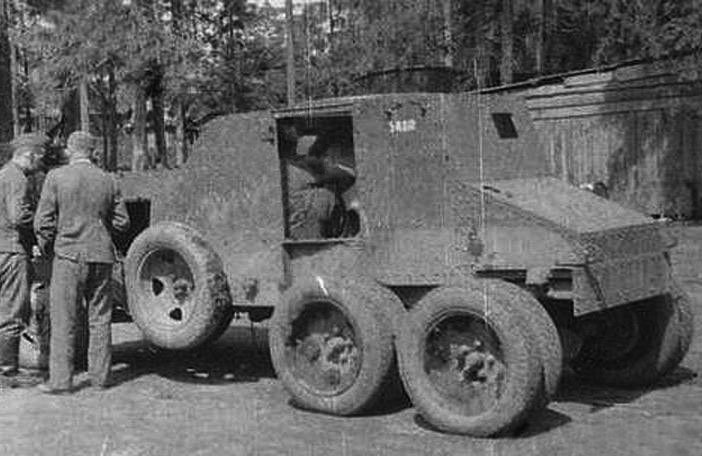
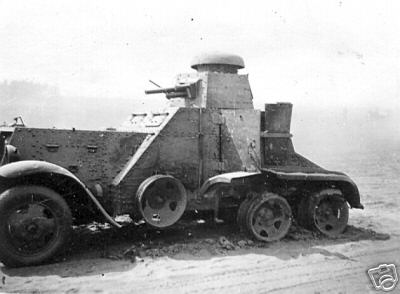
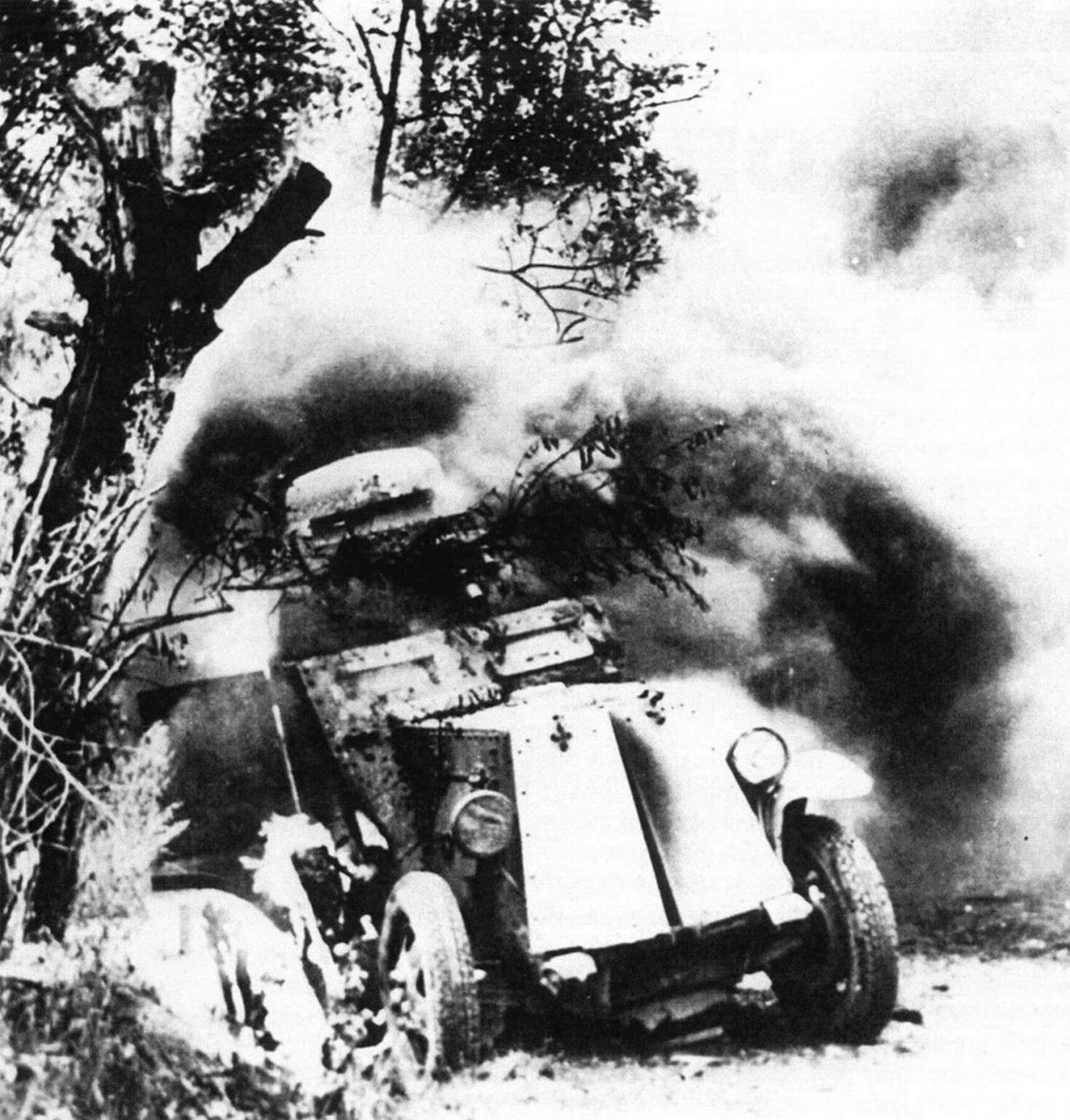
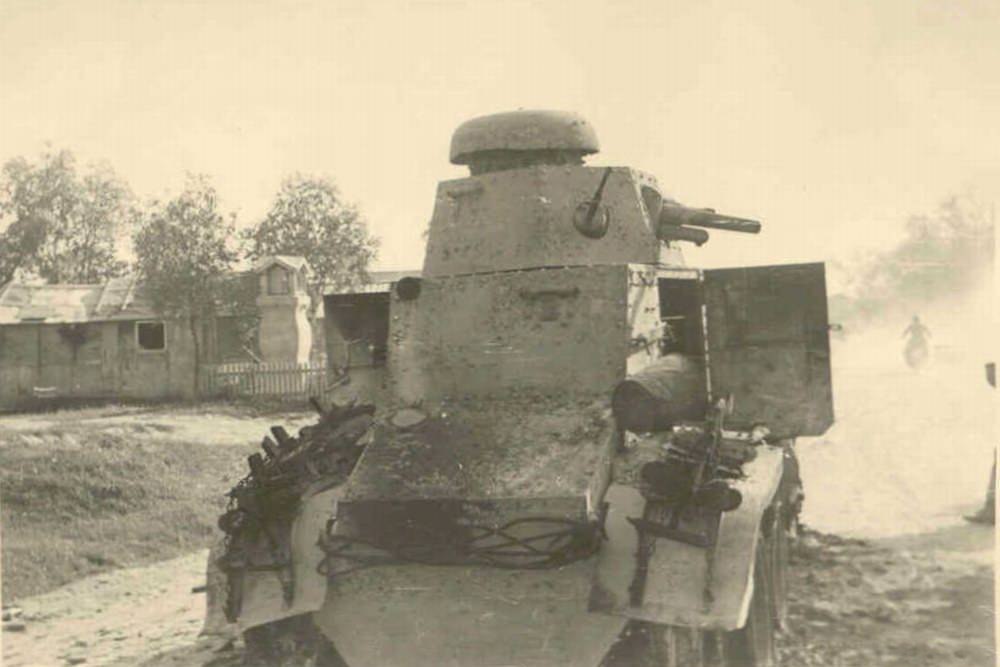
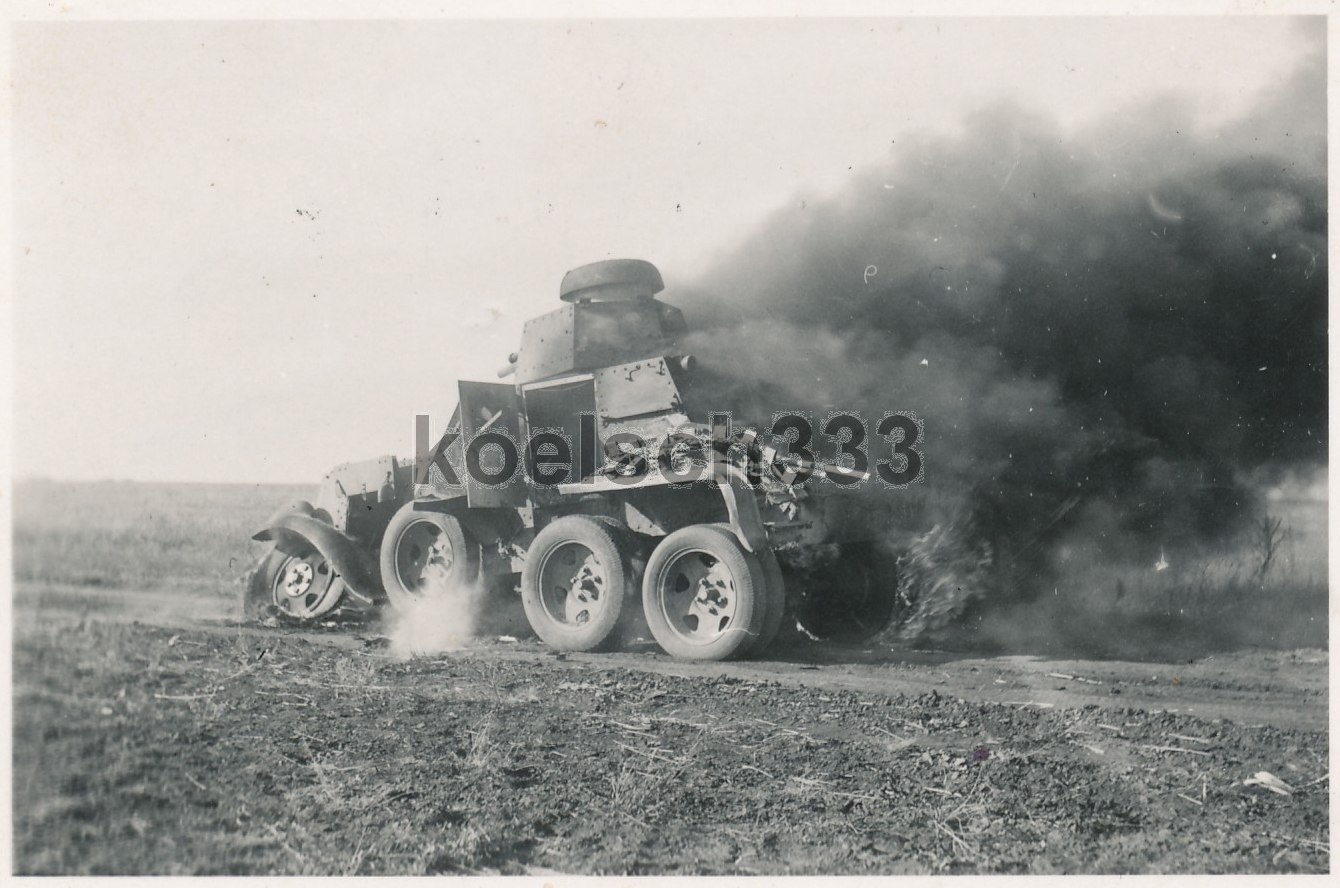
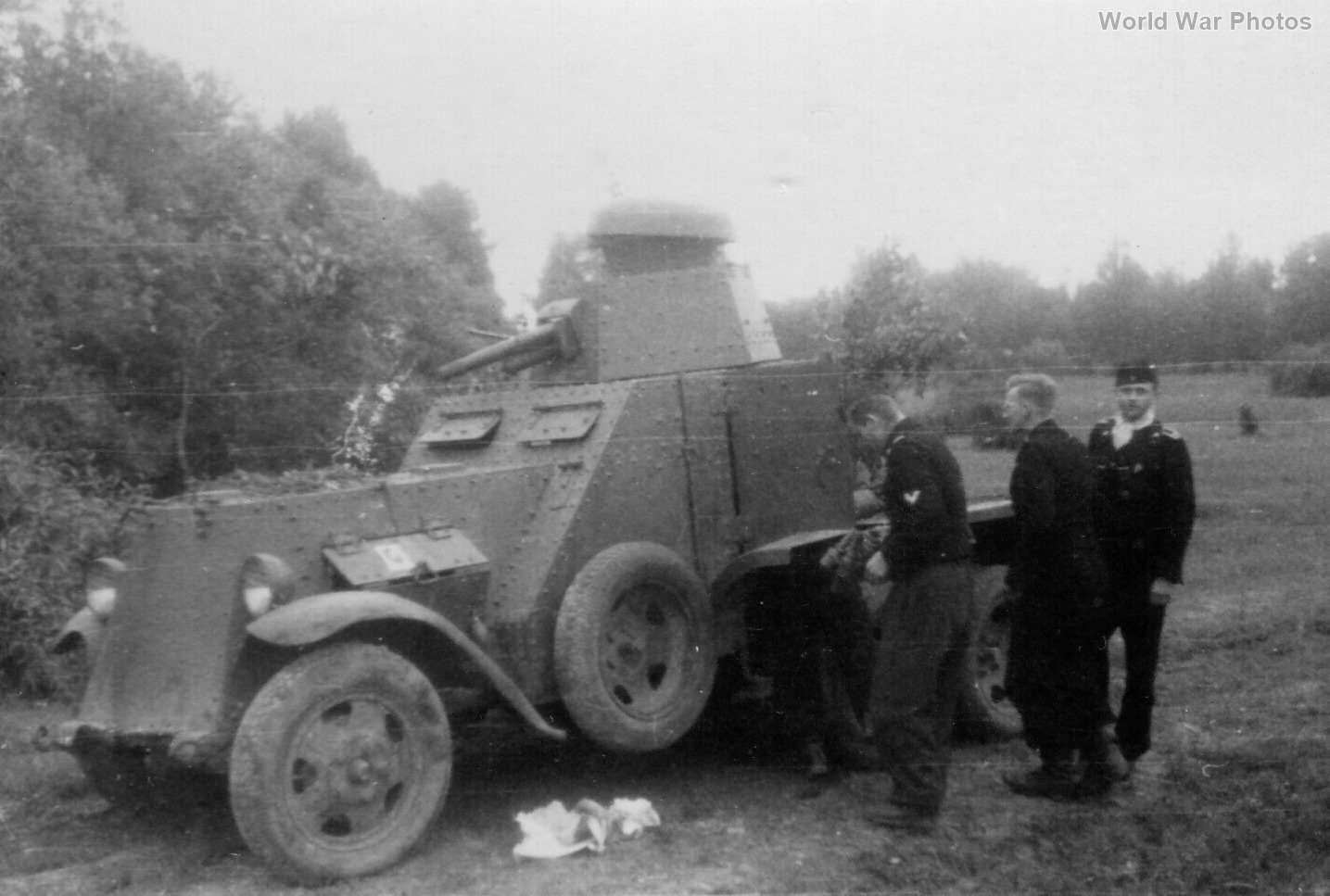
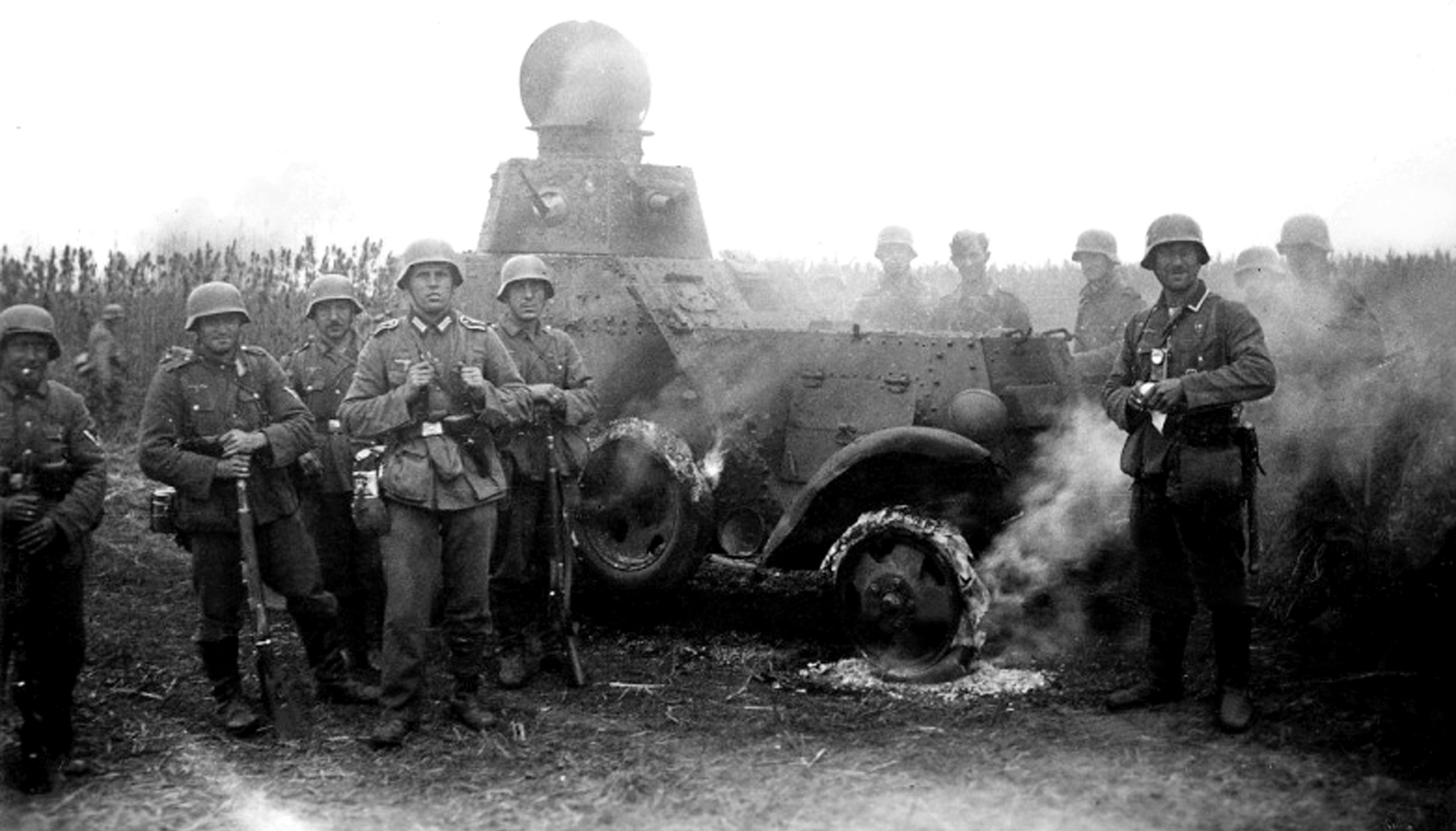
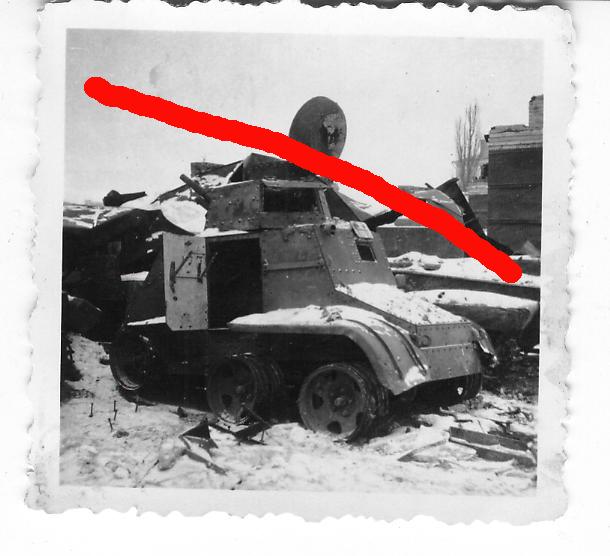
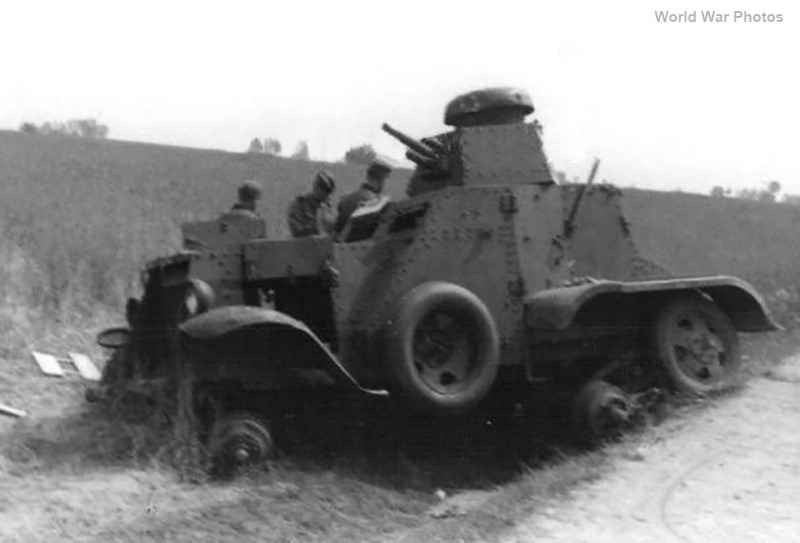
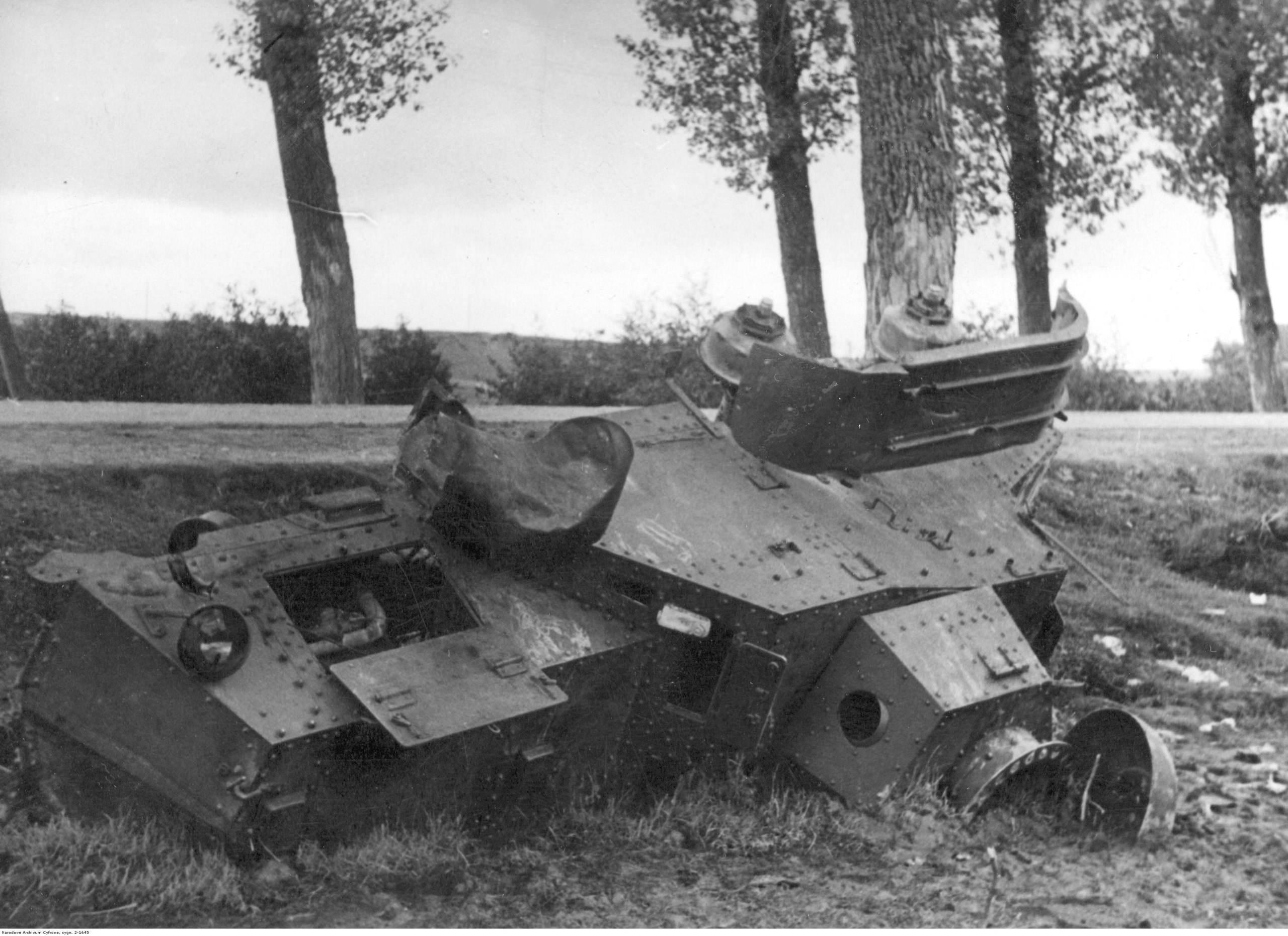
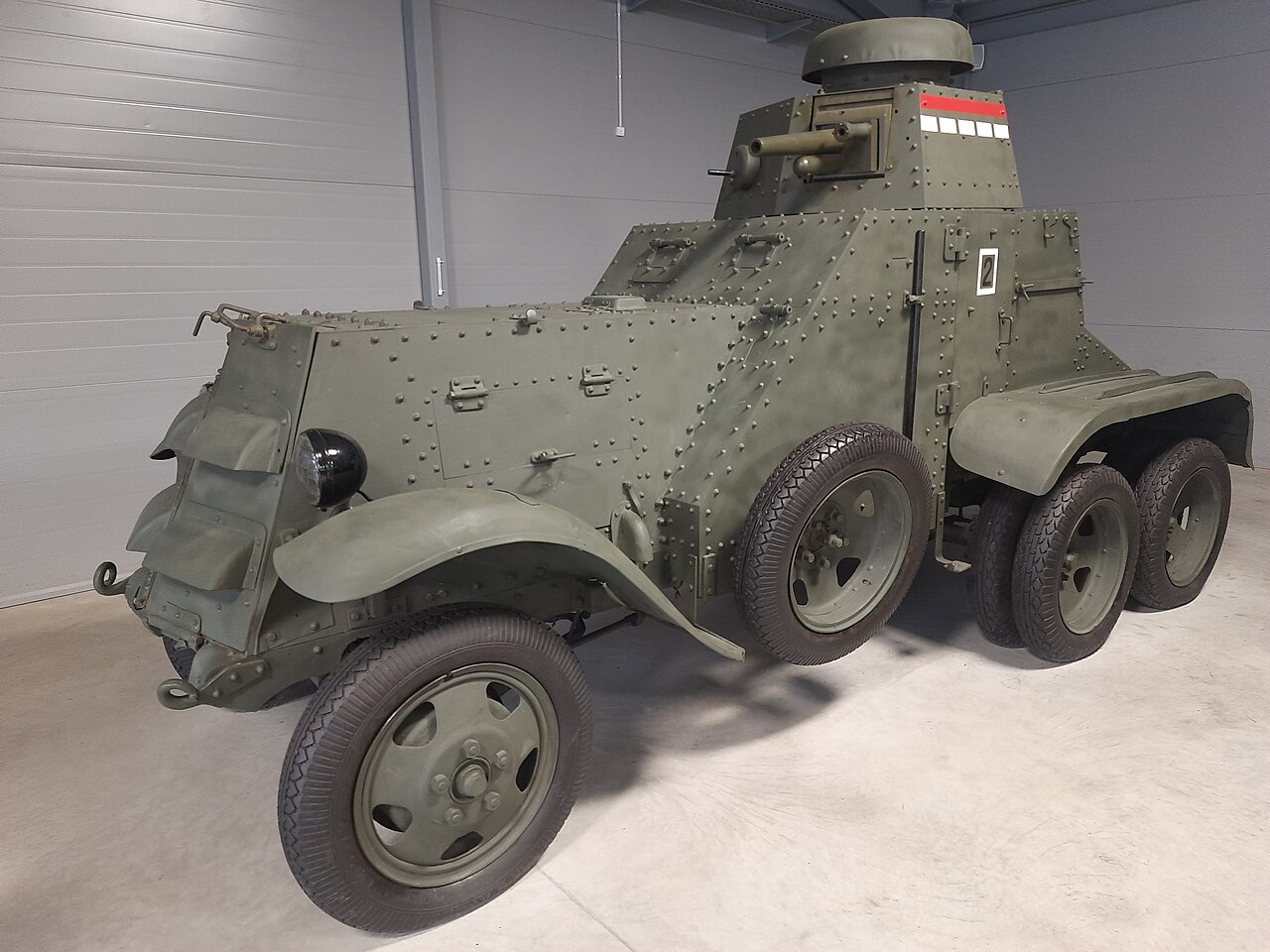
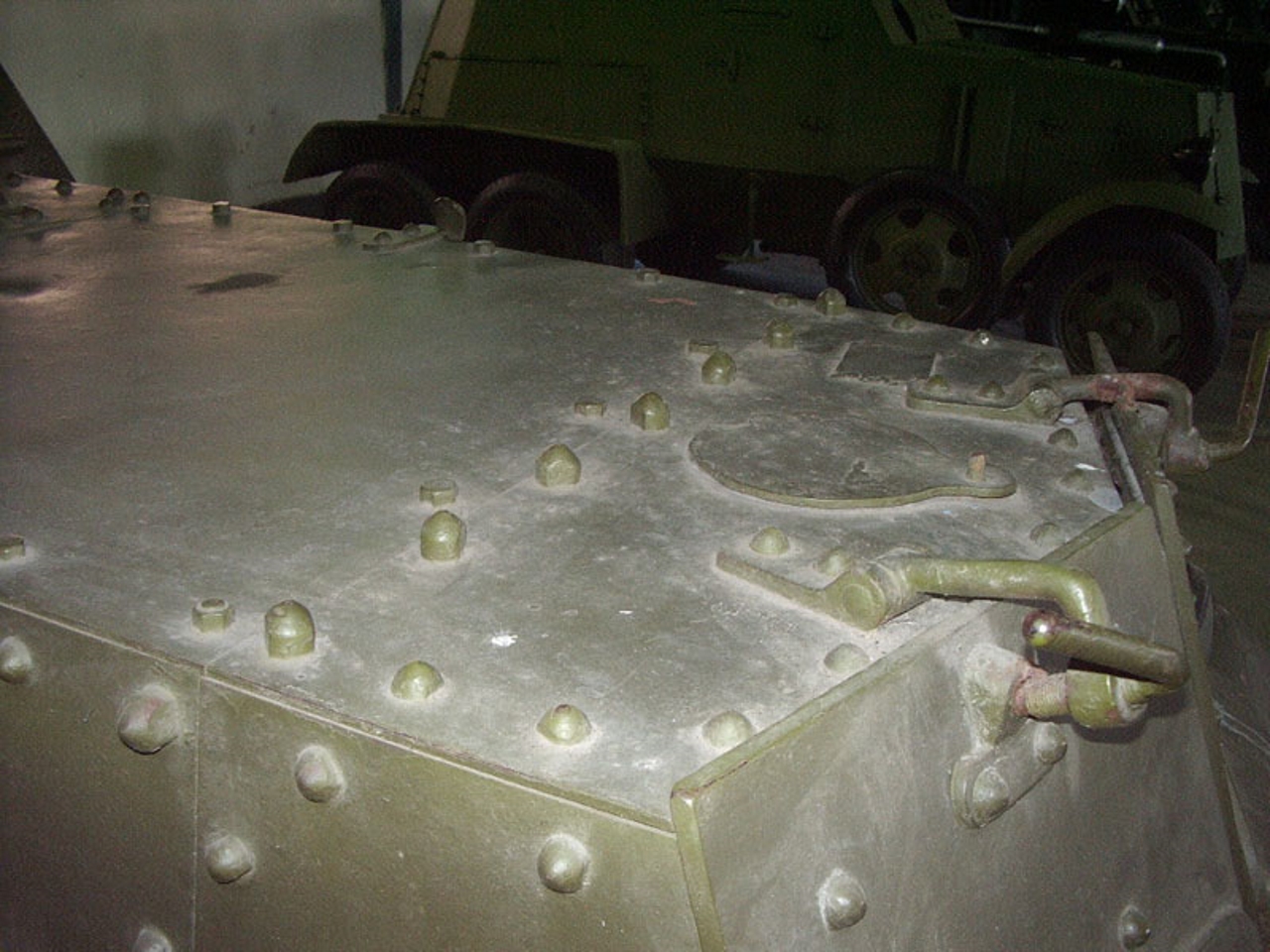
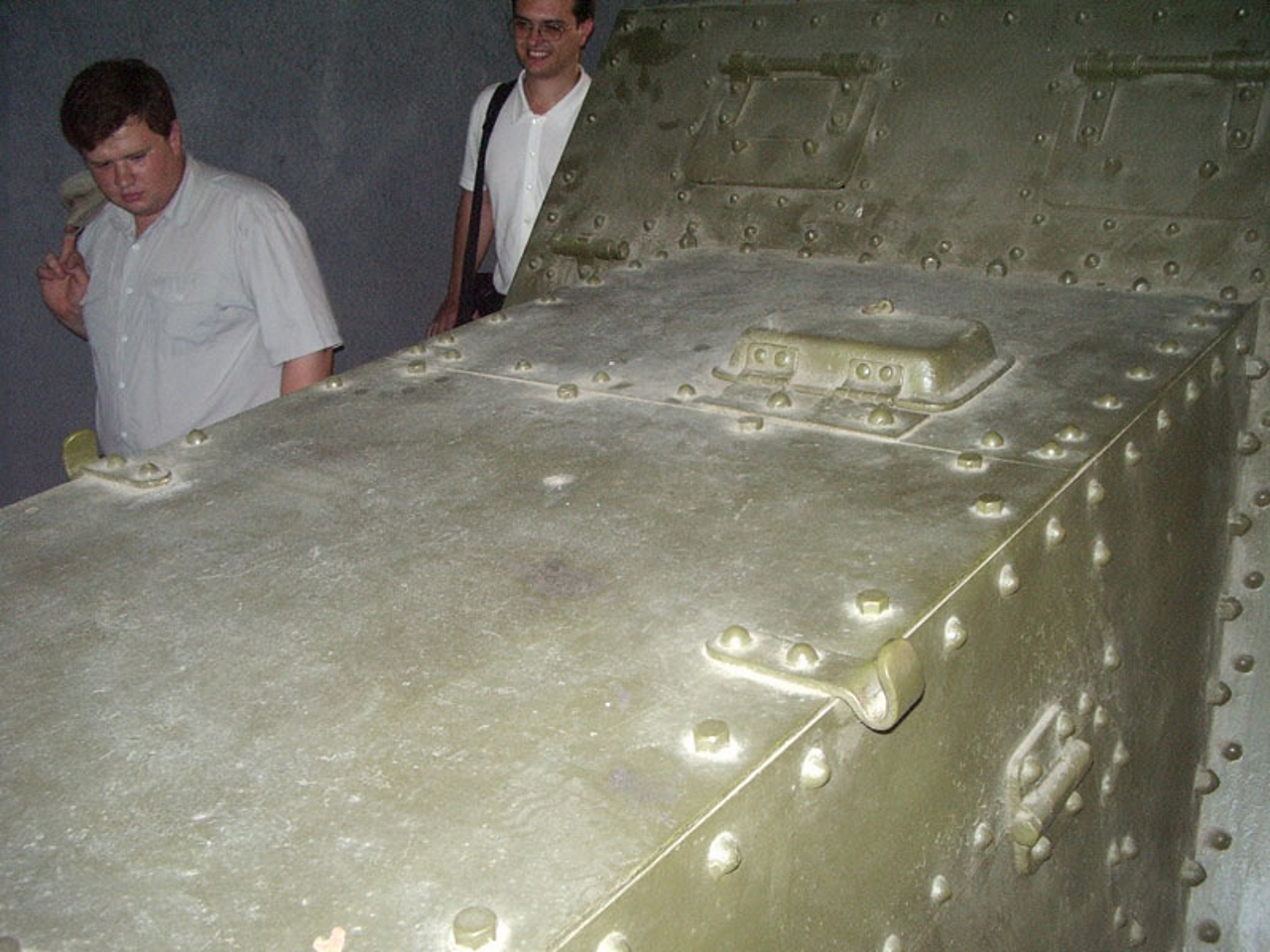
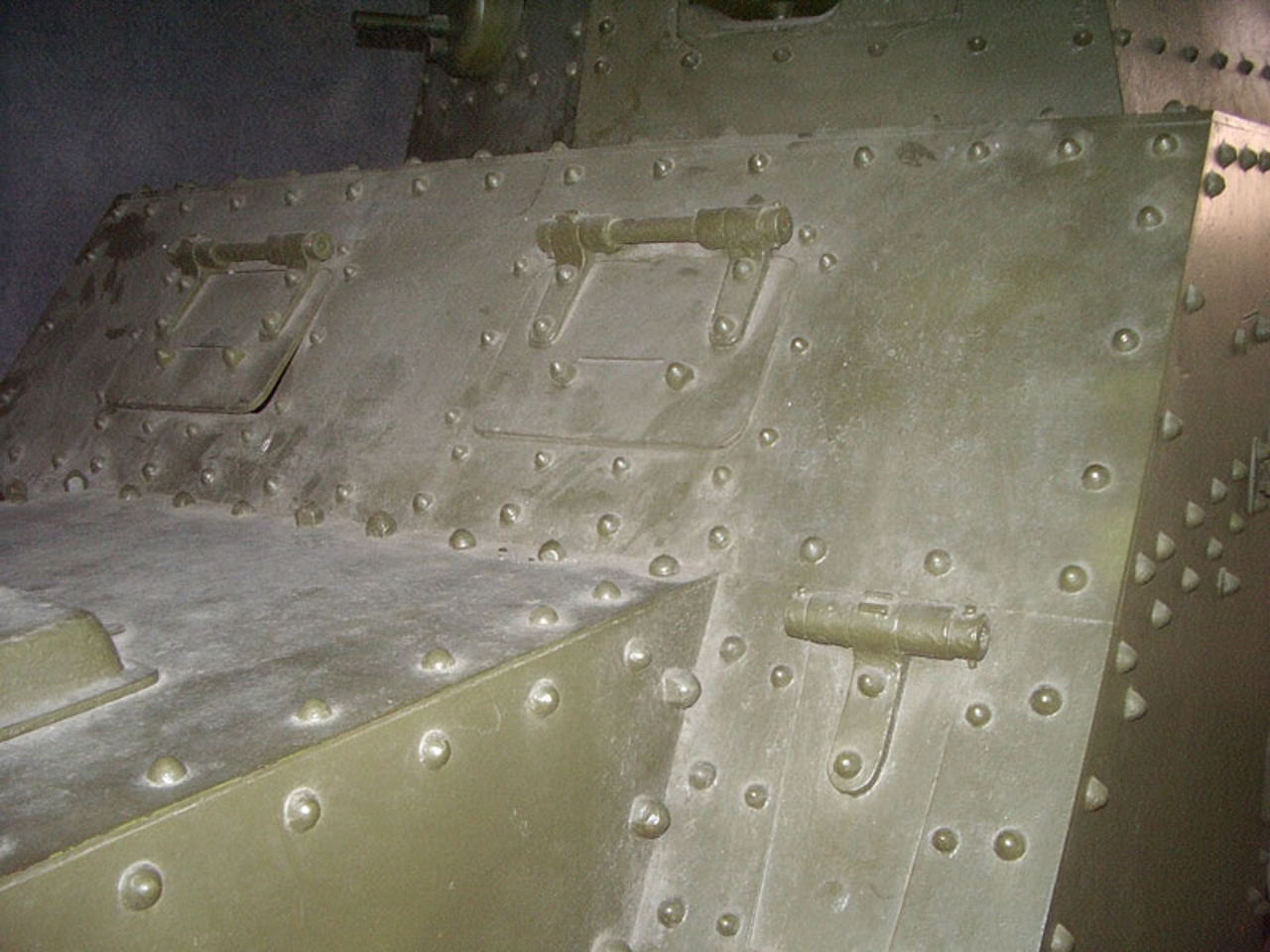
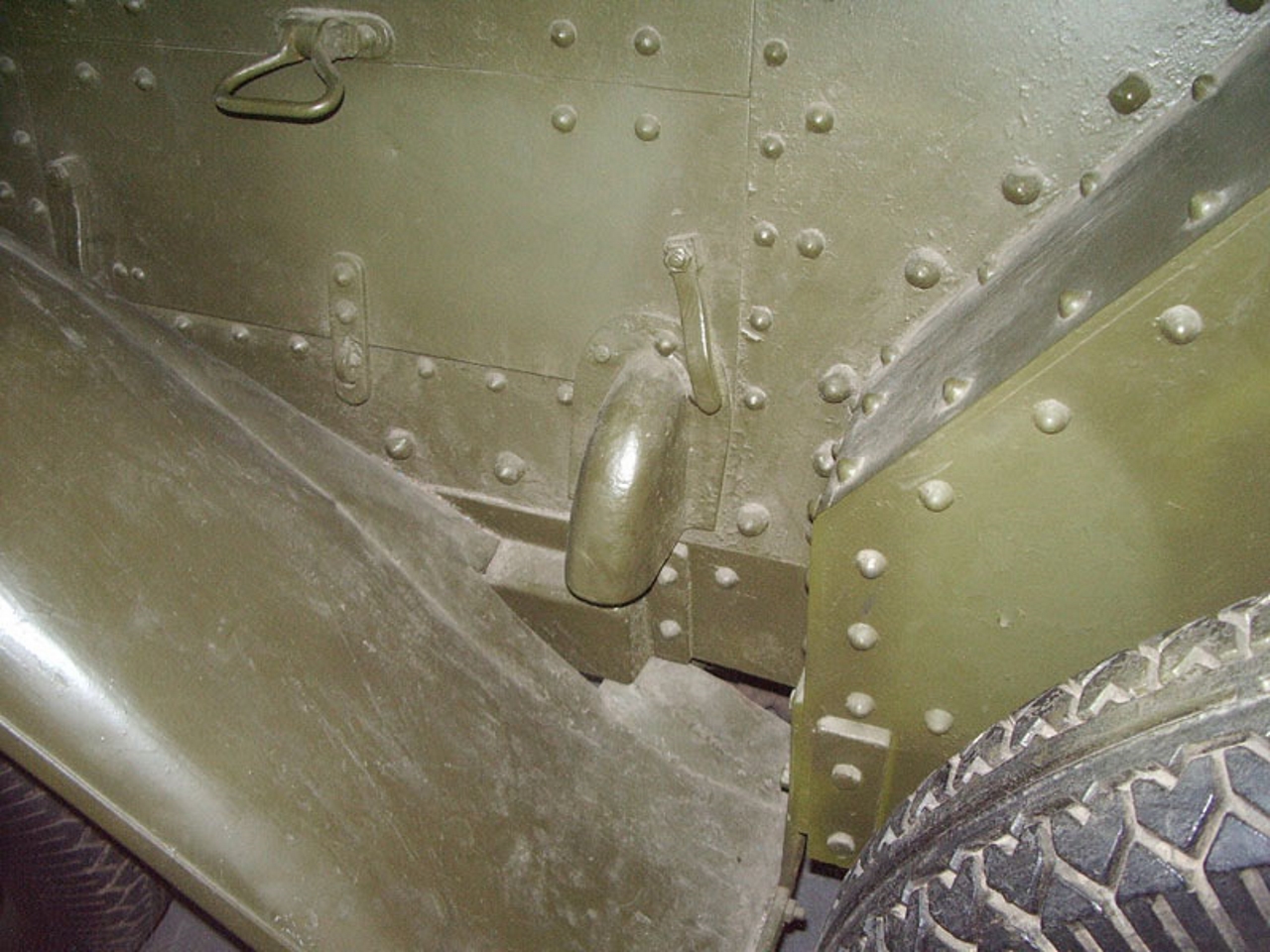
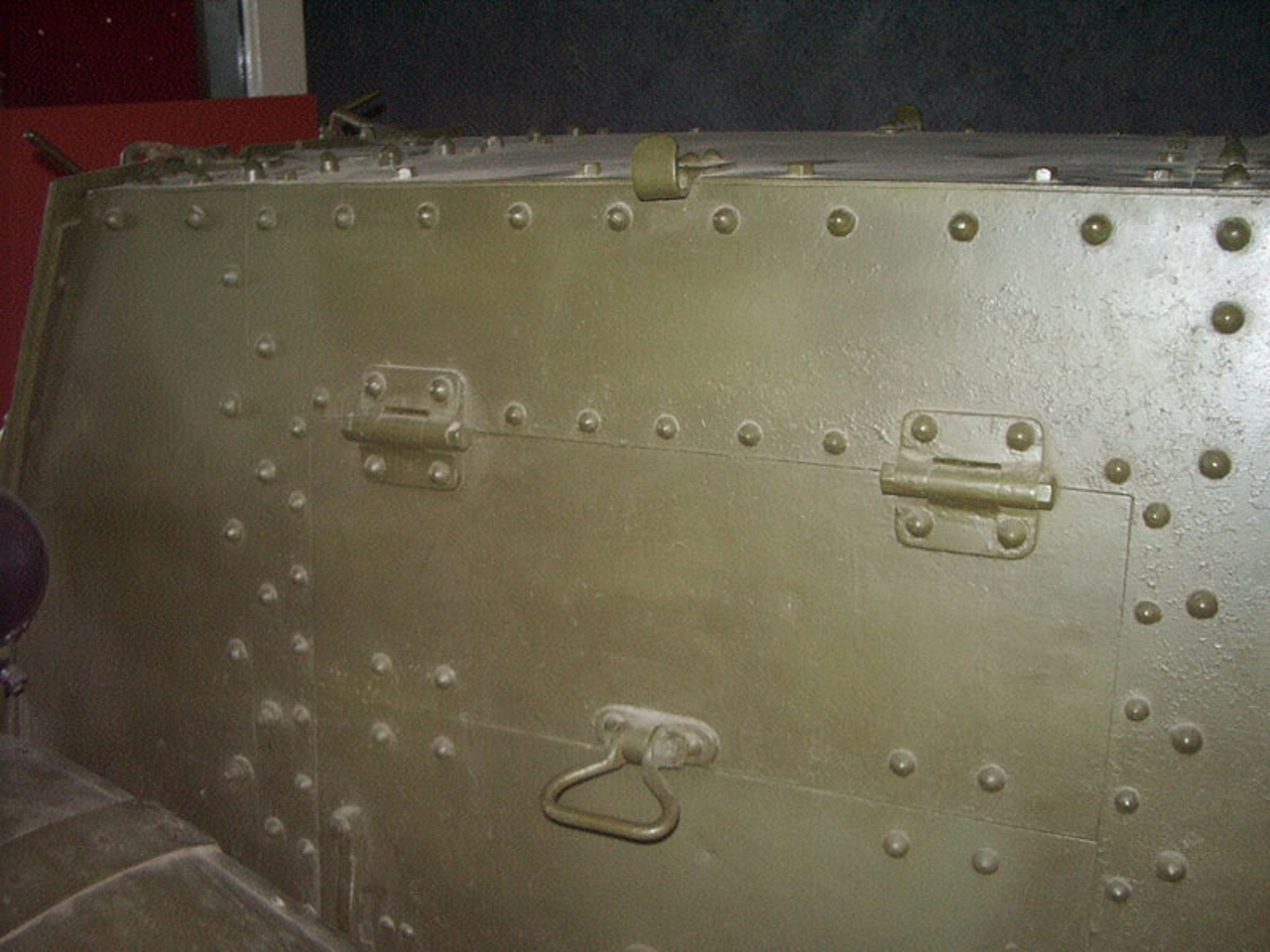
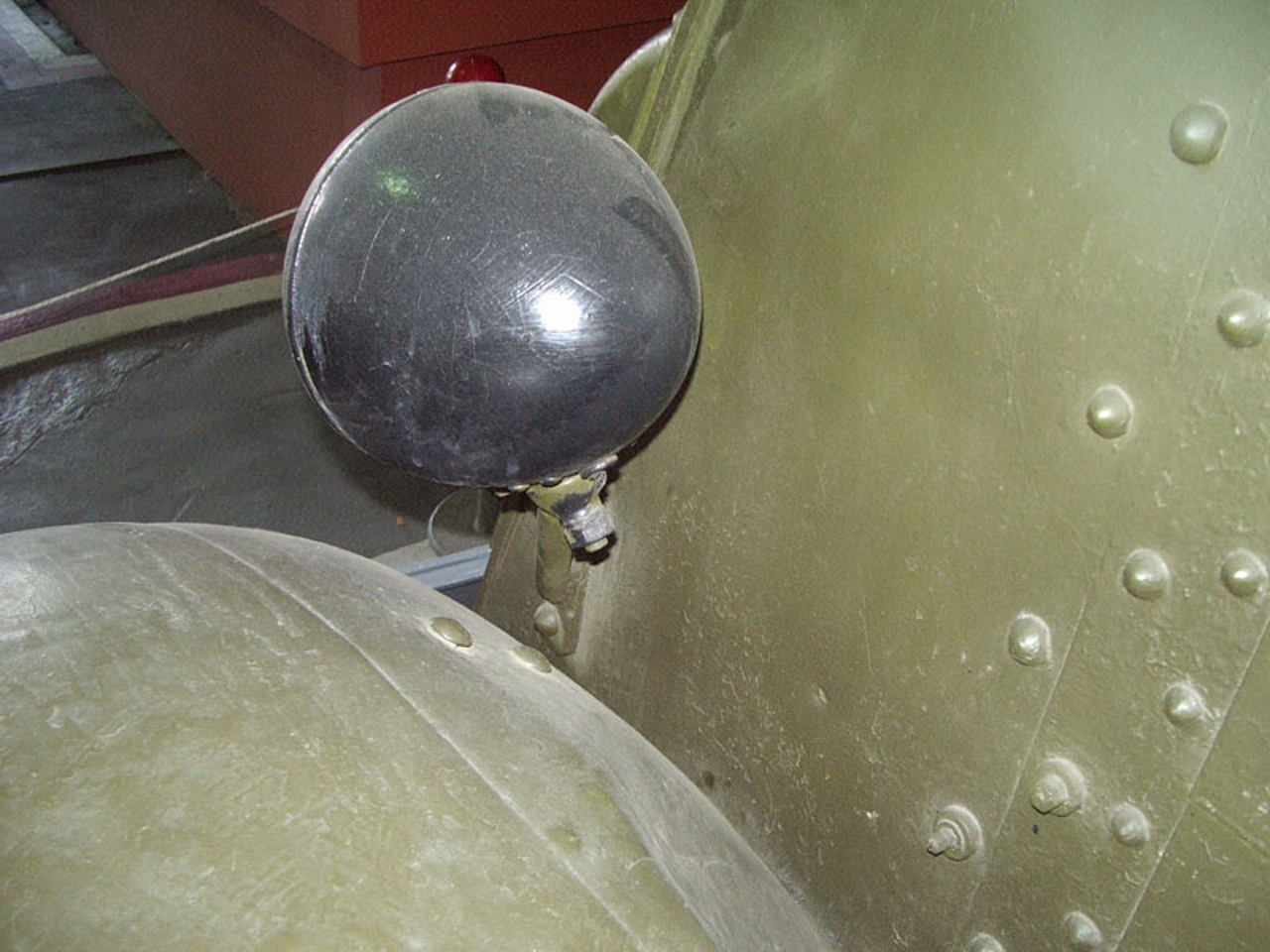
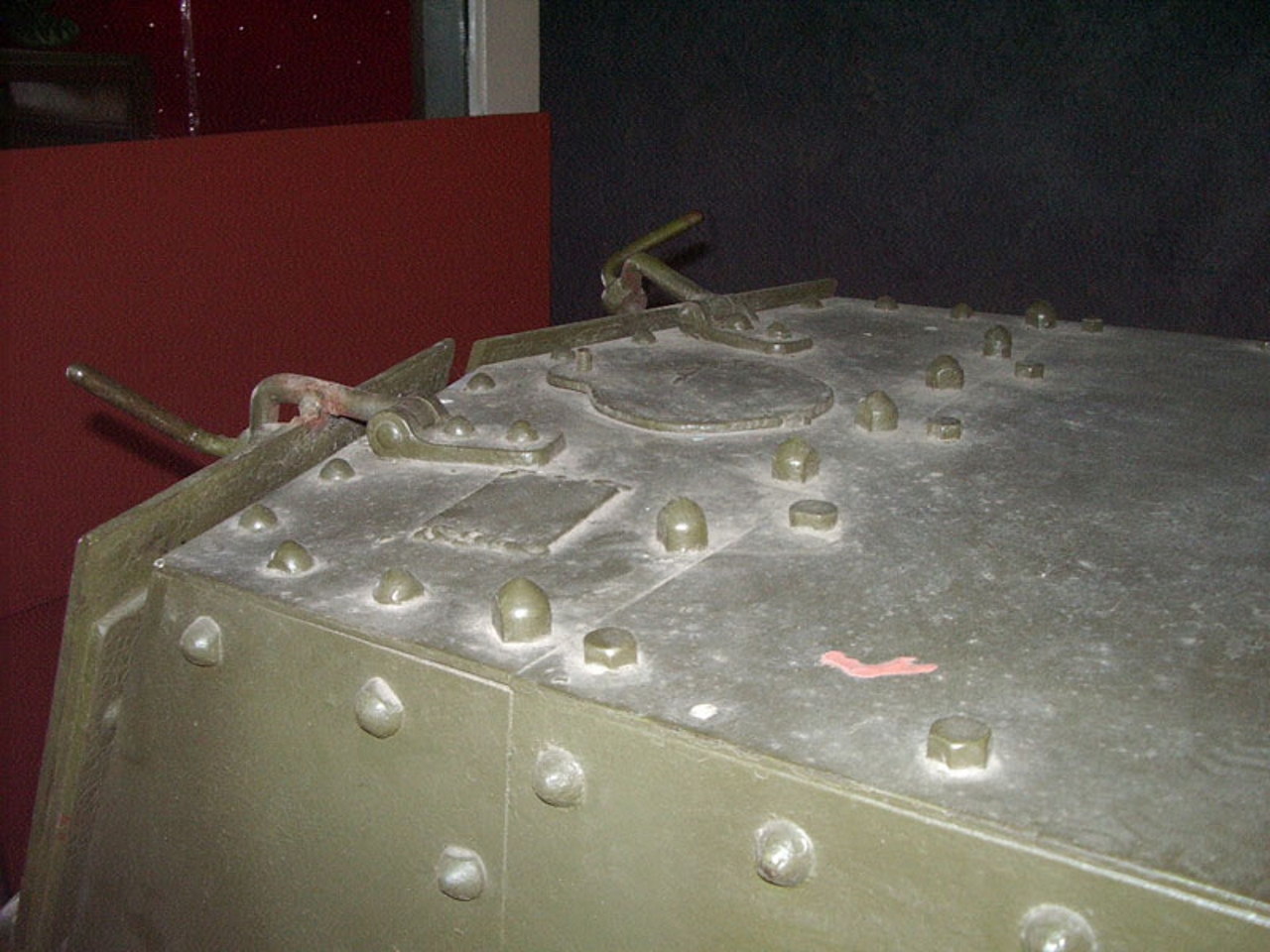
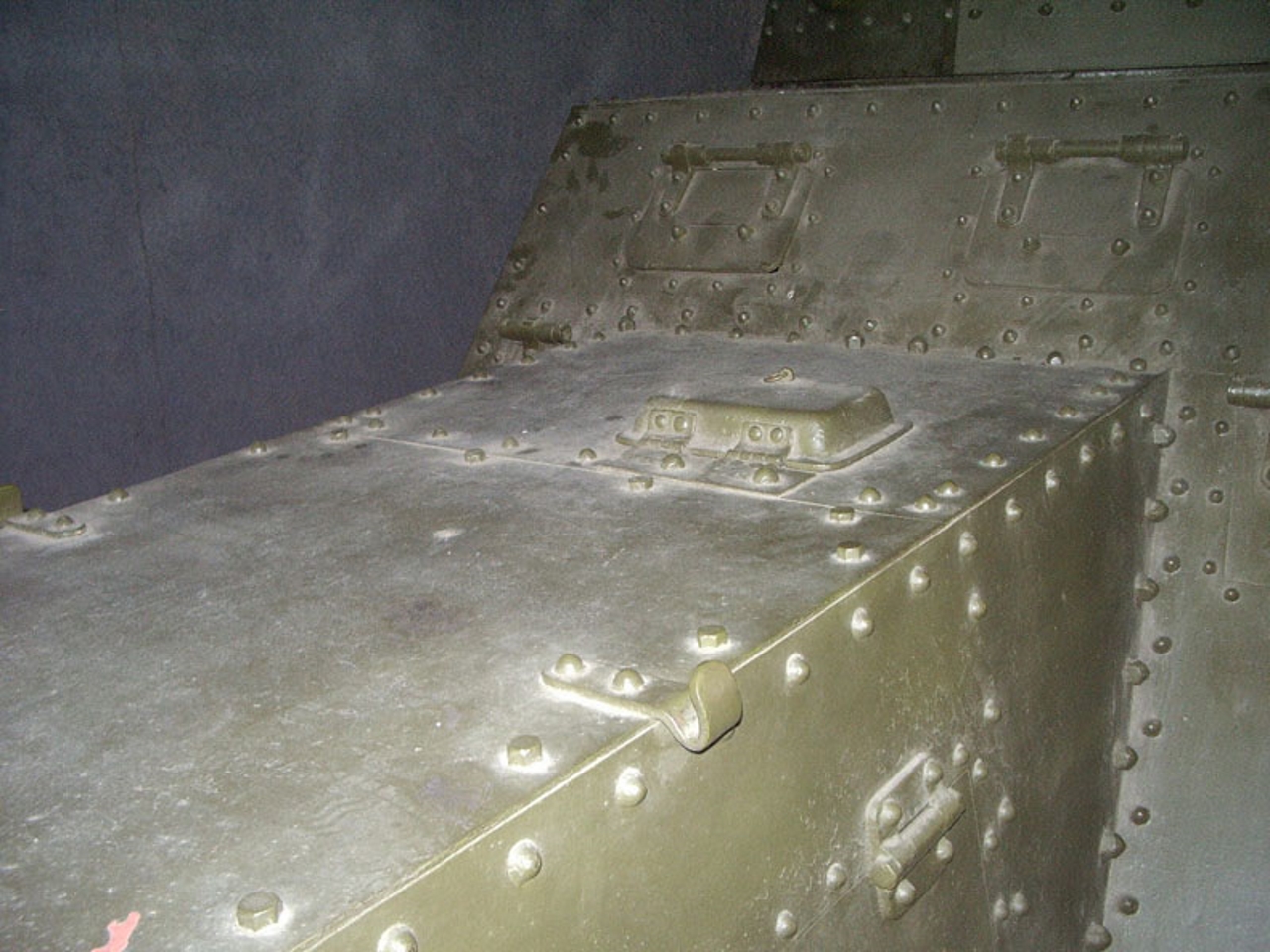
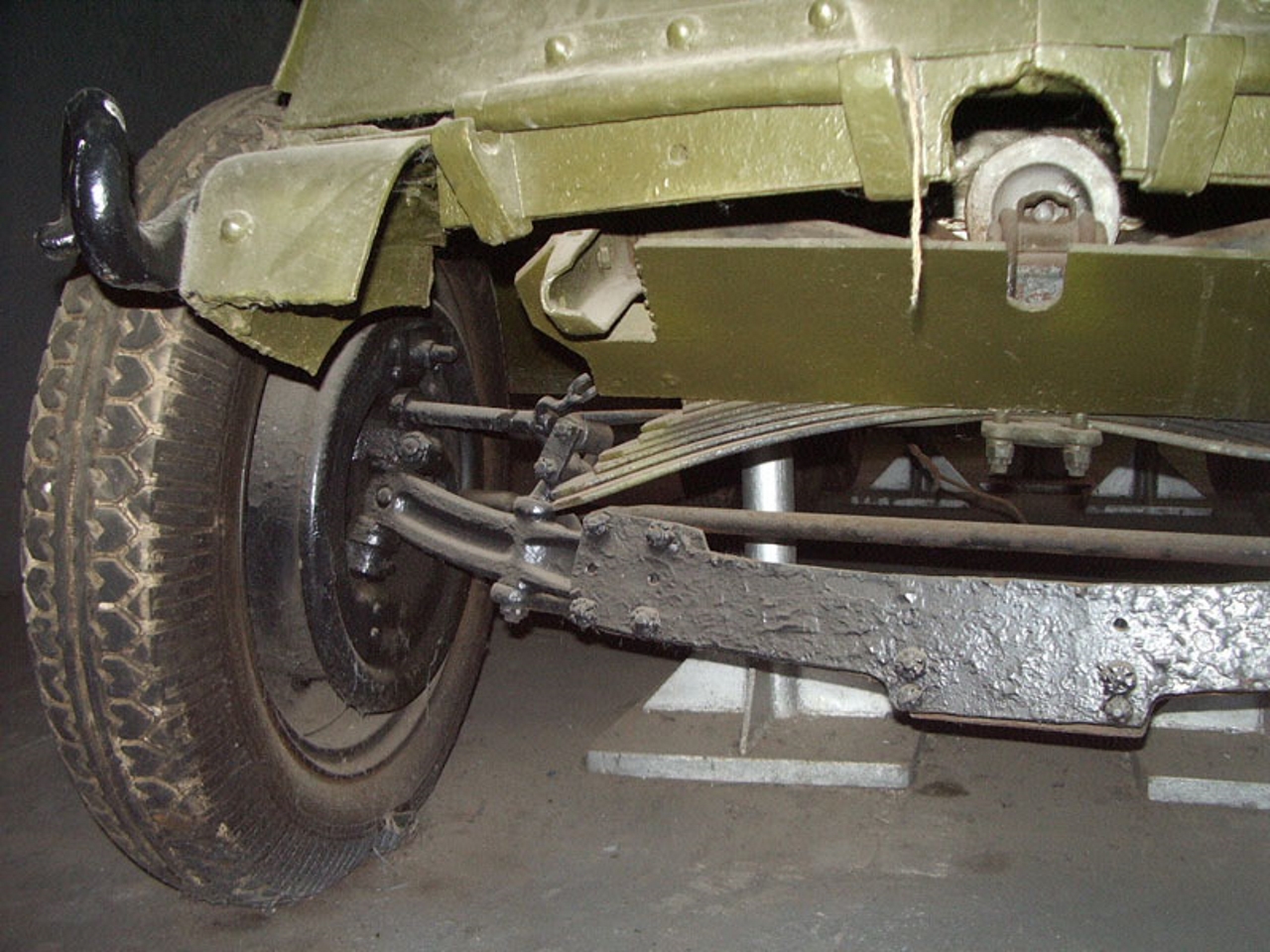
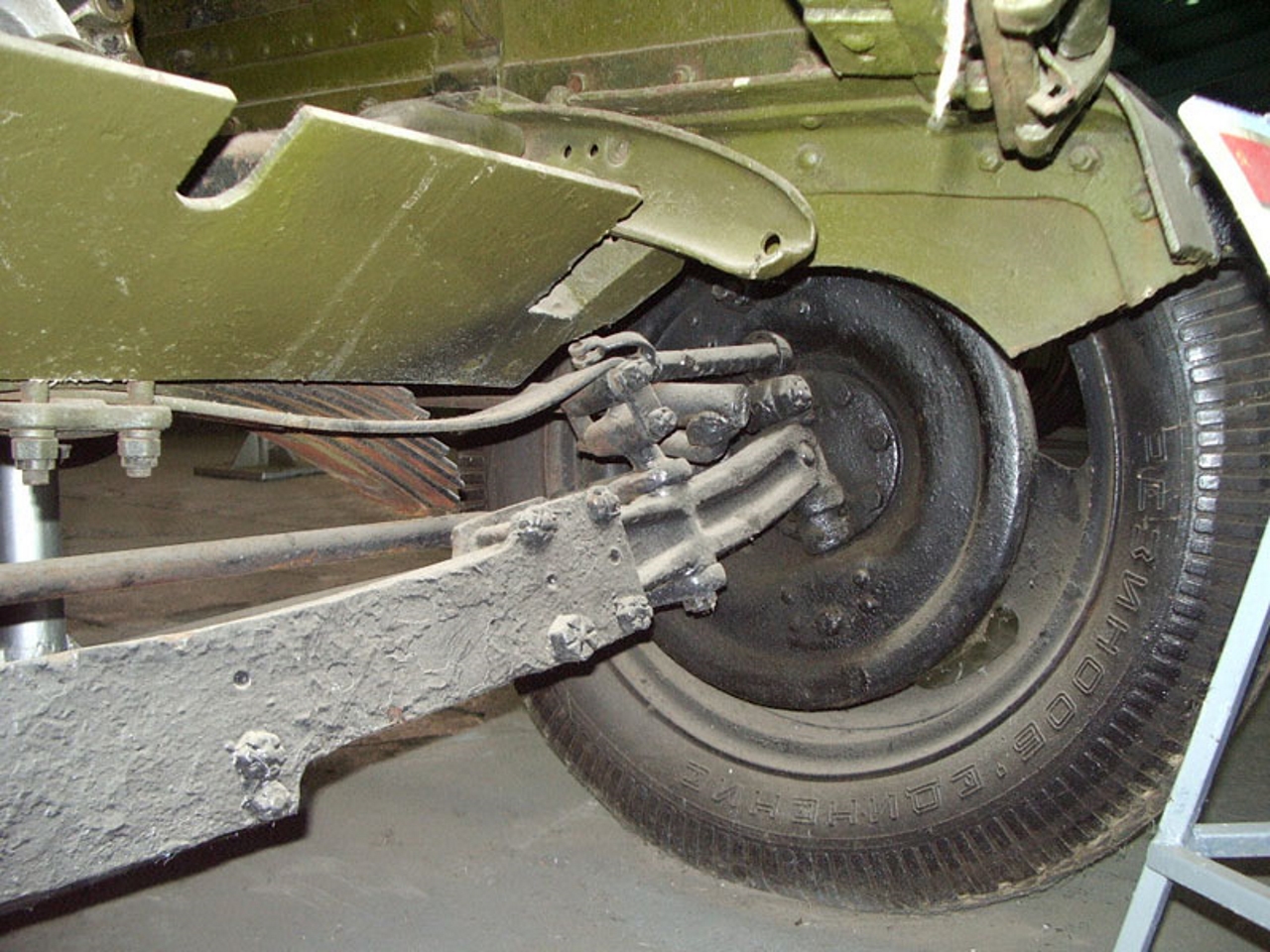
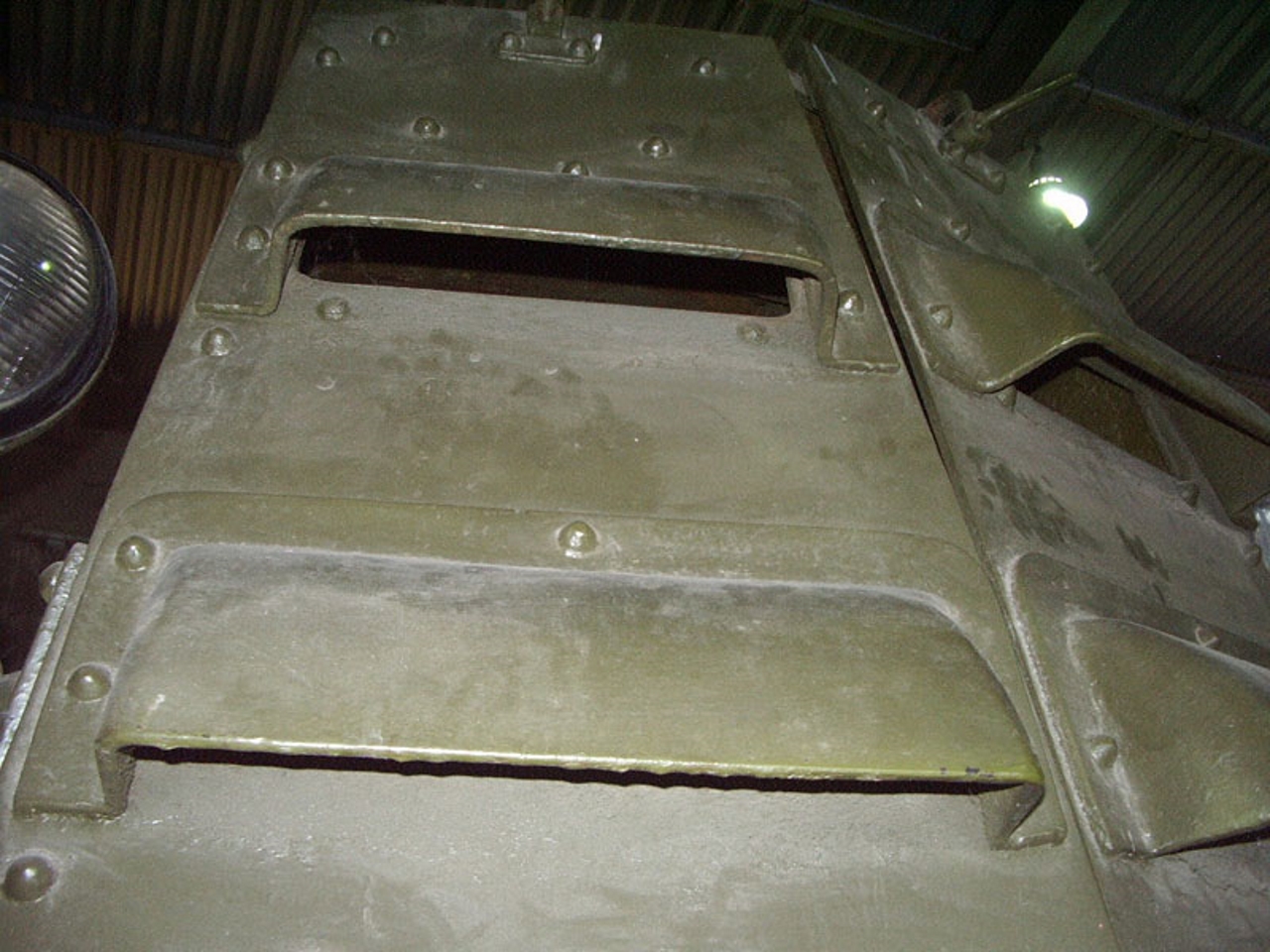
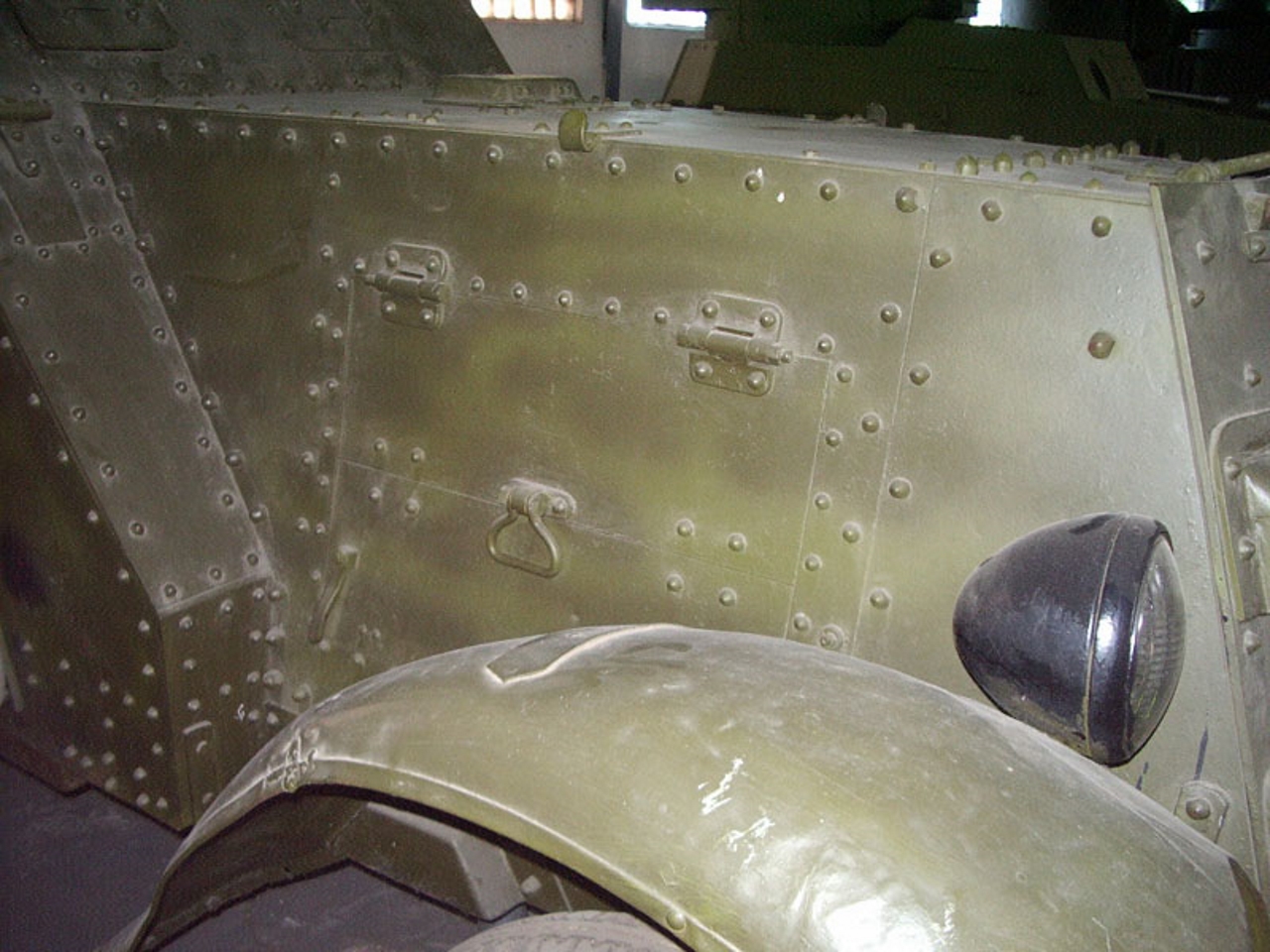
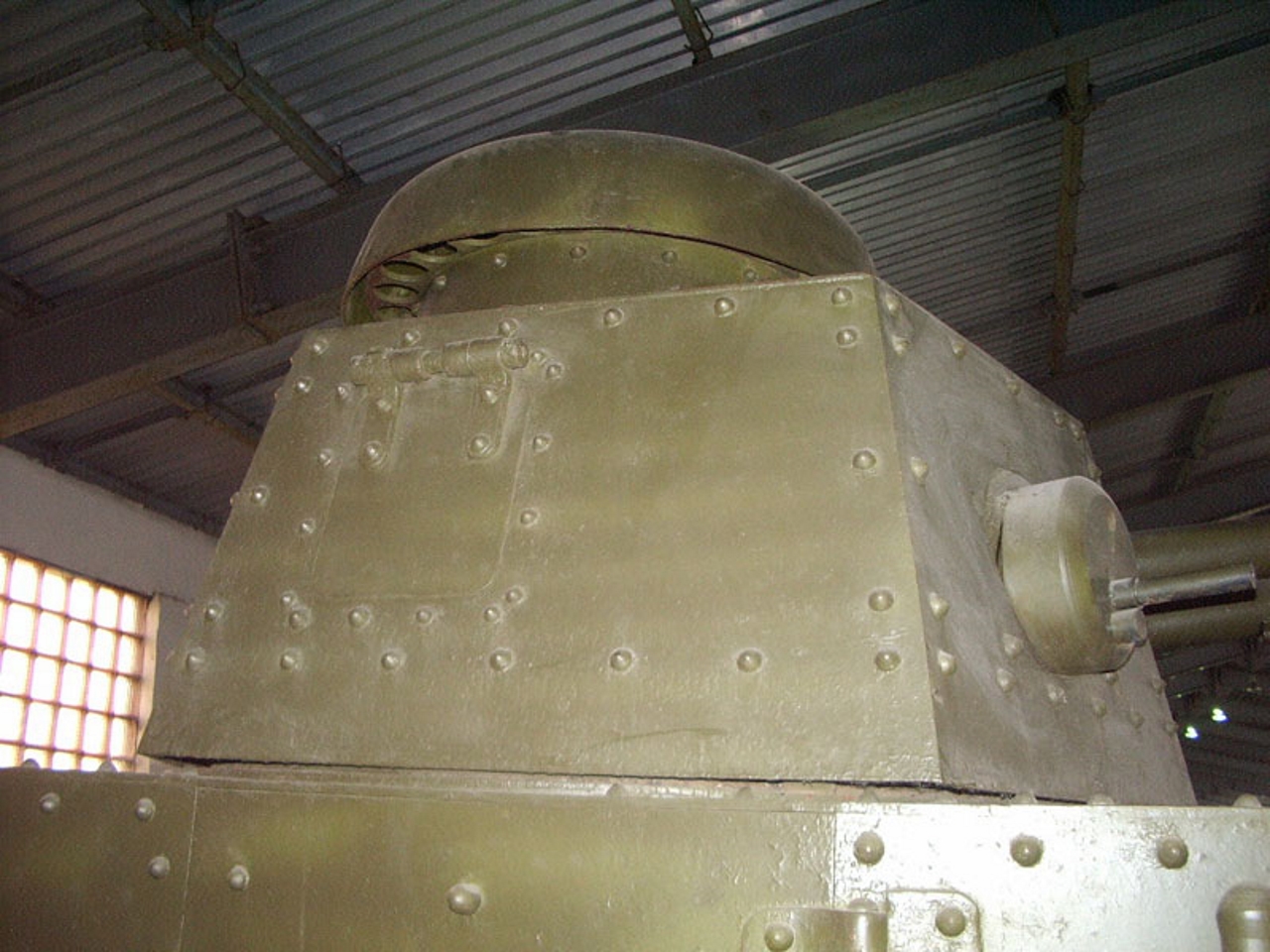
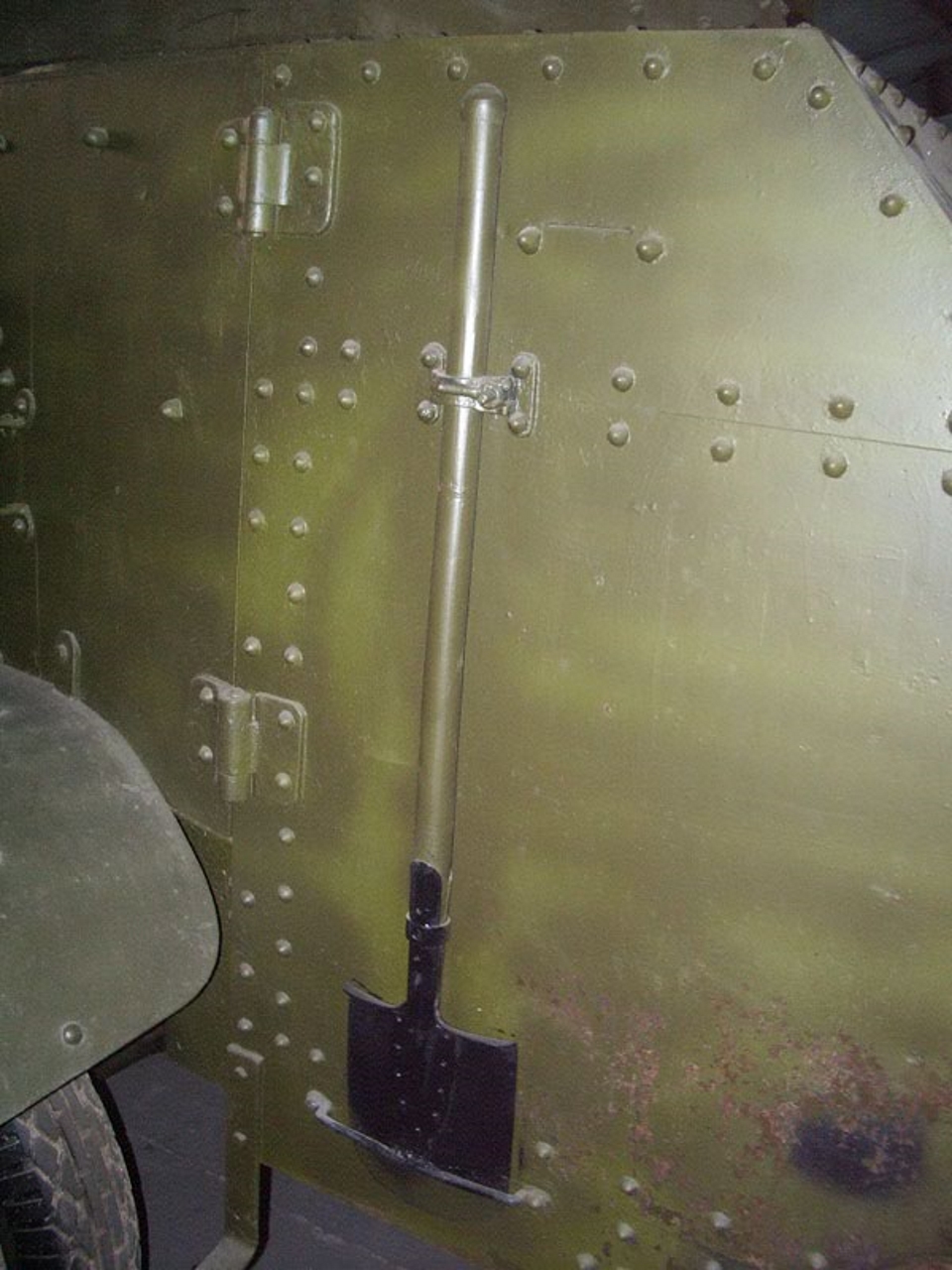
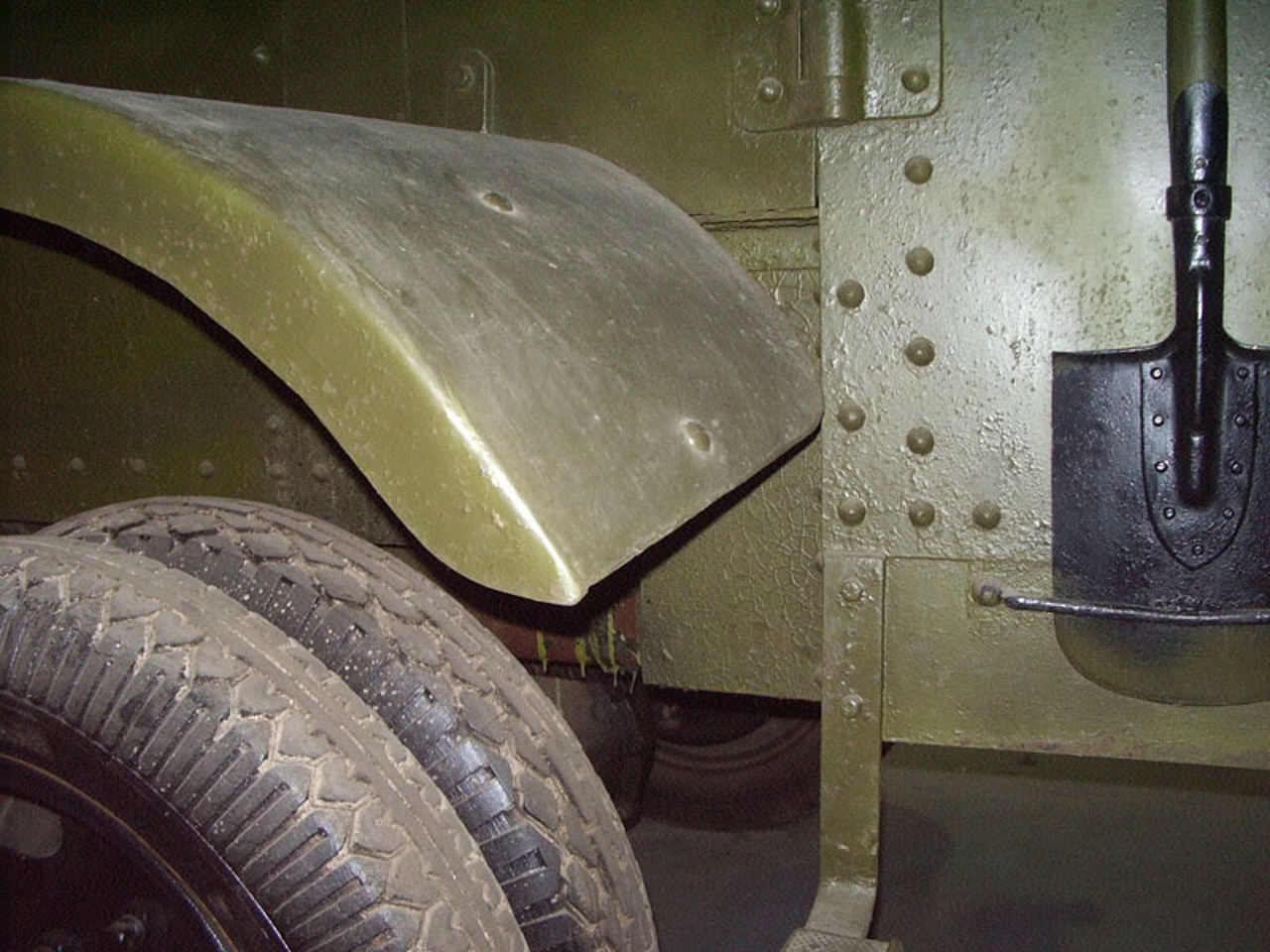
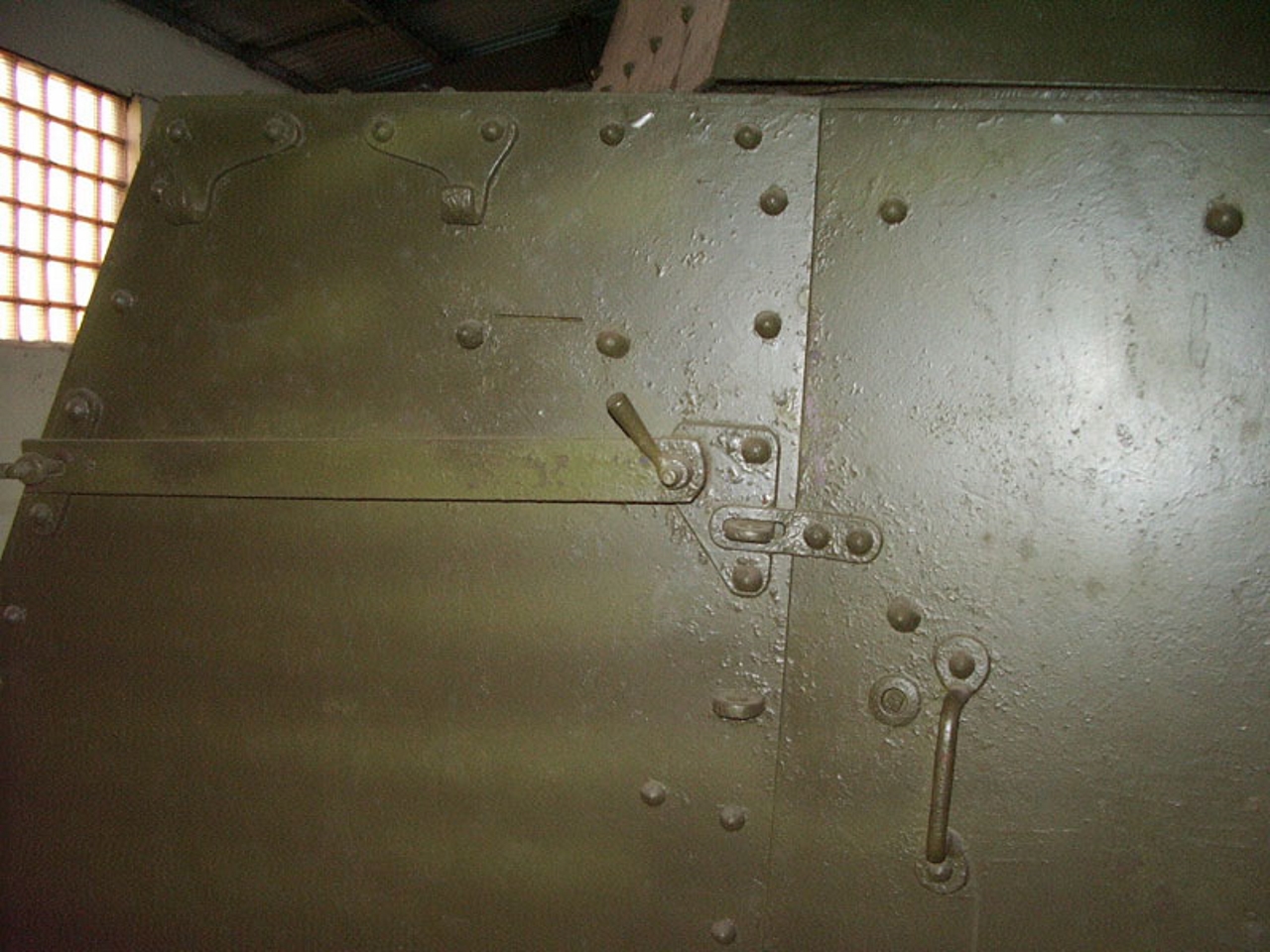
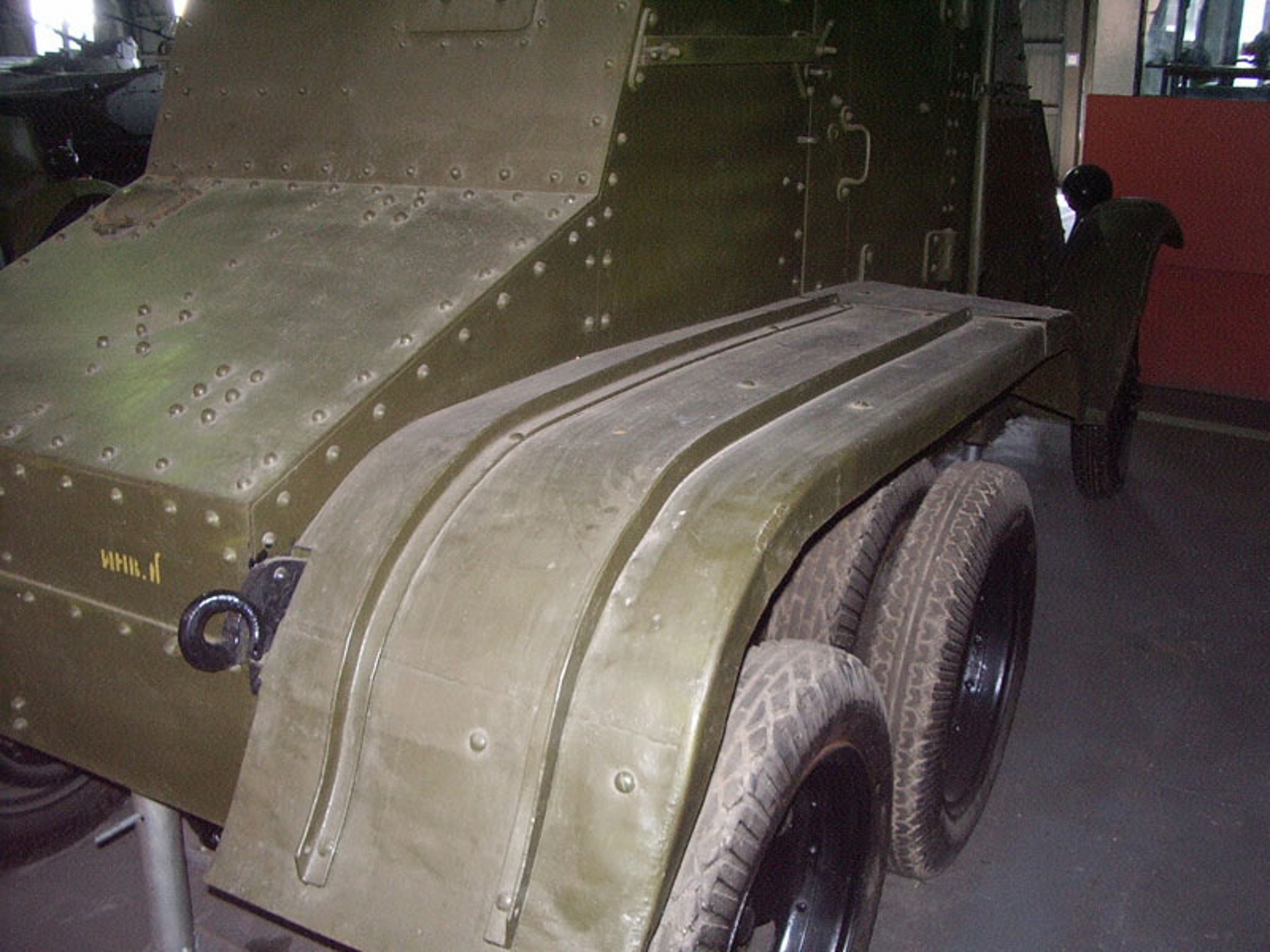
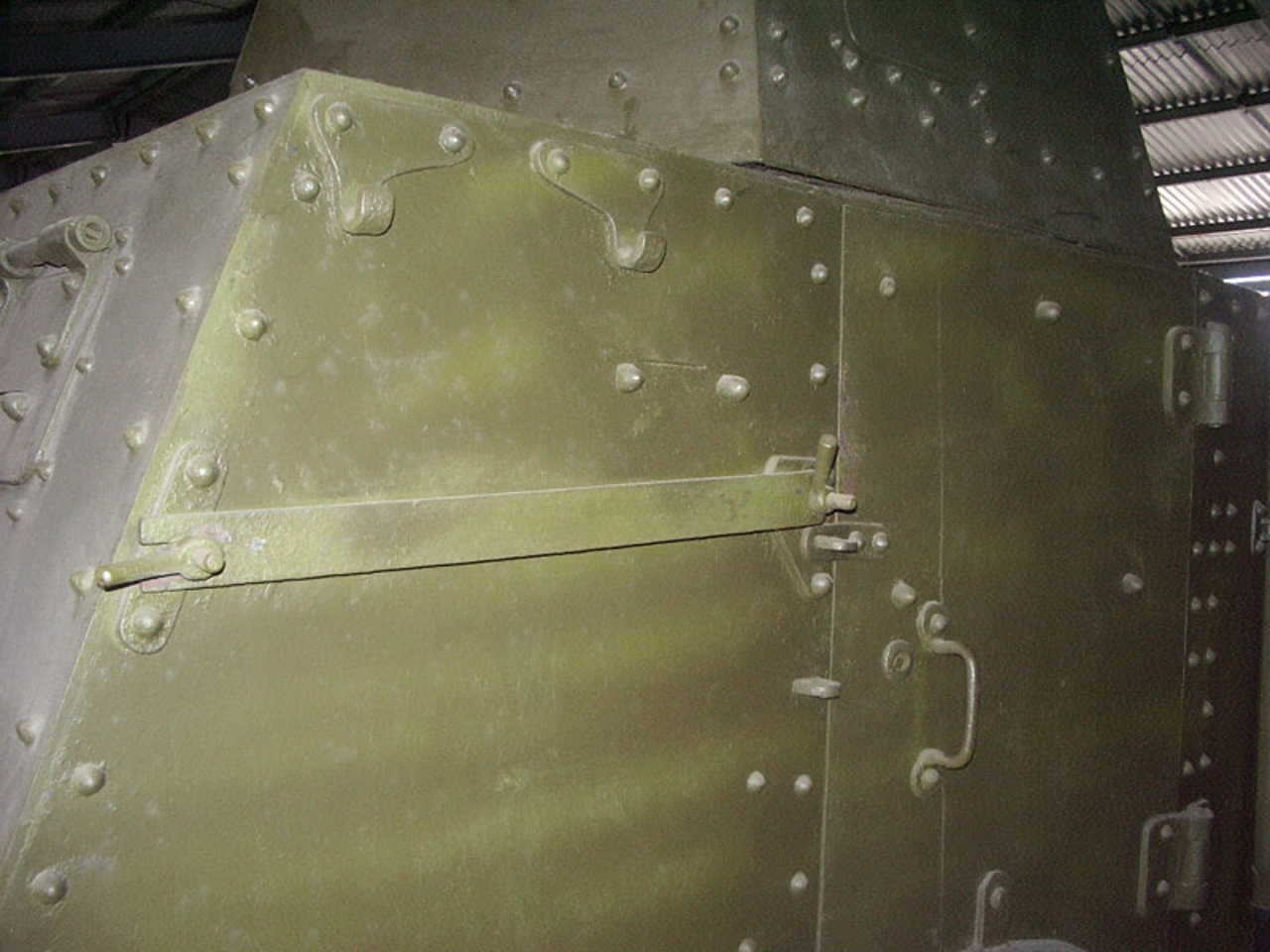
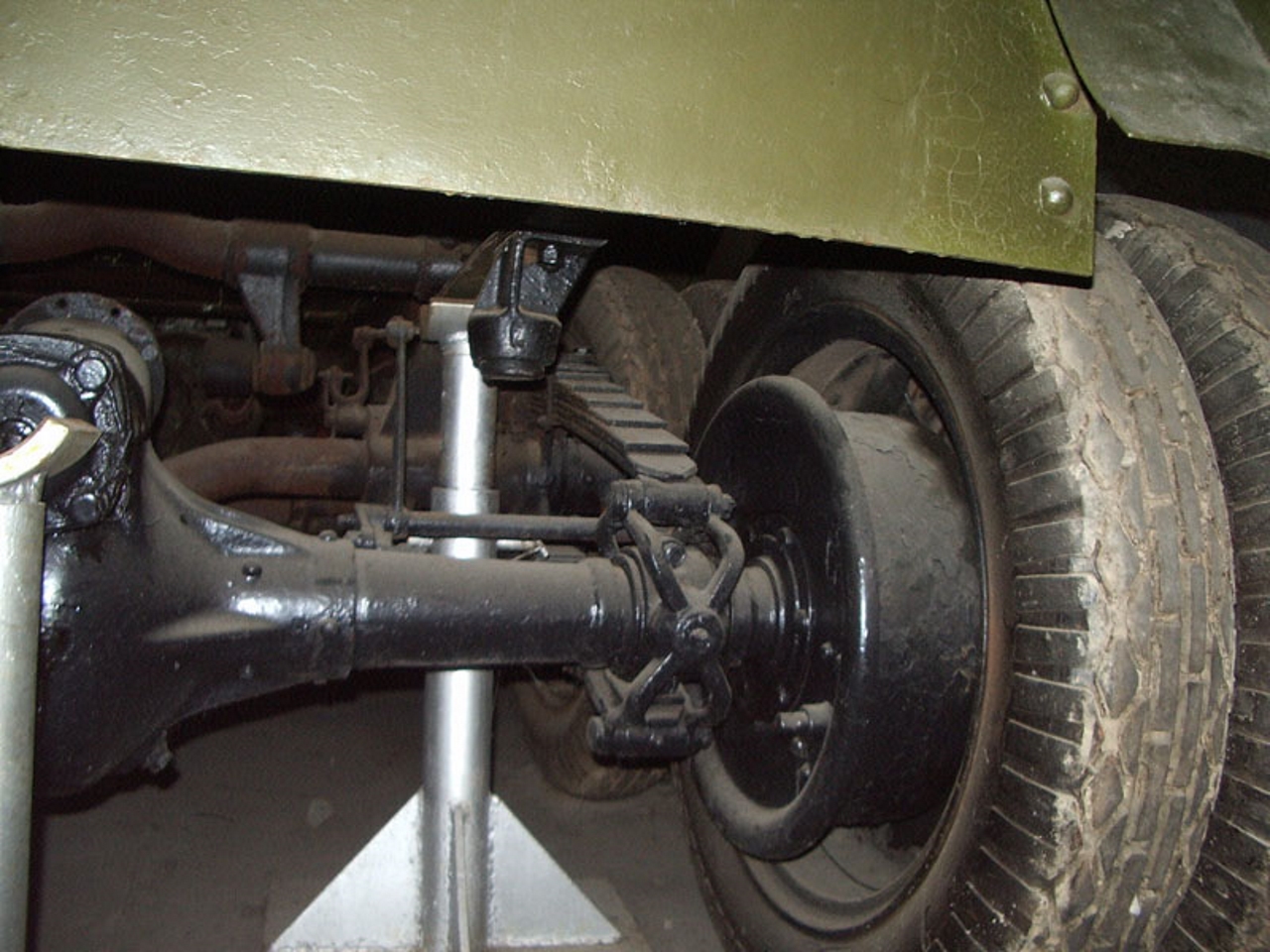
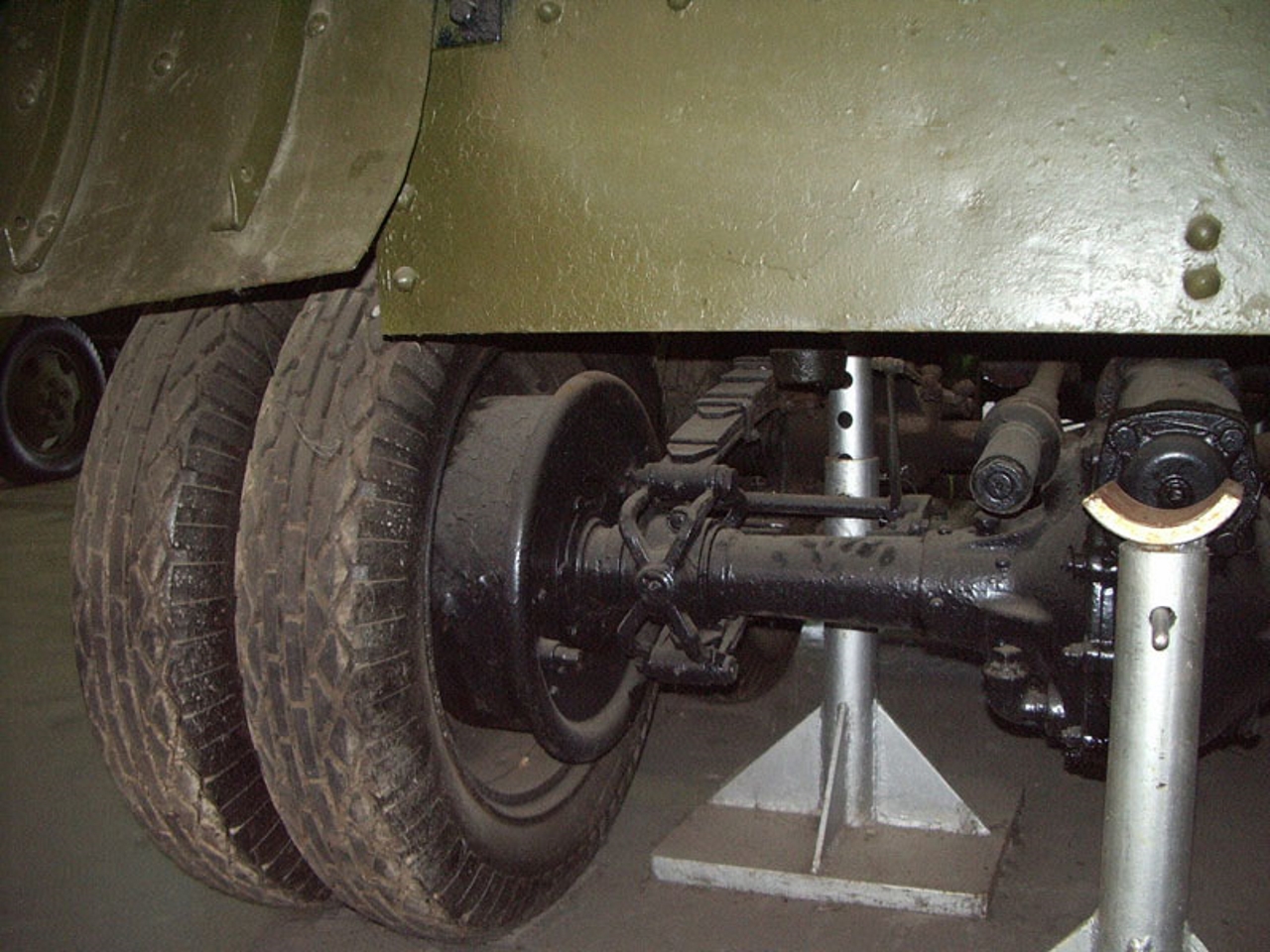
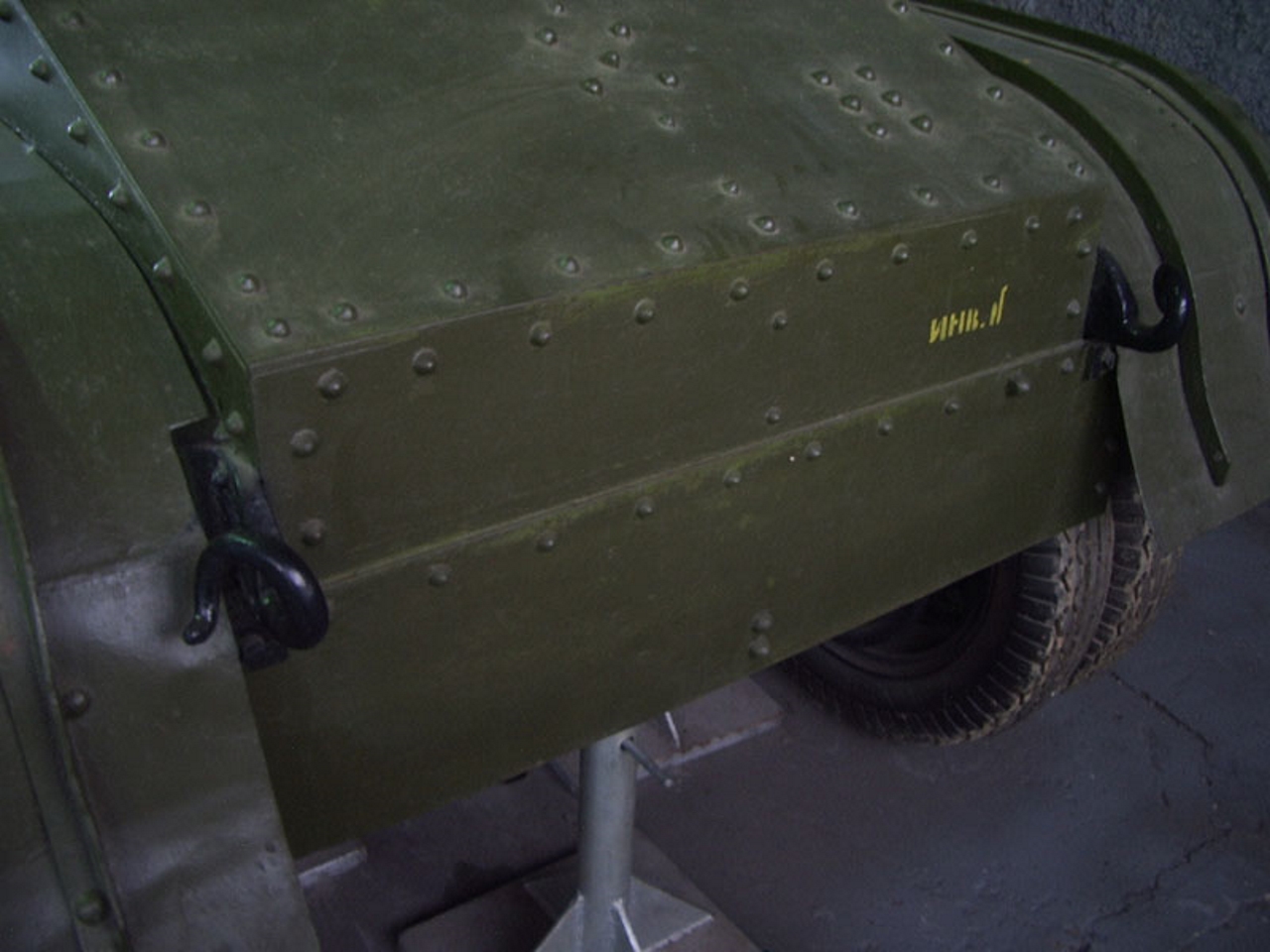
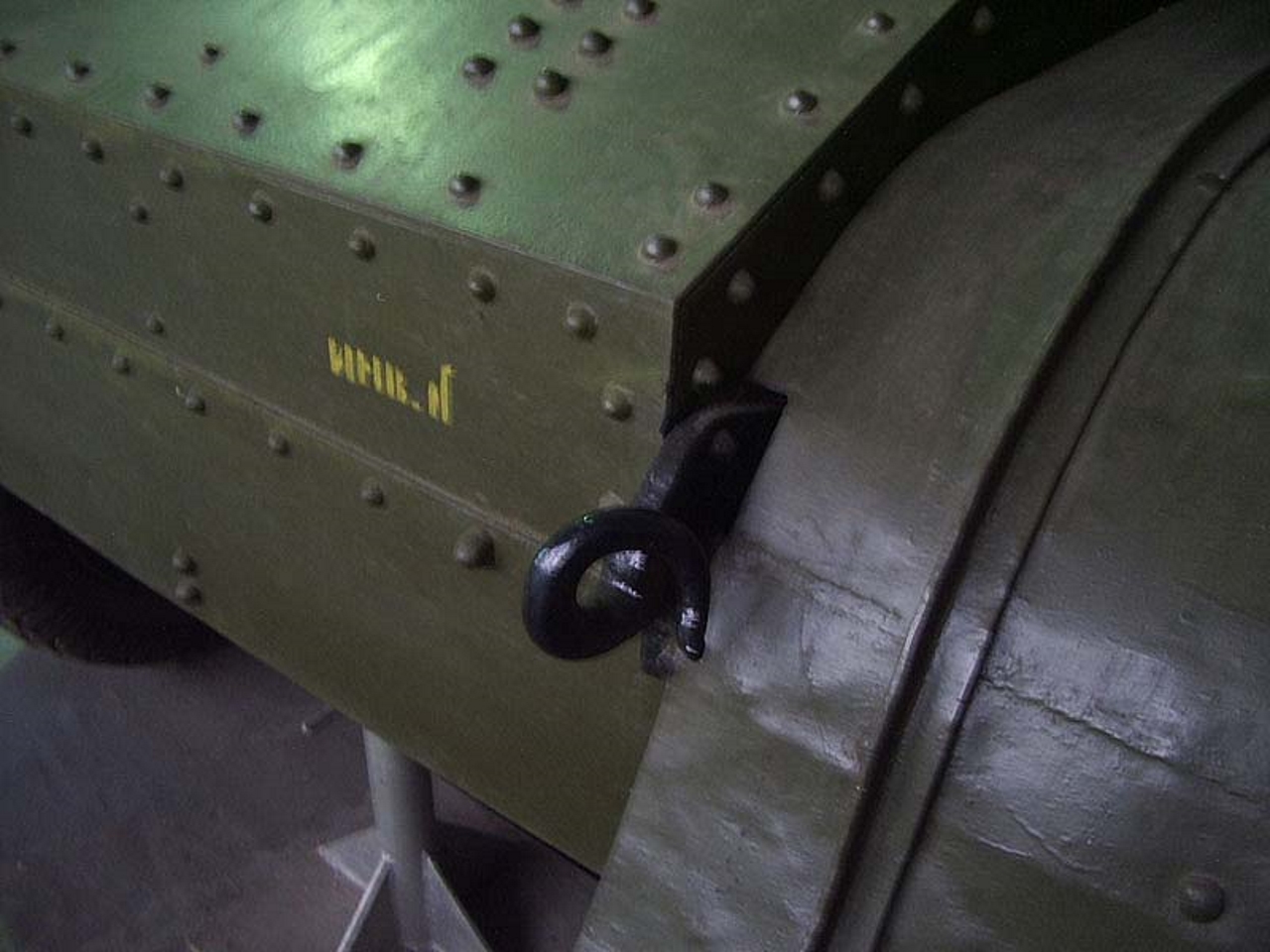
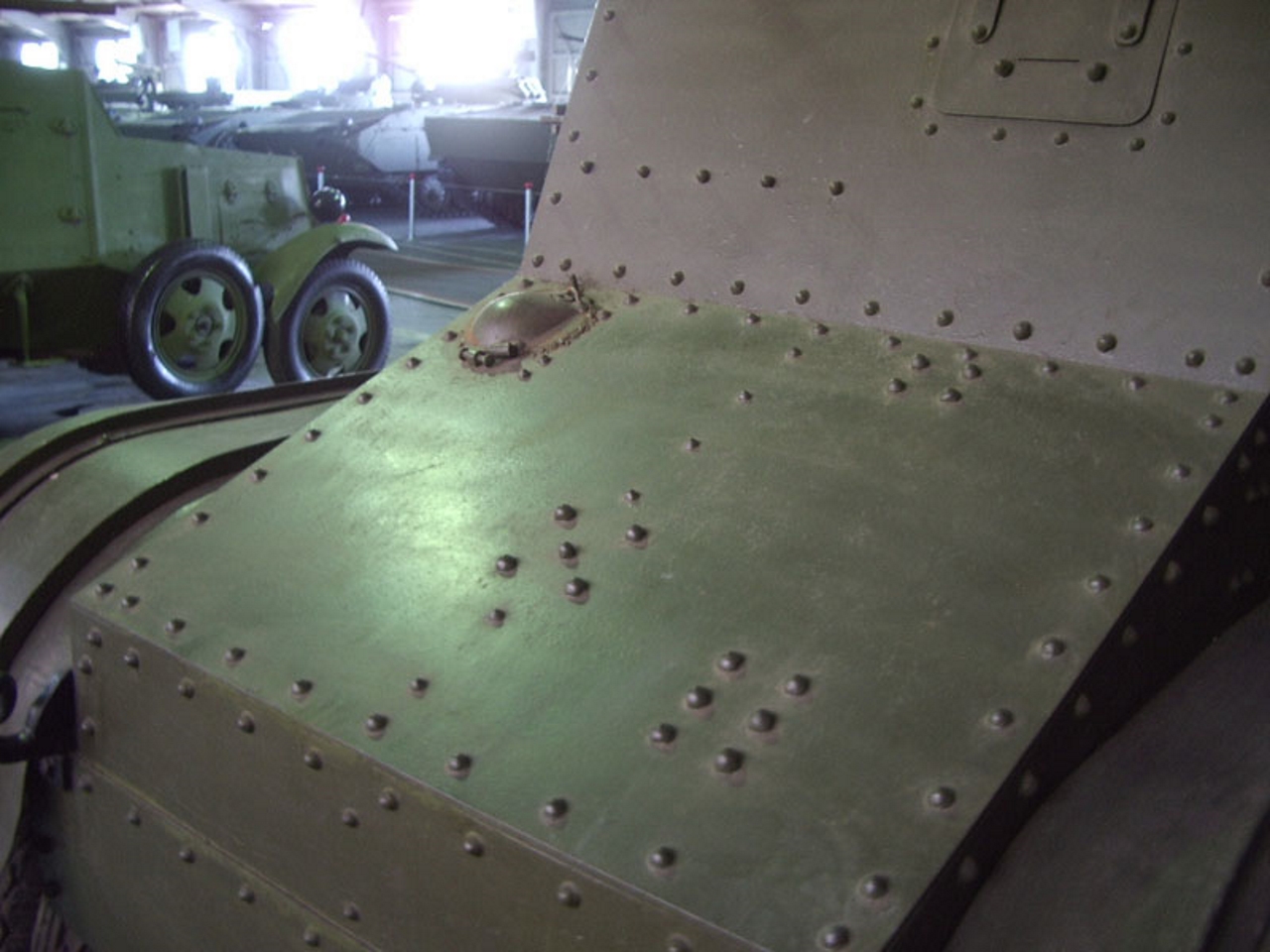
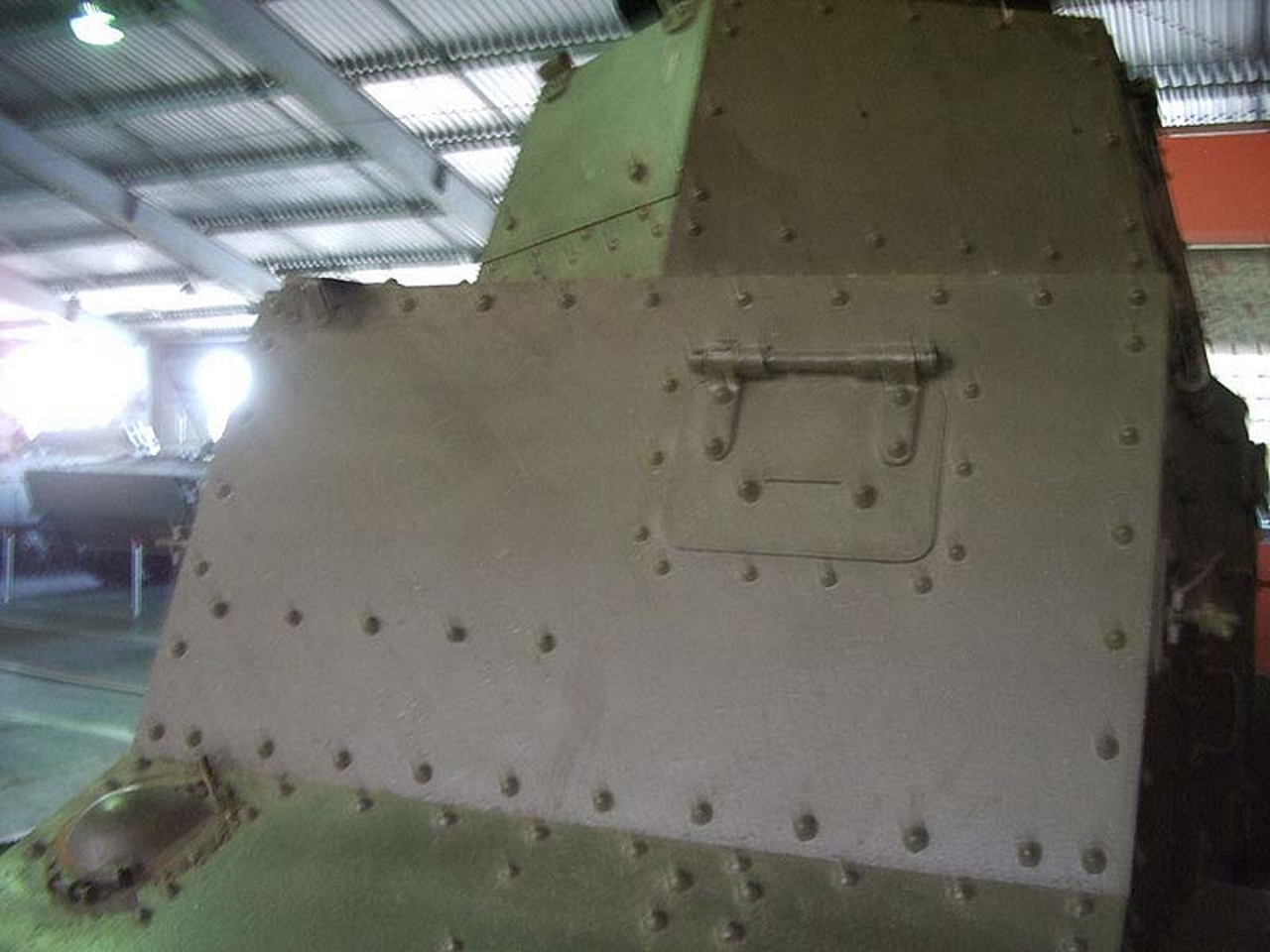
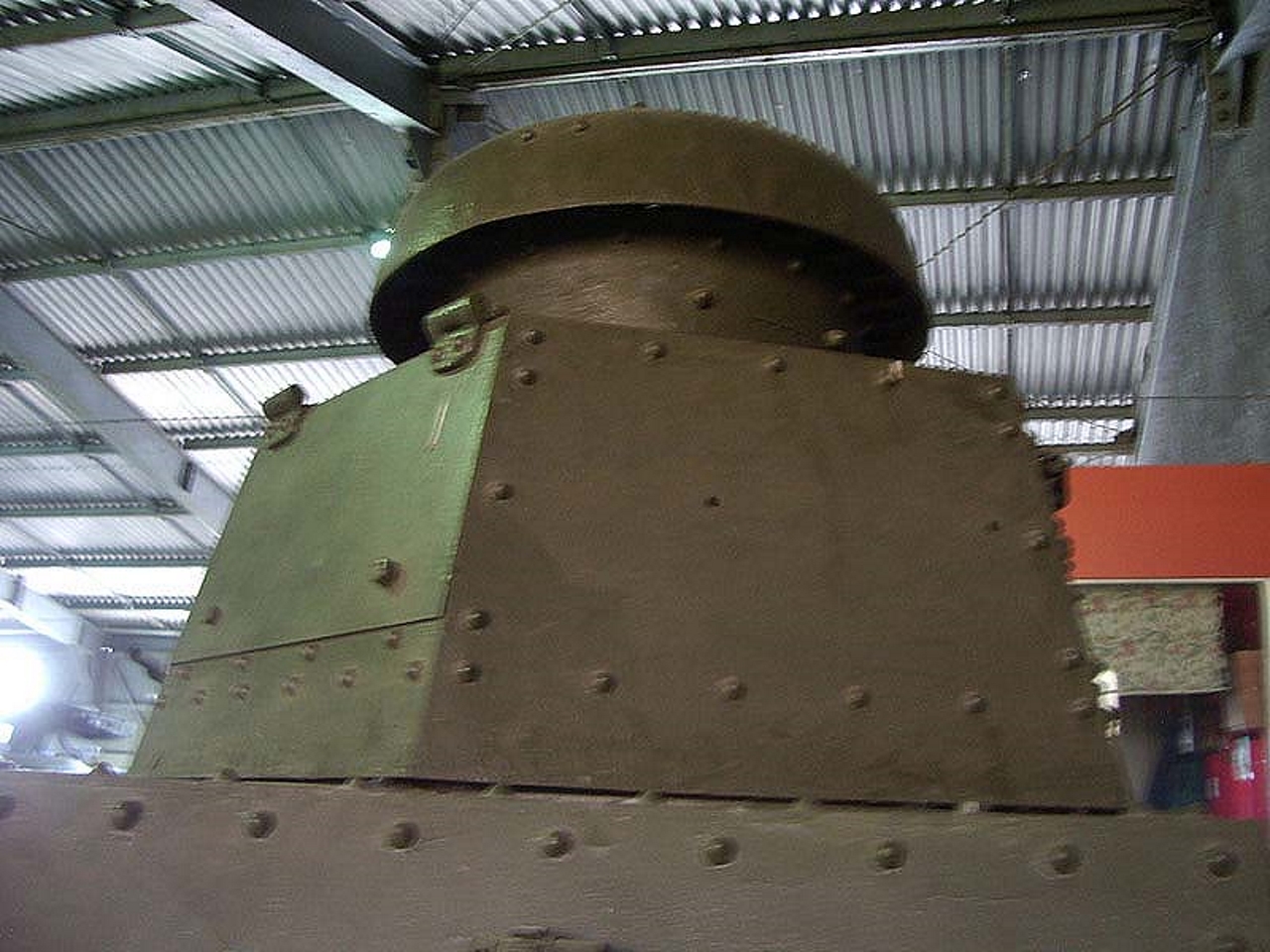
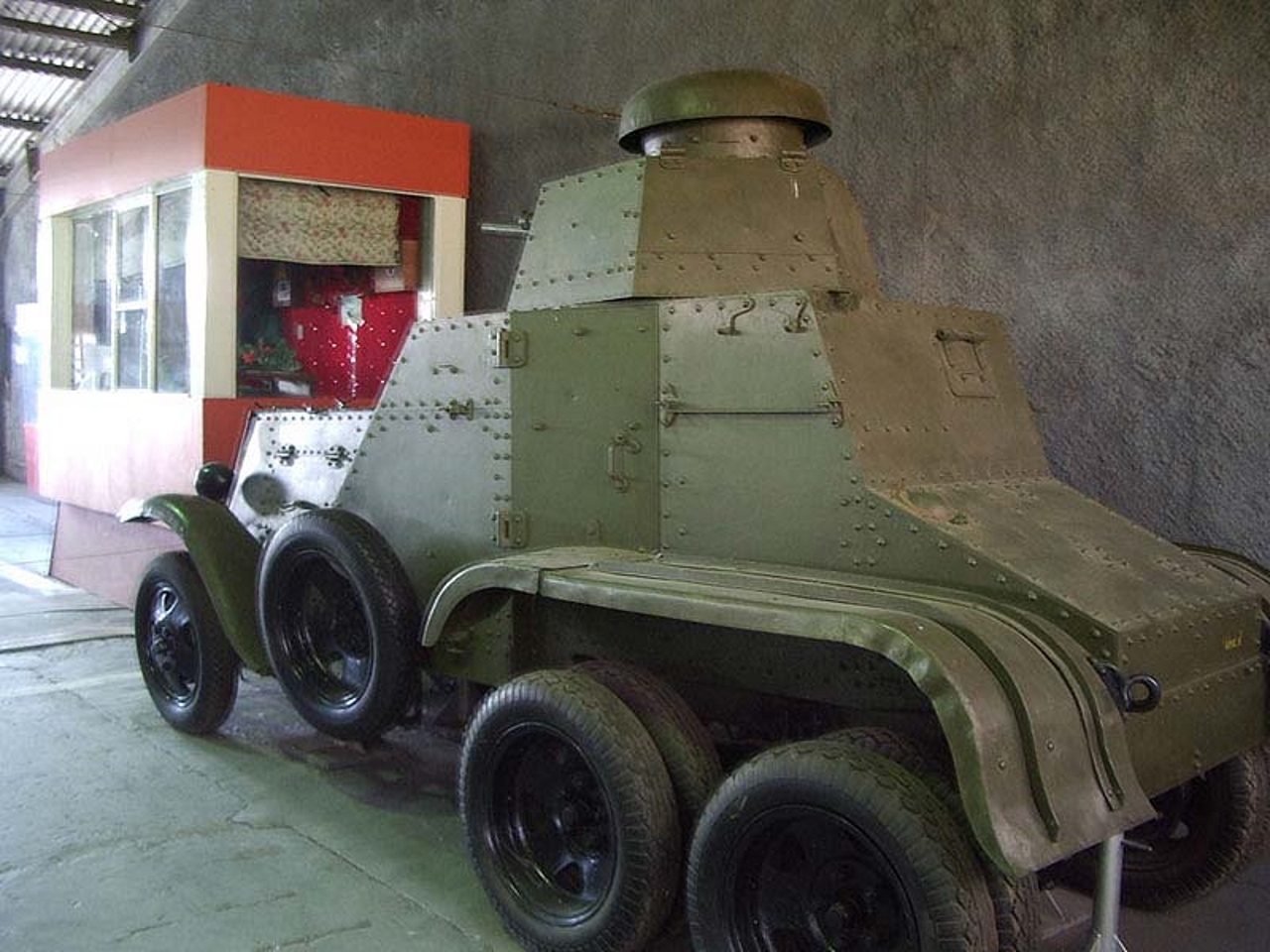
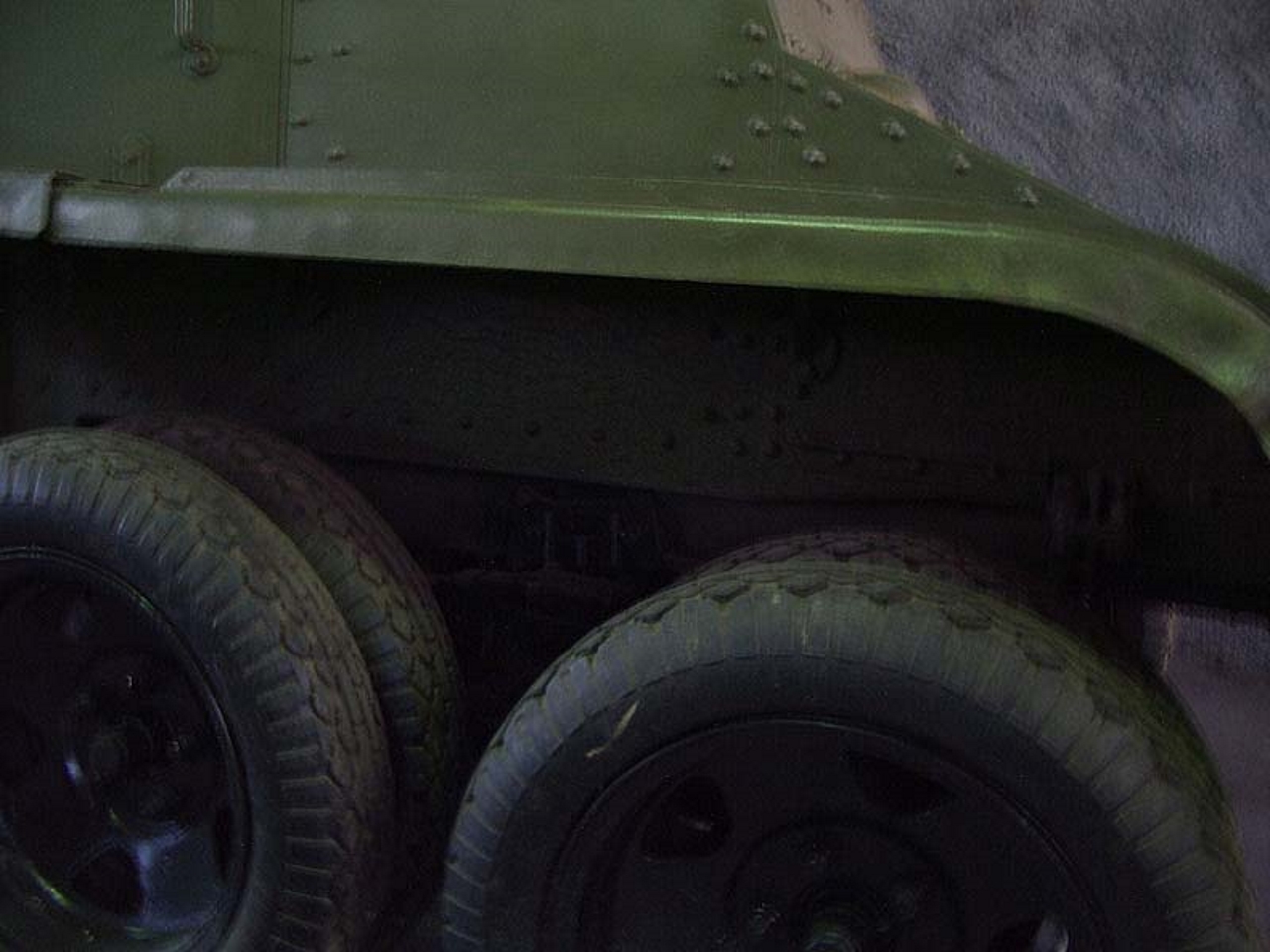
BA-27M walkaround
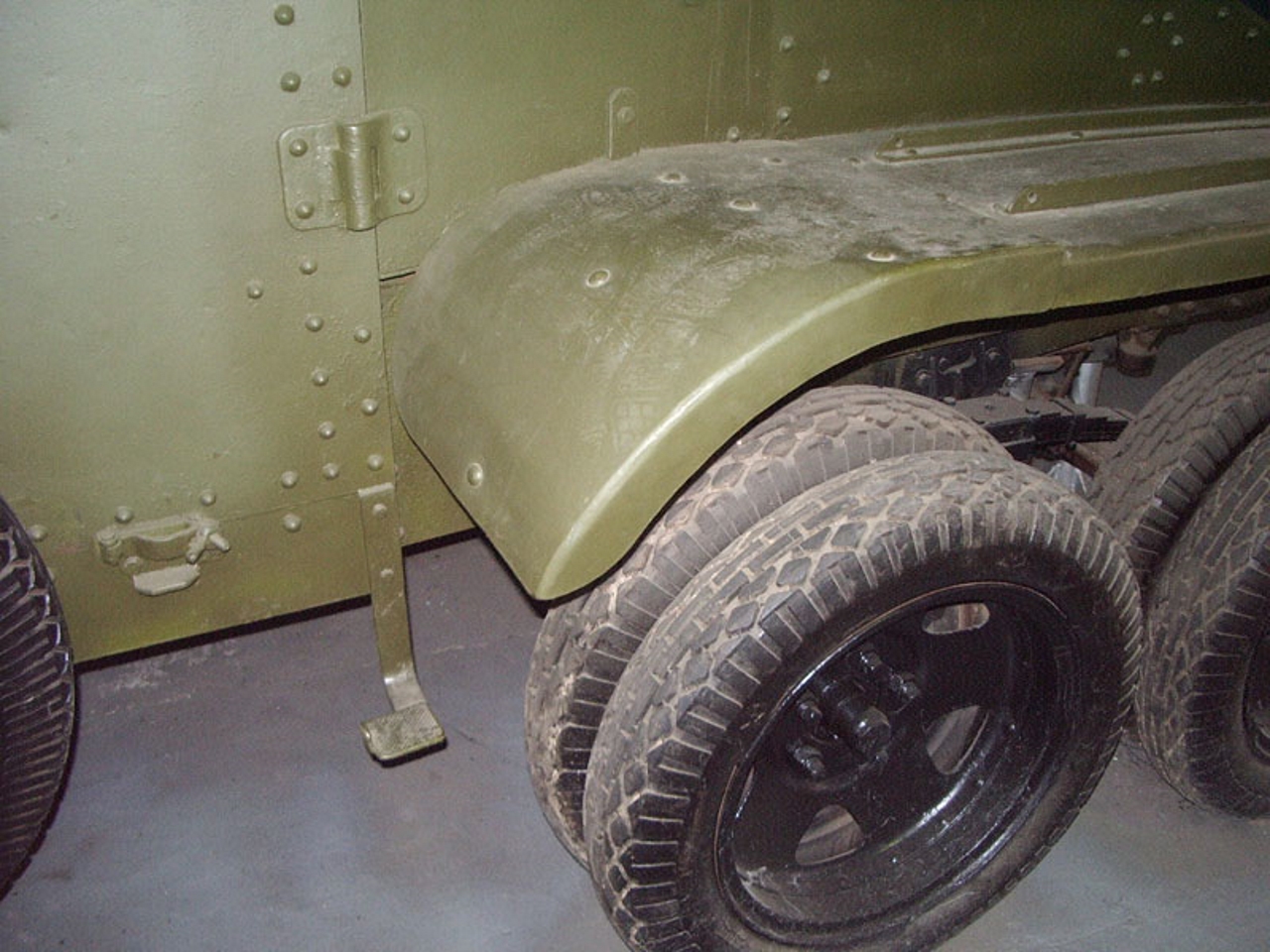
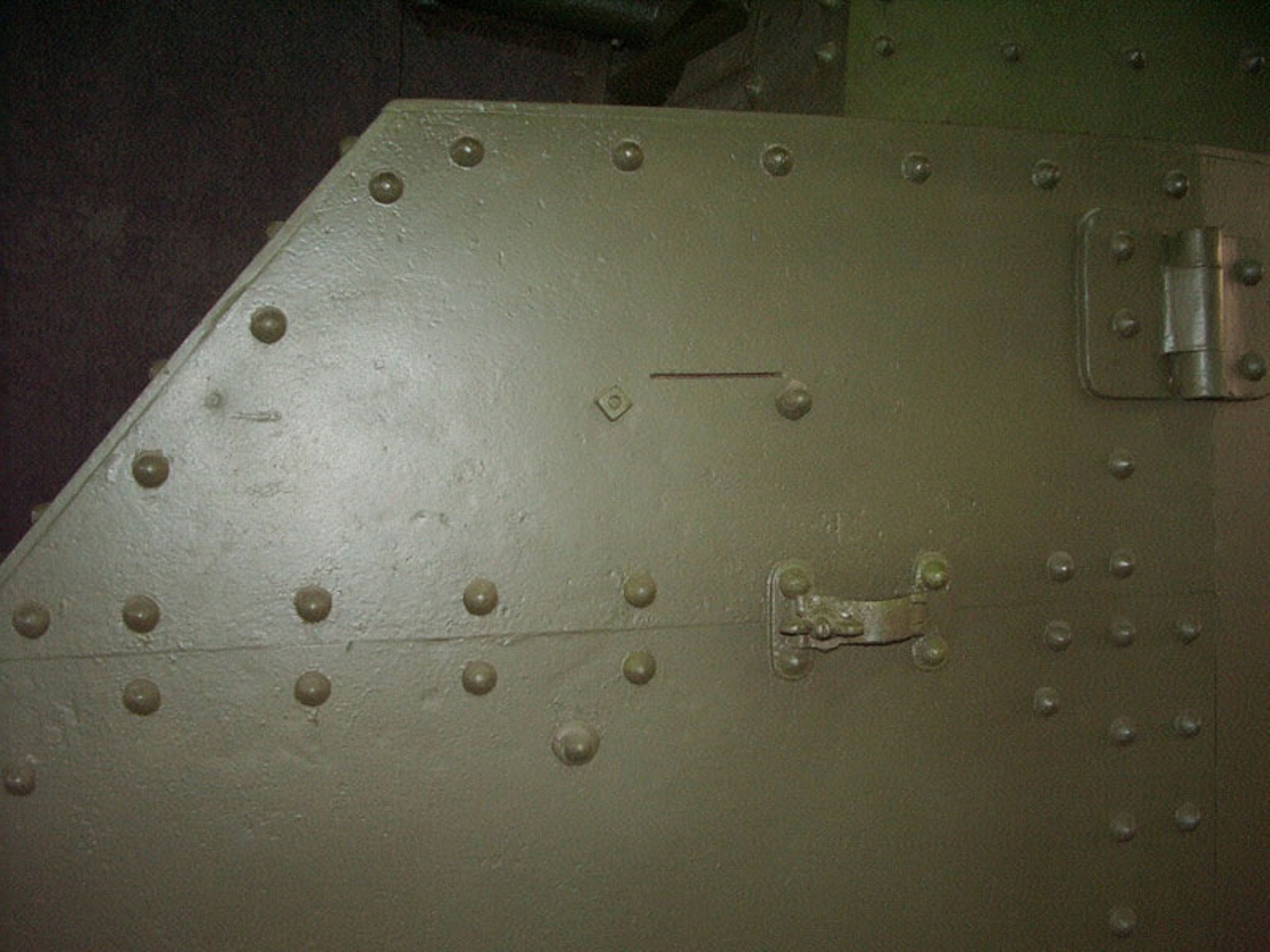
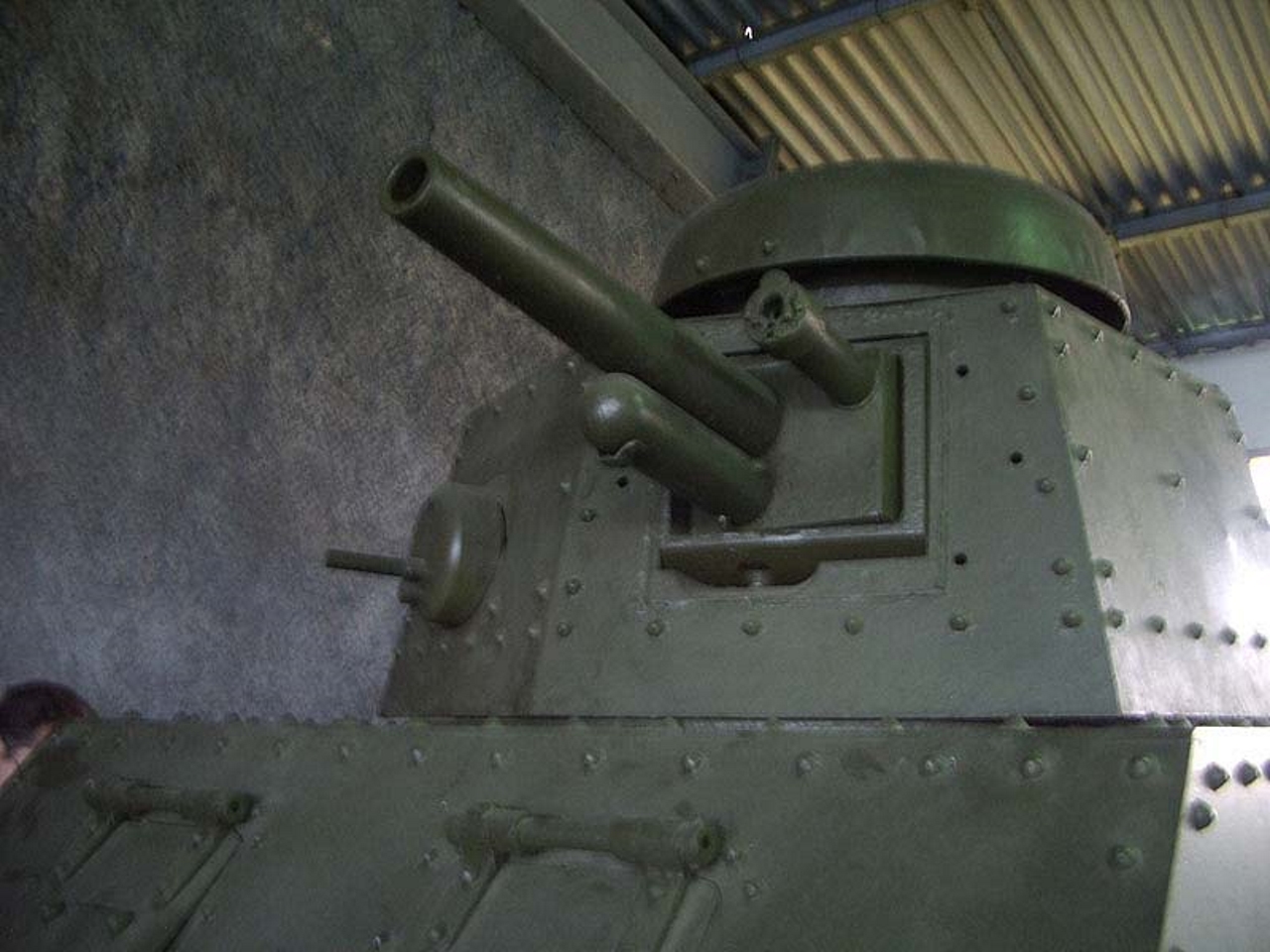
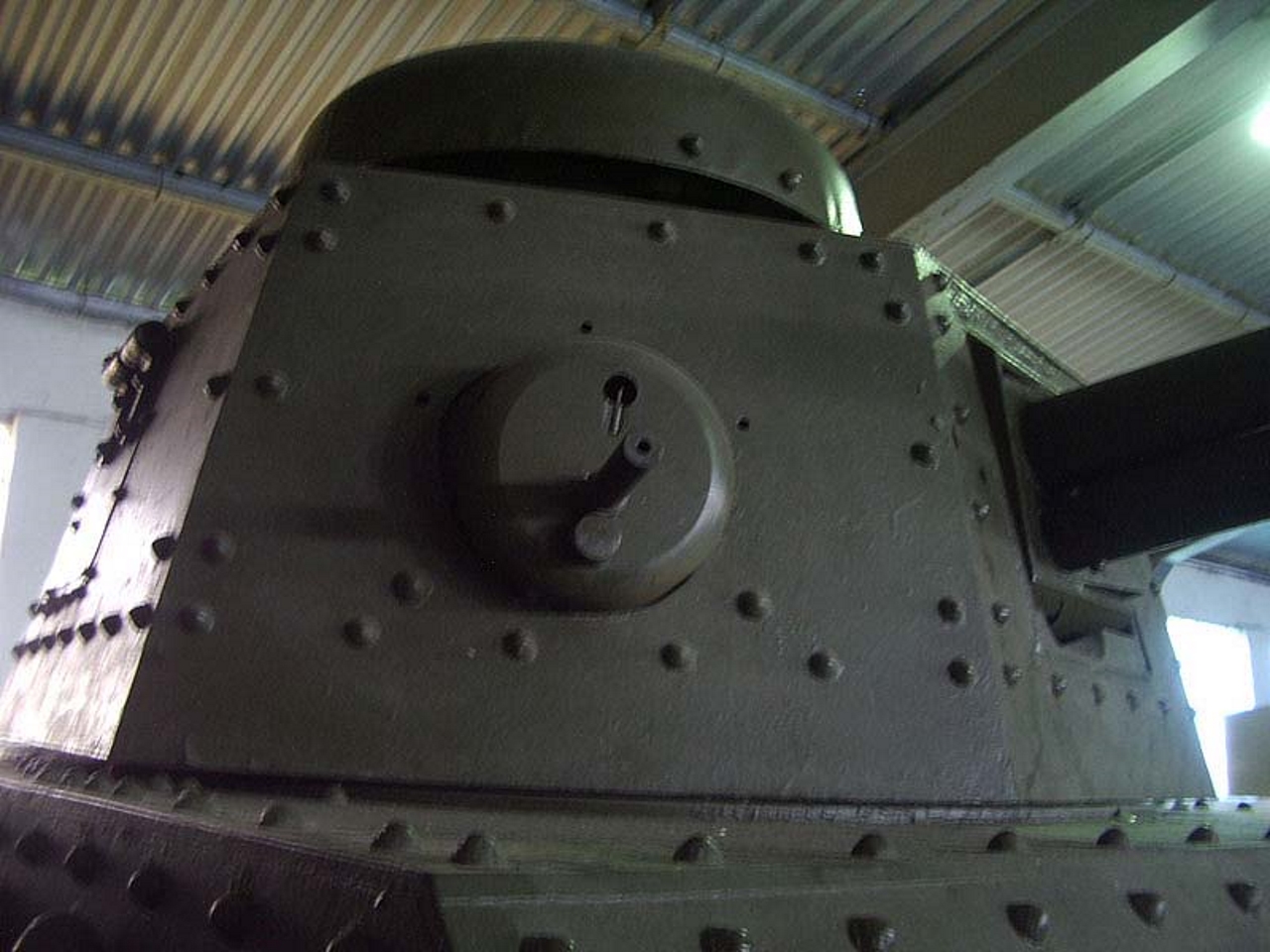
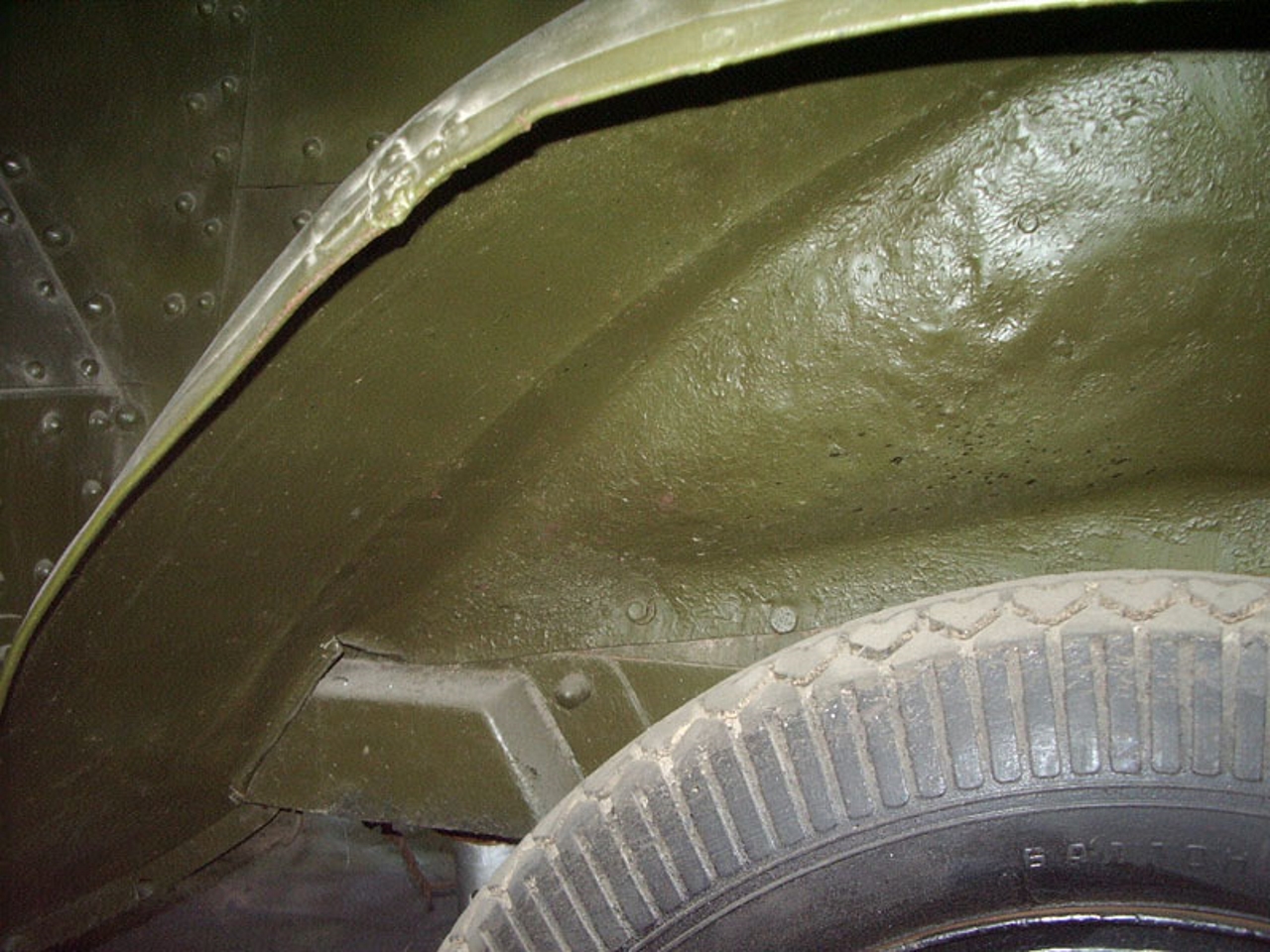
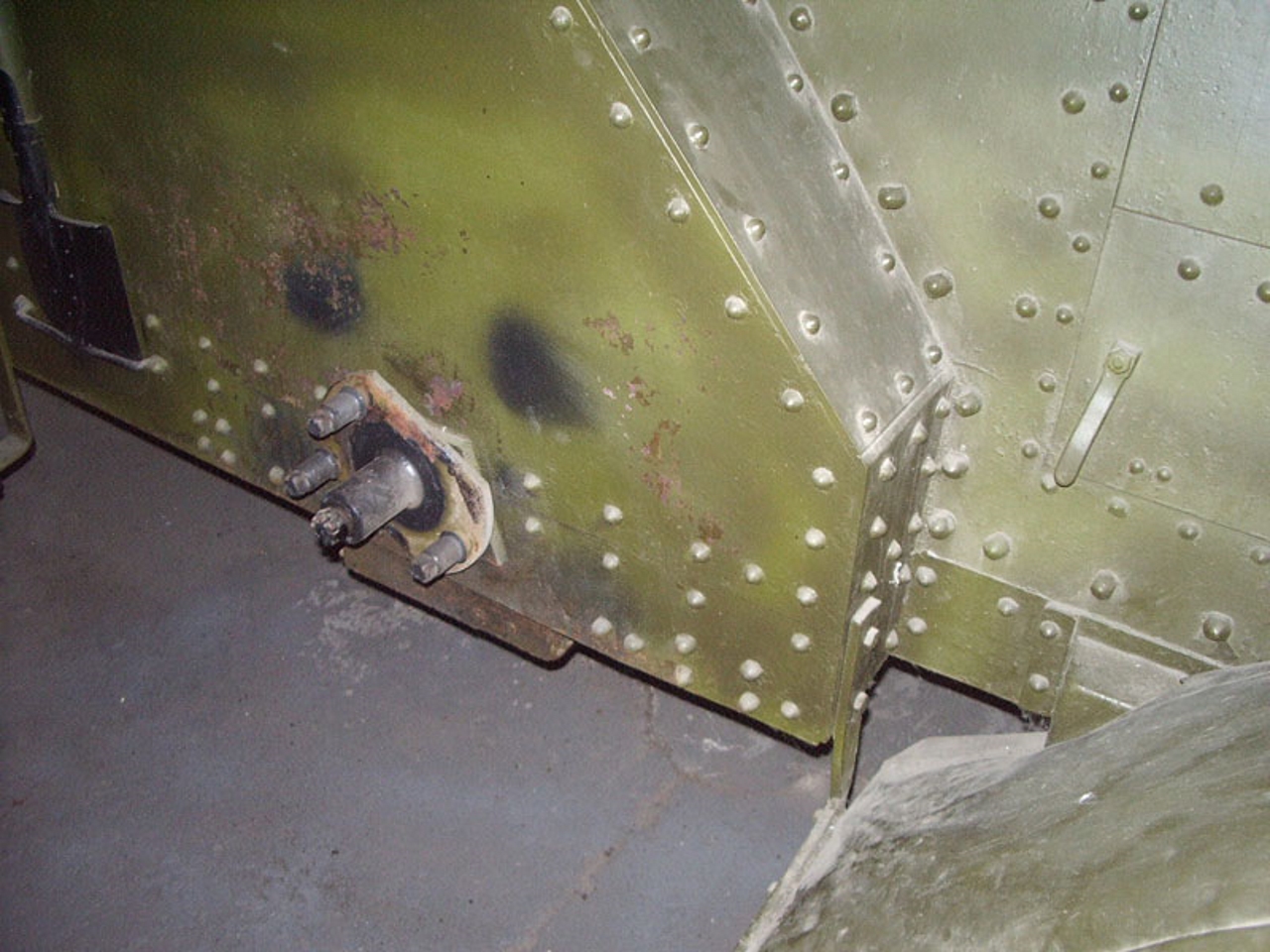
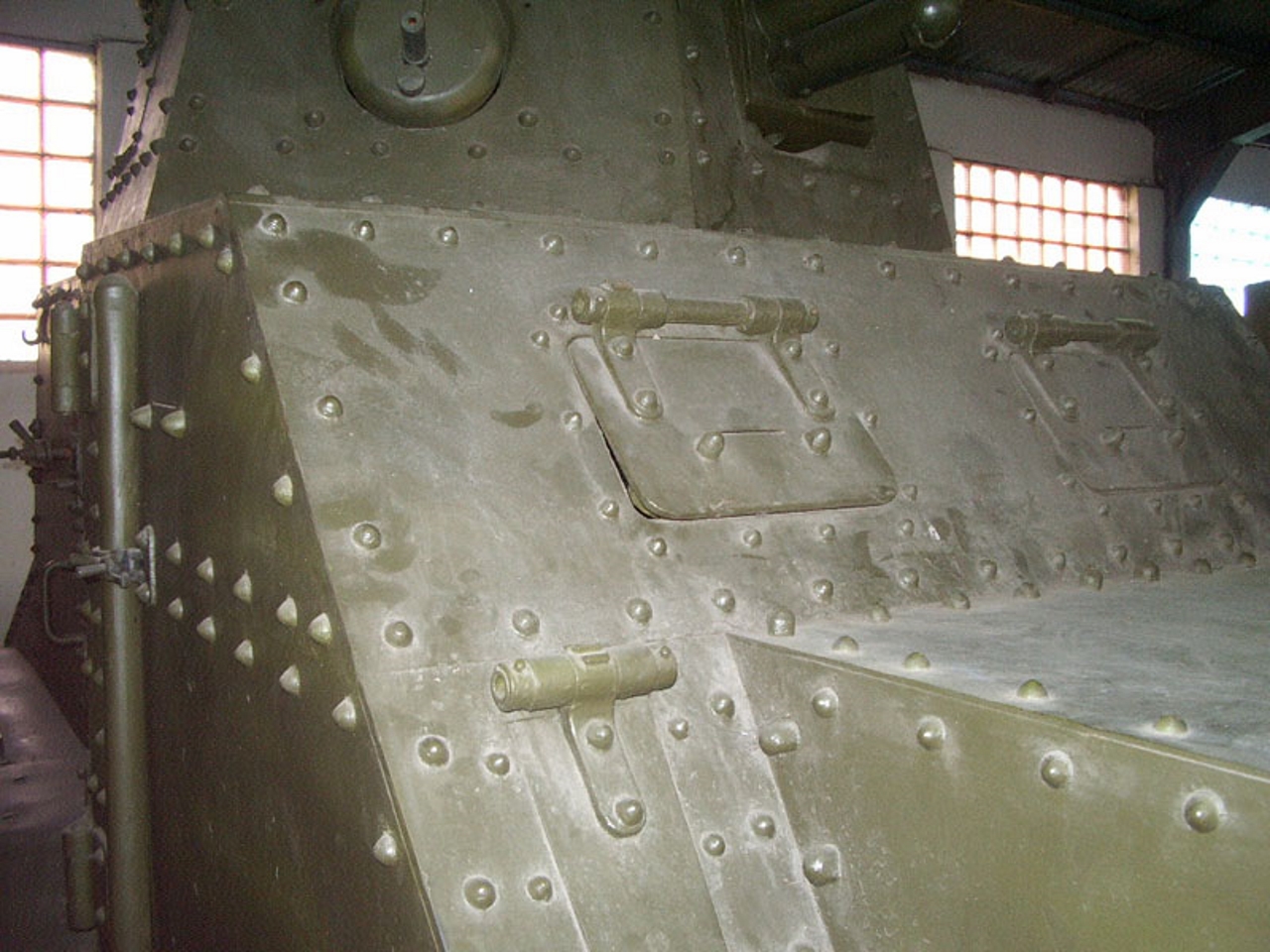
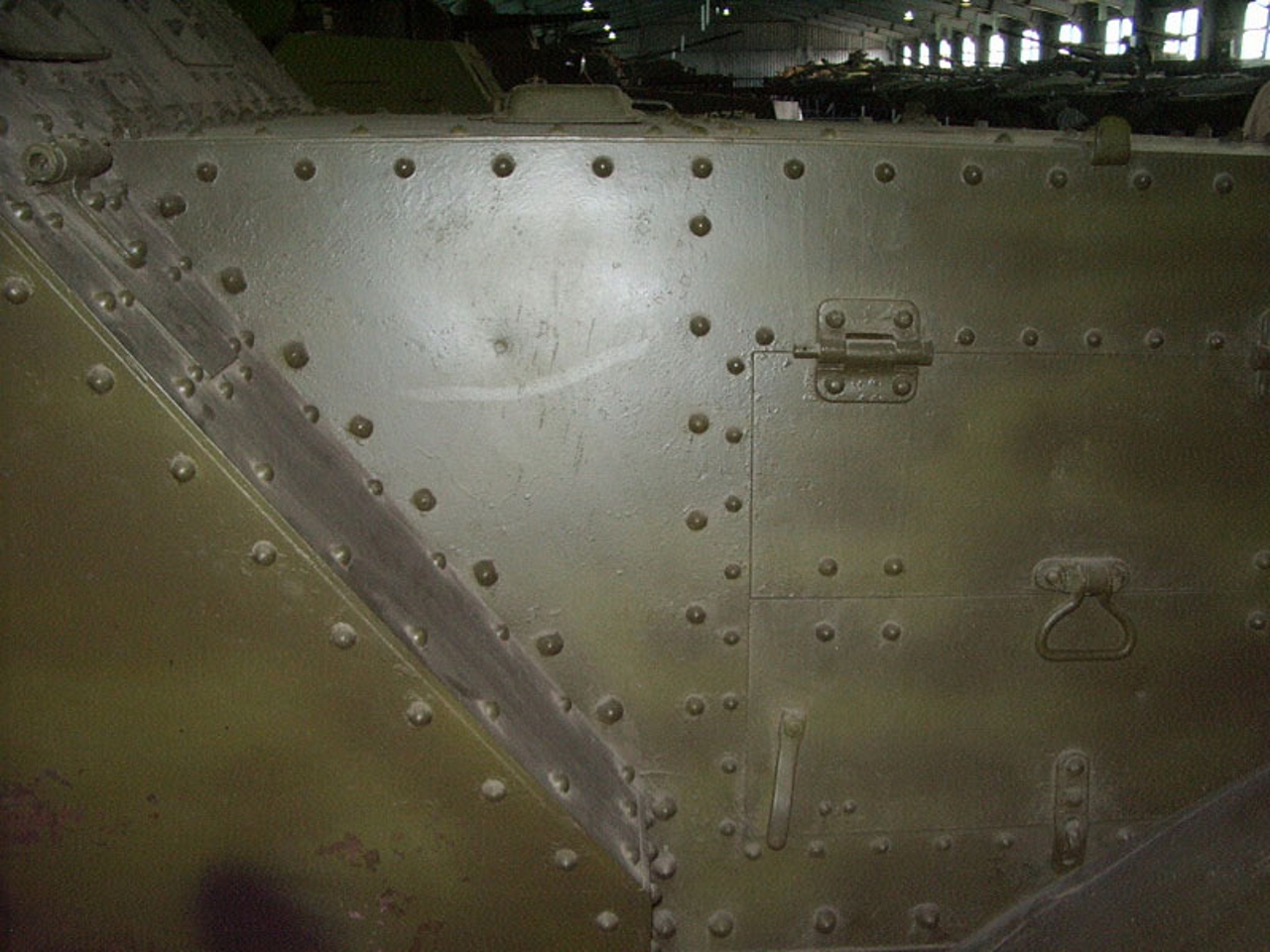
VII – The BD-37 Armored Railcar or BA-27ZhD :
In 1928, the Red Army received the BA-27, the first Soviet mass-produced armored car. It was developed in 1927 and produced until mid-1931. However, design flaws discovered during the operation of these first-born vehicles prompted consideration of possible uses. This led to the idea of using the BA-27 as an armored railcar.
By the end of 1931, the Mozherez plant had developed a railway chassis for the BA-27. The vehicle was transferred to and from the rails using a special portable device, a jack with a rotating device (a similar device was later proposed for the D-8 light armored car).
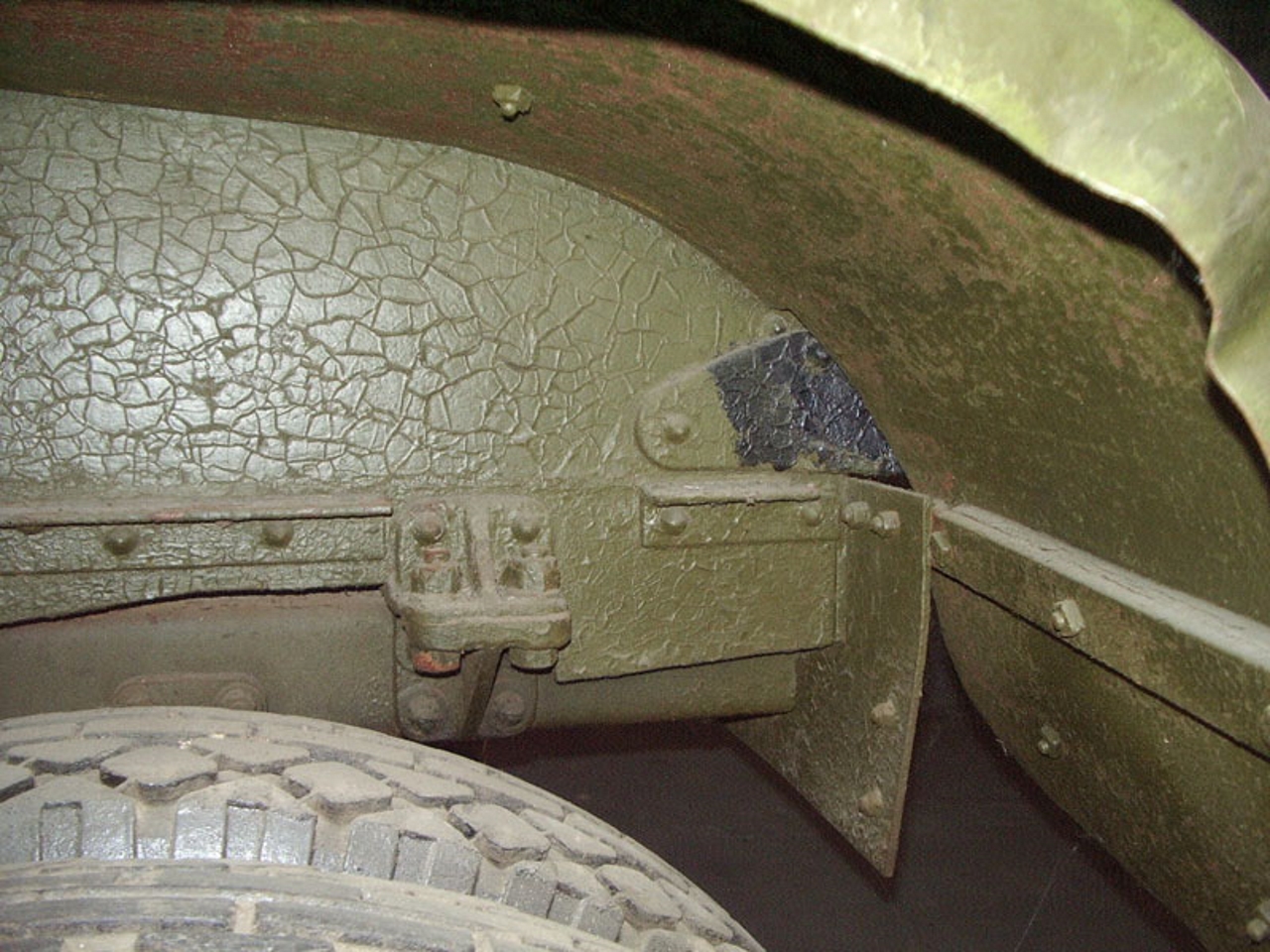
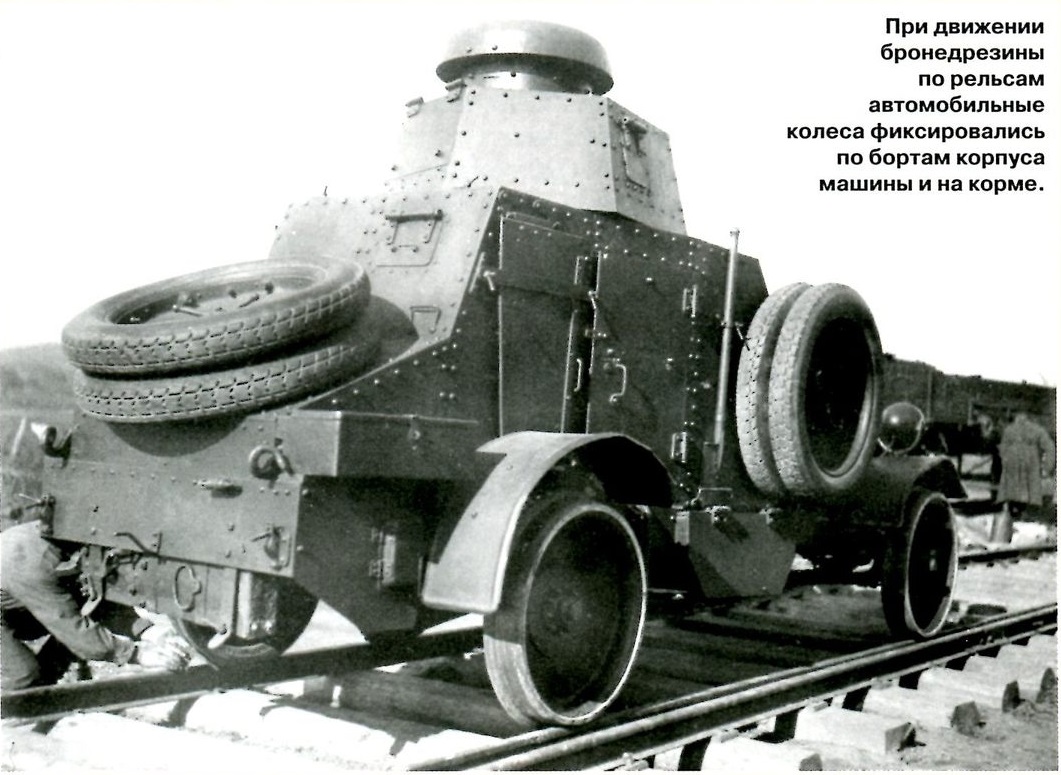
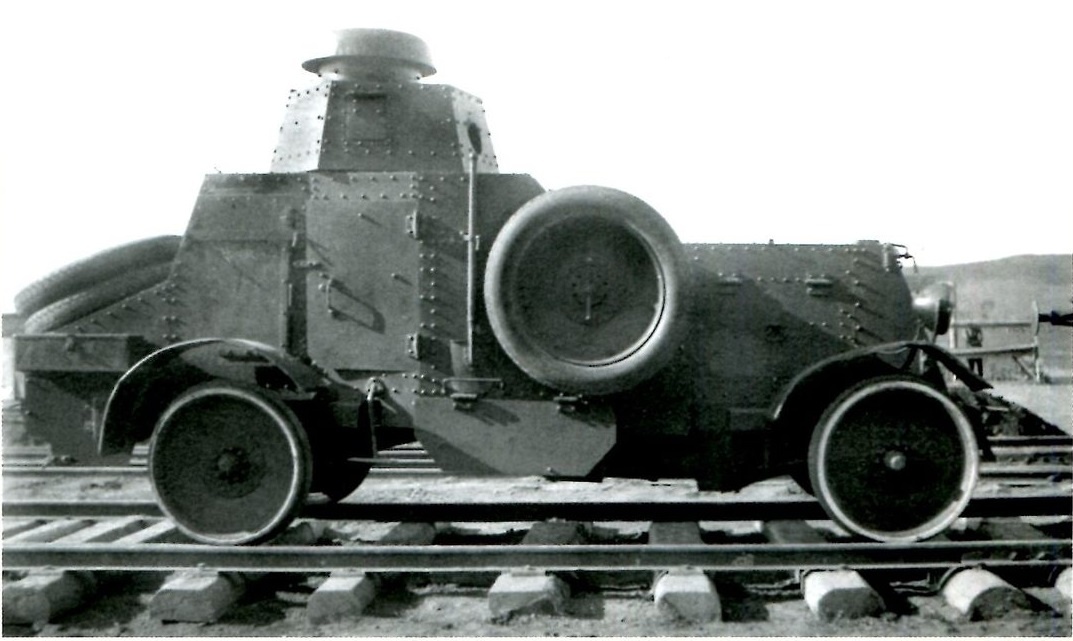
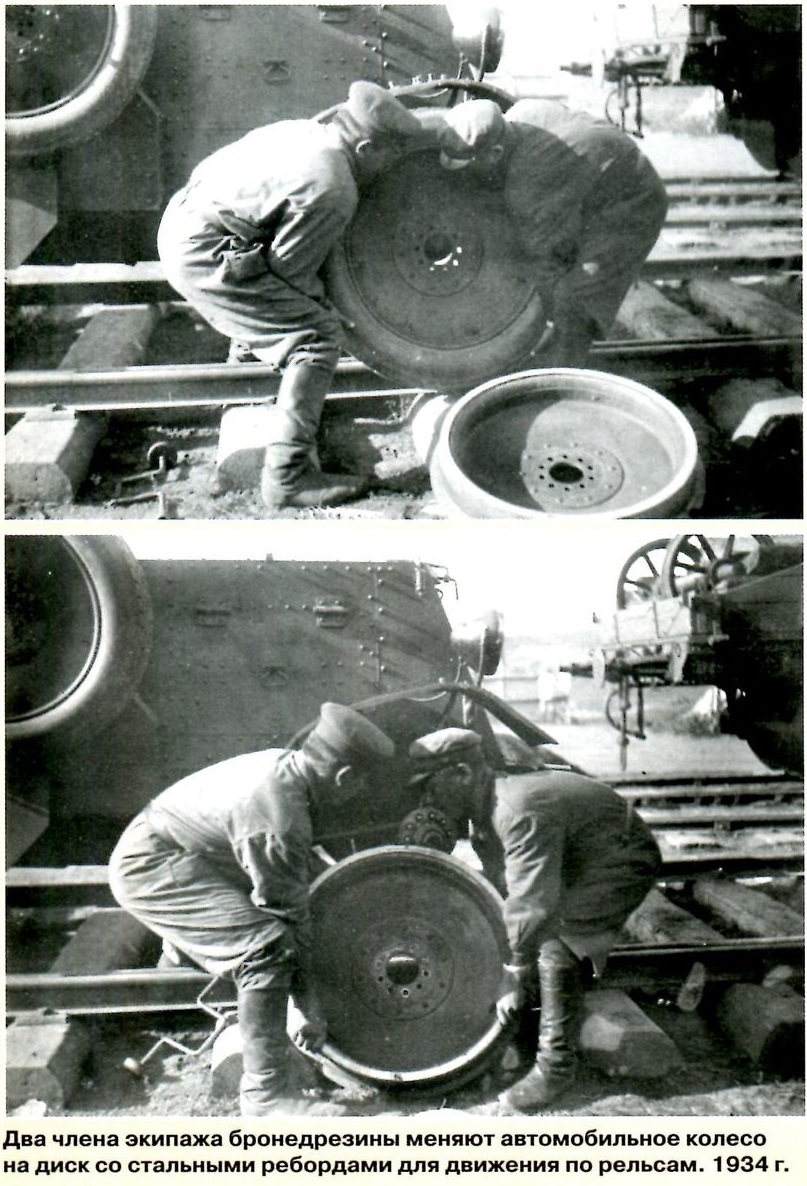
Before being used on the railway, the armored car was fitted with railway-type wheels with steel flanges and rubber tires, as well as a special buffer and towing device, allowing the vehicle to be positioned at the rear of a train or to connect two vehicles together. The buffer and towing devices were housed in a single unit, hinged on a bracket welded to the rear of the hull. When the vehicle was moving on the railway, special clamps were used to lock the front and rear springs. The maximum speed on the railway was 50 km/h. When driving on public roads, the railway wheels were mounted in pairs on special bushings located along the sides of the vehicle. The jack and stands were stored inside the vehicle. But this remains a prototype.
The idea of converting the BA-27 to rail propulsion was later revived in the Far East. By mid-1934, the mechanized units of the Special Red Banner Far Eastern Army (OKDVA) had 35 armored cars of this type. OKDVA commander Blucher noted:
« The BA-27 armored vehicles, due to their technical characteristics, cannot be used in the OKDVA theater, and therefore, maintaining 35 of these vehicles in service with mechanized units is impractical. At the same time, the OKDVA armored train units still lack the armored railcars they are entitled to, which will greatly hamper their combat operations. »
In mid-1934, the Steam Locomotive Car Repair Plant in Nikolsk-Ussuriysk converted one BA-27 into an armored railcar, designated the « BD-37. » Subsequent armored car conversions were planned to be assigned to Mobile Armored Automotive and Tractor Workshop No. 21, also located there.
The armored car was equipped with railway wheels, two new front hubs were made, a steering mount for rail driving was installed, and two wheel mounting brackets were installed on the outside of the hull sides. The factory estimated the cost of the work at 5,940 rubles.
On July 22, 1934, the commission conducted a rolling test of the armored railcar on the Nikolsk-Grodekovo section. The vehicle traveled on the railway at an average speed of 30-35 km/h, and on certain sections, its speed reached 60 km/h.
The armored railcar was stable on turns and easily negotiated inclines. Near the Talovaya station, a four-person crew converted the vehicle from rail to wheeled mode for travel on unpaved roads in 40 minutes. However, the commission believes that with sufficient training and an expanded range of necessary tools, this time could be reduced to 30-35 minutes.
However, after the car was mounted on car wheels, it was unable to free itself from the railroad ruts without chocks. When the driver attempted to turn the front wheels, the tie rod bent, requiring removal and straightening. Furthermore, during a post-run inspection, a crack was discovered in the front left wheel where the tire and rim were welded.
Based on the test results, it was noted that the BA-27 armored car, after additional equipment, can be successfully used as a railcar, but with the mandatory installation of a reverser.
« in order to have a 4 speed reverse movement. »
Without the introduction of a reverser, the vehicle could not move effectively in this mode on a railway track, since after only 150-200 m the engine overheated and the water in the radiator boiled.
At the same time, according to the head of the mobile armored car-tractor workshop No. 21 Semenov,
“…the workshop will not be able to carry out the said modification of the BA-27 on its own, since the installation of a reverser requires a structural change to the machine.”
Nevertheless, the need for highly mobile armored railcars in the Far East, given the geographical features of this region, was so great that on October 30, 1934, the commander of the OKDVA troops, Blucher, in a letter to the head of the Directorate of Mechanization and Motorization of the Red Army noted:
“I STRONGLY REQUEST:
1) Remove 35 BA-27 armored vehicles from service with mechanized units (replace them with new wheeled armored vehicles) and use them as armored railcars for armored train units.
2) Issue the order for the design and manufacture of a reversing mechanism for the BA-27 and send the manufactured mechanisms to OKDVA.
3) Allocate the necessary funds for the conversion of BA-27 vehicles at factories in the Far East.
“Please inform me of your decision immediately.”
Unfortunately, it has not yet been possible to identify any instances of use of the BA-27 armored railcar manufactured in Nikolsk-Ussuriysk, nor to determine the exact number of vehicles converted in this manner. However, it is known that the Red Army UMM ordered the conversion of all available vehicles of this type to rail propulsion.
In 1935-1936, similar work to convert two BA-27 armored cars into armored railcars was also carried out in the Belarusian Military District, at District Warehouse No. 60 in Bryansk. Prototype armored cars successfully passed trials in 1937 with the 2nd Armored Train Regiment. They reached a speed of 50 km/h on rails. Beginning in 1938, it was planned to convert all BA-27s into armored railcars, but the program was never completed.
Although the first experiments in converting armored cars to rail propulsion were not entirely successful, they became the starting point for large-scale work in this direction. Shortly thereafter, data obtained from testing the « railway » D-8 and BA-27 were used in the development of similar adaptations for mass-produced light and medium armored cars, which were successfully used during the Great Patriotic War.
Availability of BA-27M armored cars in the Red Army on June 1, 1941
Category | LVO | Bovo | ZapOVO | Kovo | OdVO | MVO | XVO | SKVO | OrVO | PriVO | UrVO | ZakVO | SAVO | ZabVO | DVO | Repair bases | Total |
1 | 7 | 10 | 1 | 2 | 3 | 5 | 25 | 11 | 23 | 4 | 26 | 7 | 4 | 128 | |||
2 | 1 | 7 | 5 | 3 | 2 | 1 | 4 | 5 | 33 | ||||||||
3 | 4 | 11 | 8 | 4 | 2 | 5 | 2 | 1 | 32 | ||||||||
Total | 7 | 4 | 10 | 13 | 17 | 8 | 12 | 25 | 15 | 28 | 5 | 4 | 31 | 9 | 4 | 1 | 193 |
Category 1: daily maintenance
Category 2: general maintenance
Category 3: factory repair, vehicle heavily damaged
LVO : Leningrad Military District (Russian: ЛВО – Ленинградский военный округ)
BOVO : Belorussian Special Military District (Russian: БОВО -Белорусский Особый военный округ) from 11.7.40
ZapOVO – Western Special military district (Russian: ЗапОВО –Западный Особый военный округ)
KOVO – Kiev Special Military District (Russian: КОВО – Киевский Особый военный округ)
OdVO – Odessa Military District (Russian: ОдВО – Одесский военный округ)
MVO – Moscow Military District (Russian: МВО -Московский военный округ)
XVO – Kharkov Military District (Russian: XВО –Ха́рьковский вое́нный о́круг )
SKVO – North Caucasus Military District (Russian: СКВО -Северо-Кавказский военный округ)
OrVO – Orel Military District (Russian: ОрВО -Орловский военный округ)
PriVO – Volga Military District (Russian: ПриВО -Приволжский военный округ)
UrVO – Ural Military District (Russian: УрВО -Уральский военный округ)
ZakVO – Transcaucasian Military District (Russian: ЗакВО – Закавказский военный округ)
SAVO – Central Asian Military District (Russian: САВО -Среднеазиатский военный округ)
ZabVO – Transbaikal Military District (Russian: ЗабВО -Забайкальский военный округ)
DVO later DVF – Far Eastern Military District later Front (Russian: ДВО – Дальневосточный военный округ)
Sources:
frontline illustration
technic and armament
vk
dzen