For a long time, efforts to design and manufacture light armored cars in the USSR were hampered by the lack of a suitable chassis. The various foreign-made vehicles available in the country were unsuitable—they were heavily worn, and there was a critical shortage of spare parts. At the time, the Soviet Union lacked its own domestic automotive industry. Admittedly, in 1926, the design bureau of the Main Directorate of the Military Industry had developed a preliminary design for a reconnaissance armored car based on the 1.5-ton AMO-F-15 truck chassis; however, the project was deemed a failure.
The situation changed radically following the agreement signed on May 31, 1929, between the Soviet government and Henry Ford. Under this agreement, Ford was to begin supplying the Soviet Union with 72,000 assembly kits for Ford-A passenger cars and Ford-AA trucks. Furthermore, the Ford Motor Company financed the construction of a modern automobile plant in Nizhny Novgorod, designed to produce 100,000 vehicles annually, and committed to providing technical assistance for a period of nine years. In February 1930, the assembly of Ford vehicles from American-made parts began at the « Gudok Oktyabrya » plant in Nizhny Novgorod; in November, a second assembly plant in Moscow joined the effort. In January 1932, an automobile plant was launched in Nizhny Novgorod; it became the largest manufacturer of passenger cars and trucks in the USSR (following the renaming of Nizhny Novgorod to Gorky, the enterprise became known as GAZ, the Molotov Gorky Automobile Plant). The plant produced GAZ-AA trucks and GAZ-A passenger cars, which were Soviet versions of Ford models. Work on creating reconnaissance and communications vehicles based on passenger car chassis began in the USSR as soon as the first American Ford passenger cars appeared.
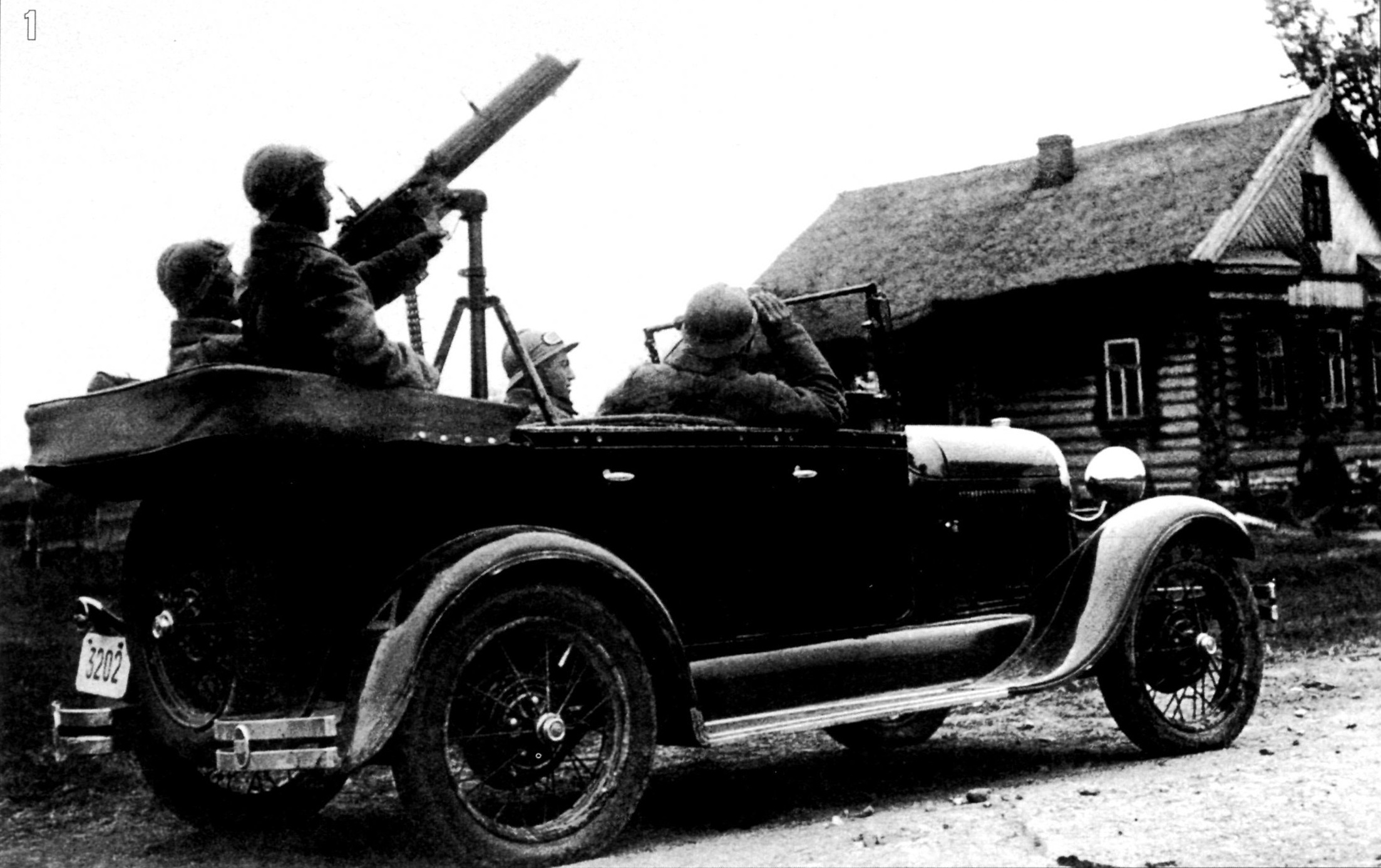
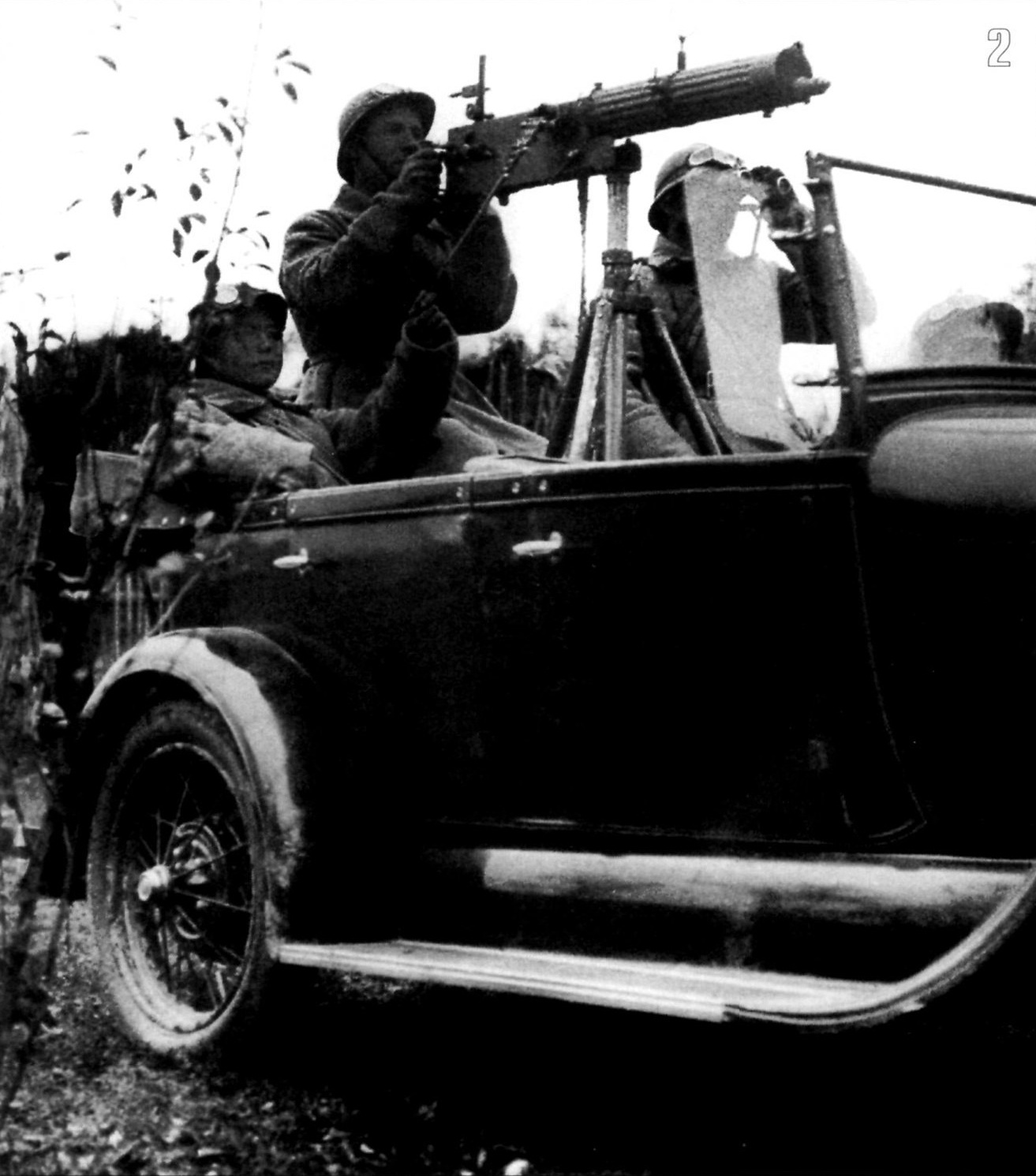
In September 1929, the Red Army’s Artillery Directorate issued a directive to the workshops of the Scientific and Testing Arms Proving Ground (NIOP) and Tool Plant No. 2 in Kovrov to develop mounts for Maxim and DP machine guns on passenger cars and motorcycles. In October, a Ford-A equipped with a Maxim machine gun on a NIOP-designed mount participated in exercises held by an experimental mechanized regiment near Moscow.
On November 12, the Red Army’s Inspector of Armored Forces sent a report to the Red Army Headquarters titled « Assessment of the Ford-A Passenger Car as a Reconnaissance Vehicle, » which stated:
« The Ford vehicle presented to the regiment, in addition to its other functions, was used as a reconnaissance vehicle; to this end, it was equipped with the necessary hardware for mounting weaponry (a machine gun). Thus, alongside the BA-27, it served as a primary asset for support duties (reconnaissance and security). During exercises and maneuvers, the Ford passenger vehicle demonstrated adequate speed, good off-road capability on dirt roads, sufficient reliability, and a long operational range; these qualities place it among the best wheeled vehicles suitable for support duties. A major and significant drawback of the vehicle is its vulnerability, resulting from the lack of armor and the use of pneumatic tires. It would be advisable to produce a series of experimental prototypes during the coming winter to determine the most suitable model. The following variants are desirable:
a) a lightly armored Ford;
b) a semi-armored Ford;
c) a fully armored Ford. »
From November 25 to 30, 1929, trials of machine-gun-equipped passenger cars and motorcycles took place at the NIOP facility and Plant No. 2, under the chairmanship of Comrade Blumberg. A total of three modified automobiles and three motorcycles were tested: one Ford-A, one NAMI-1 (a small car manufactured by the Moscow « Spartak » plant), and two Harley-Davidson motorcycles fitted with NIOP-designed equipment, alongside one Ford-A and one motorcycle featuring designs from Plant No. 2.
All vehicles were inspected by the commission, which noted the following (motorcycle designs are not discussed here, as they fall outside the scope of this report):
« Ford-A vehicle (NIOP configuration): ammunition supply for the Maxim machine gun consists of two 250-round belts and three ammunition boxes (totaling 1,250 rounds); supply for the DP machine gun consists of four magazines. The total weight of the equipment, including machine guns and ammunition, is 197.65 kg. Even with the removal of one passenger, the vehicle remains overloaded by 120 kg.
NAMI vehicle: ammunition supply is the same; total weight of equipment and ammunition is 175.7 kg. The vehicle remains overloaded by approximately 100 kg even with the removal of one occupant.
Ford-A vehicle (Plant No. 2 configuration): eight ammunition boxes for the Maxim and ten magazines for the DP light machine gun. Total weight of equipment and ammunition is 250 kg. The vehicle remains overloaded by approximately 170 kg even with the removal of one occupant.
In terms of design, the machine gun mounts are engineered for both ground and anti-aircraft fire, and the mounting system is simpler than that used on the NIOP models. »
The vehicles underwent a 200 km road test and target practice, with firing conducted both from a stationary position and while in motion. In its conclusions following the trials, the Blumberg Commission noted:
« 1. The concept of arming motorcycles and automobiles with machine guns merits serious consideration. Such vehicles could be utilized not only for transporting machine guns but also for combat operations.
2. It is determined that none of the submitted machine gun mounting systems meet the requirements of the Red Army (due to vehicle overloading, ergonomic issues for the gunners, etc.). »
3. The design did not take into account the possibility of up-armoring the vehicle.”
Following the establishment of the Red Army’s Directorate of Mechanization and Motorization (UMM) in late 1929, responsibility for all reconnaissance passenger vehicle projects was transferred to it. After reviewing the test results of armed passenger vehicles, the UMM’s Scientific-Technical Committee (NTK) decided in January 1930 to abandon the NAMI-1 and proceed only with the “Ford” models.
A letter sent to the head of the NIOP by Sviridov, chairman of the 2nd Section of the UMM NTK, stated:
“…the machine-gun mountings for the ‘Ford-A’ vehicle are to be redesigned. At a meeting of the 6th Section of the Artillery Directorate, you were assigned the task of refining this design. According to the armament specifications, this vehicle, equipped with a machine-gun mount, must feature an armored shield in place of the windshield. The shield is to be 7 mm thick, and its height must allow both the gunner and the driver to observe the terrain over the top of it. Additionally, observation must be possible through viewing ports in the armored shield. The order for the armored shield is expected to be placed with the Izhora Plant.”
Testing of two ‘Ford-A’ vehicles fitted with armored shields took place in May and June of 1930. One was armed with Maxim and DP machine guns (a project of the Artillery Directorate’s Scientific-Technical Committee), while the other carried a DT machine gun (a project of the Red Army UMM).
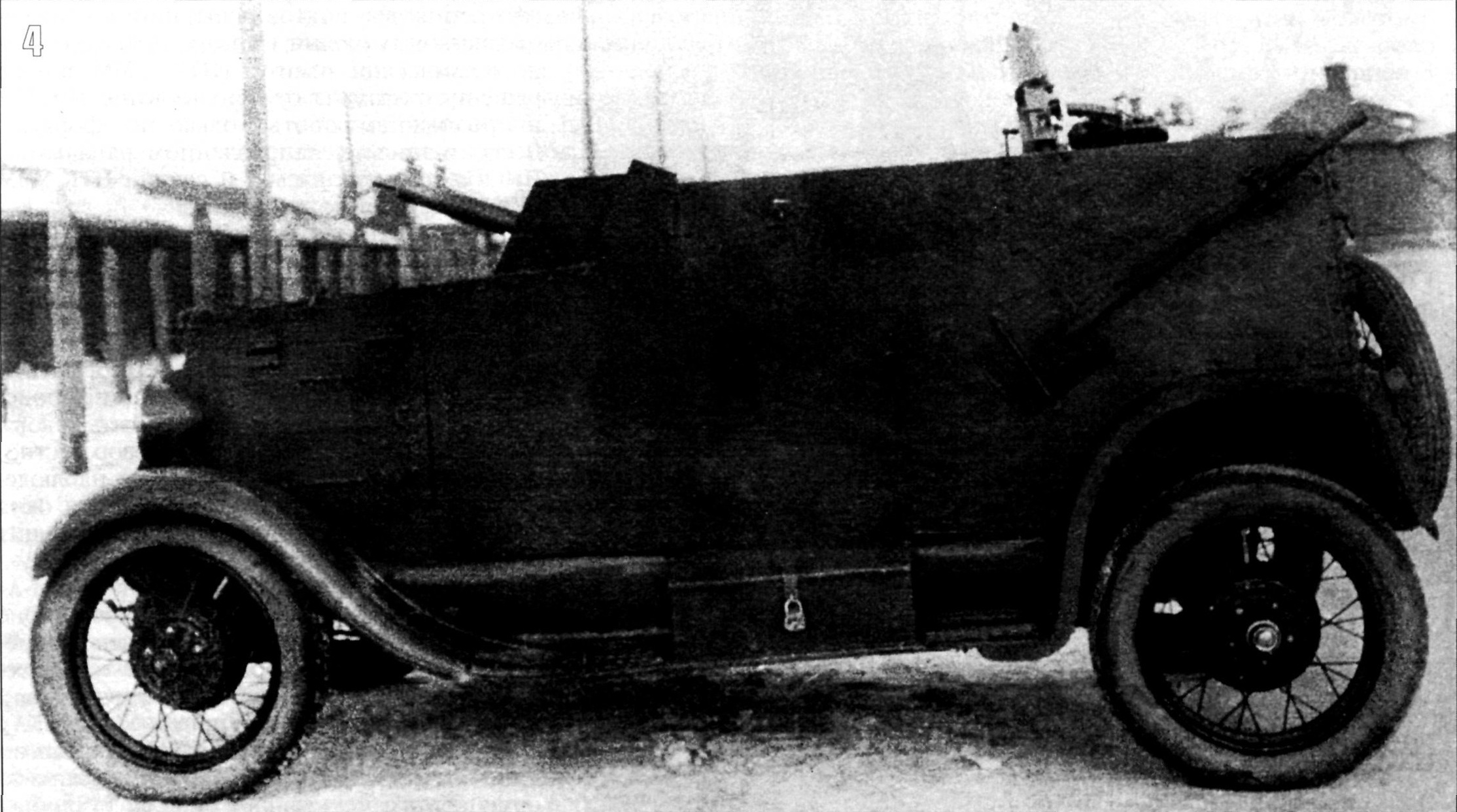
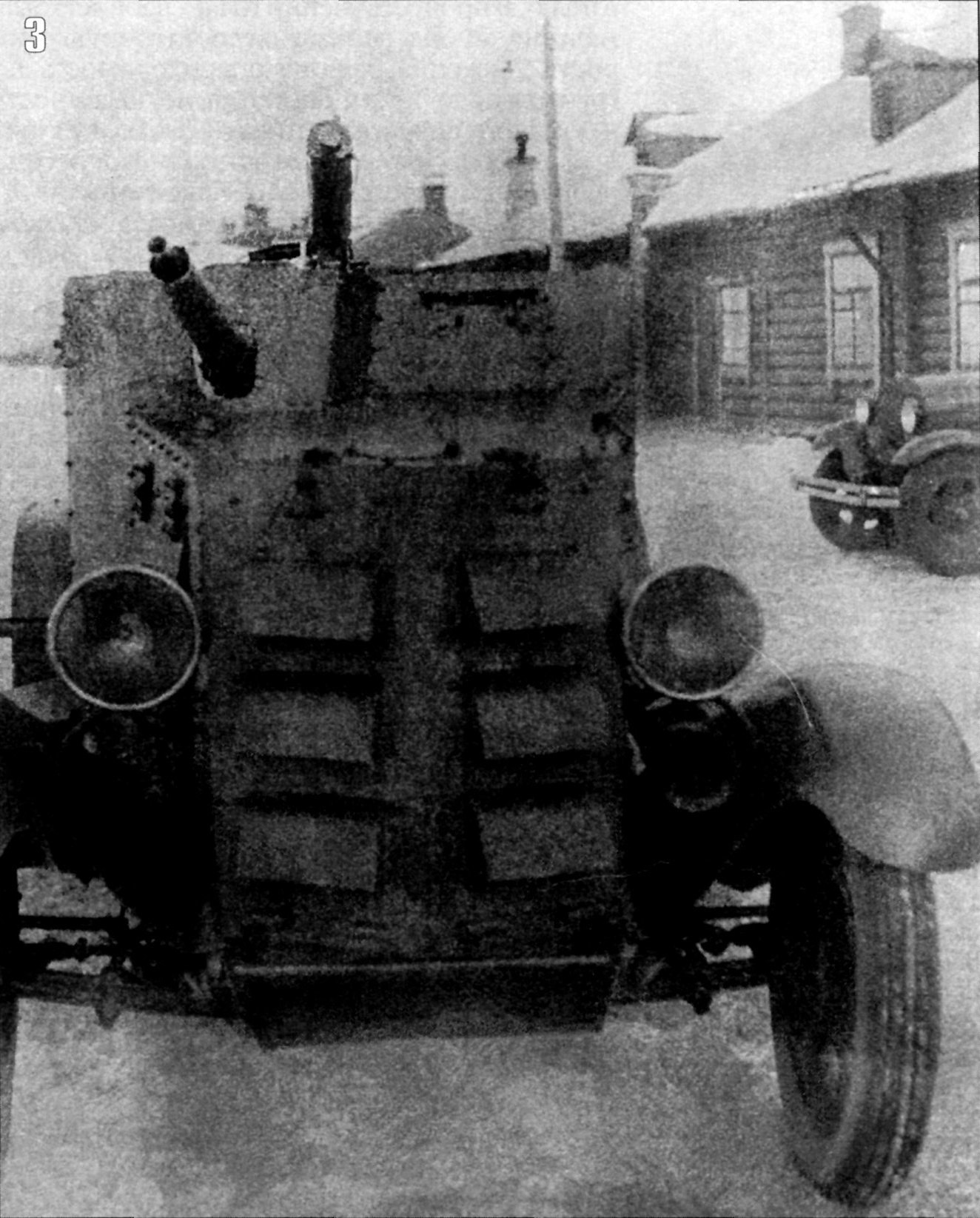
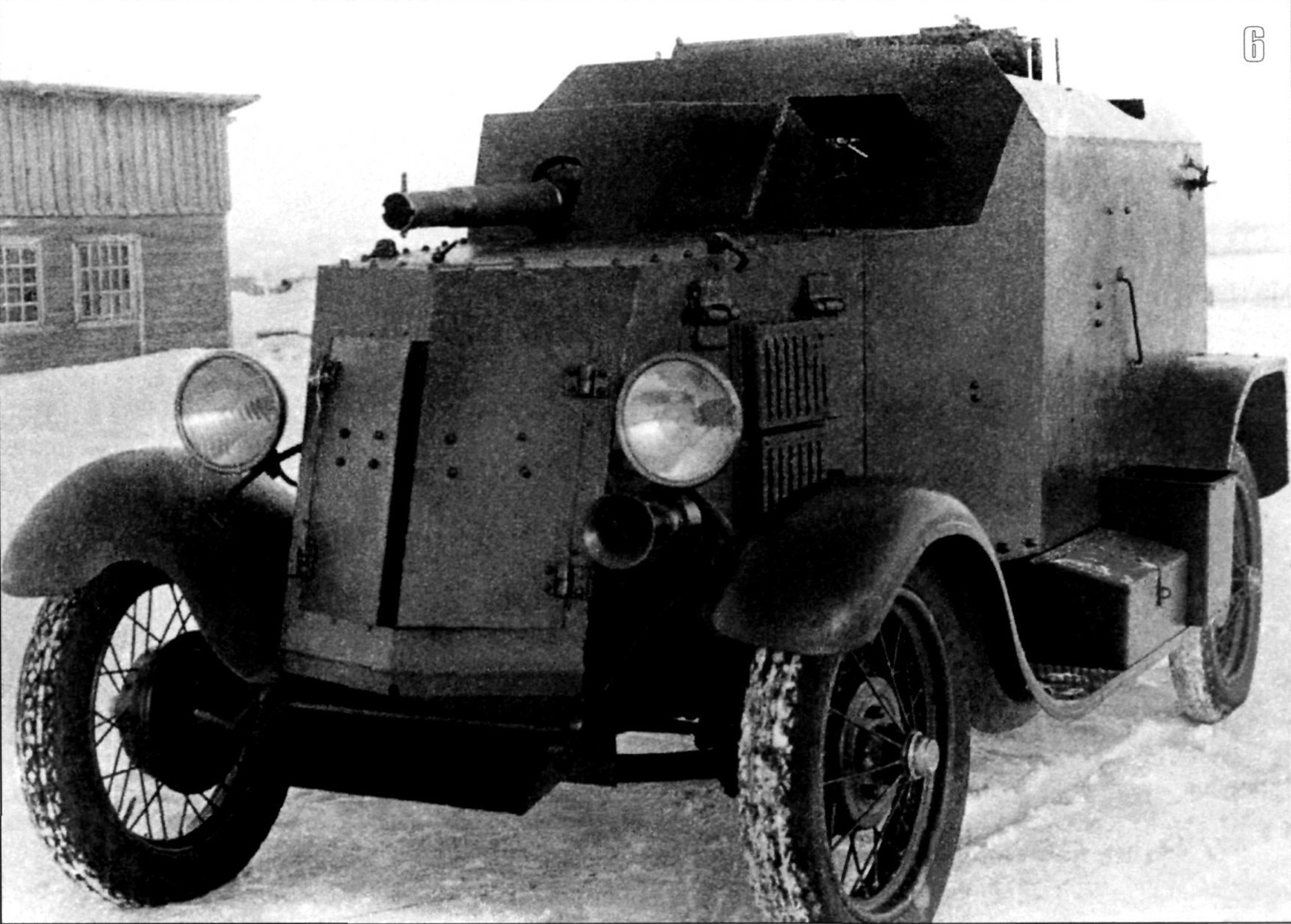
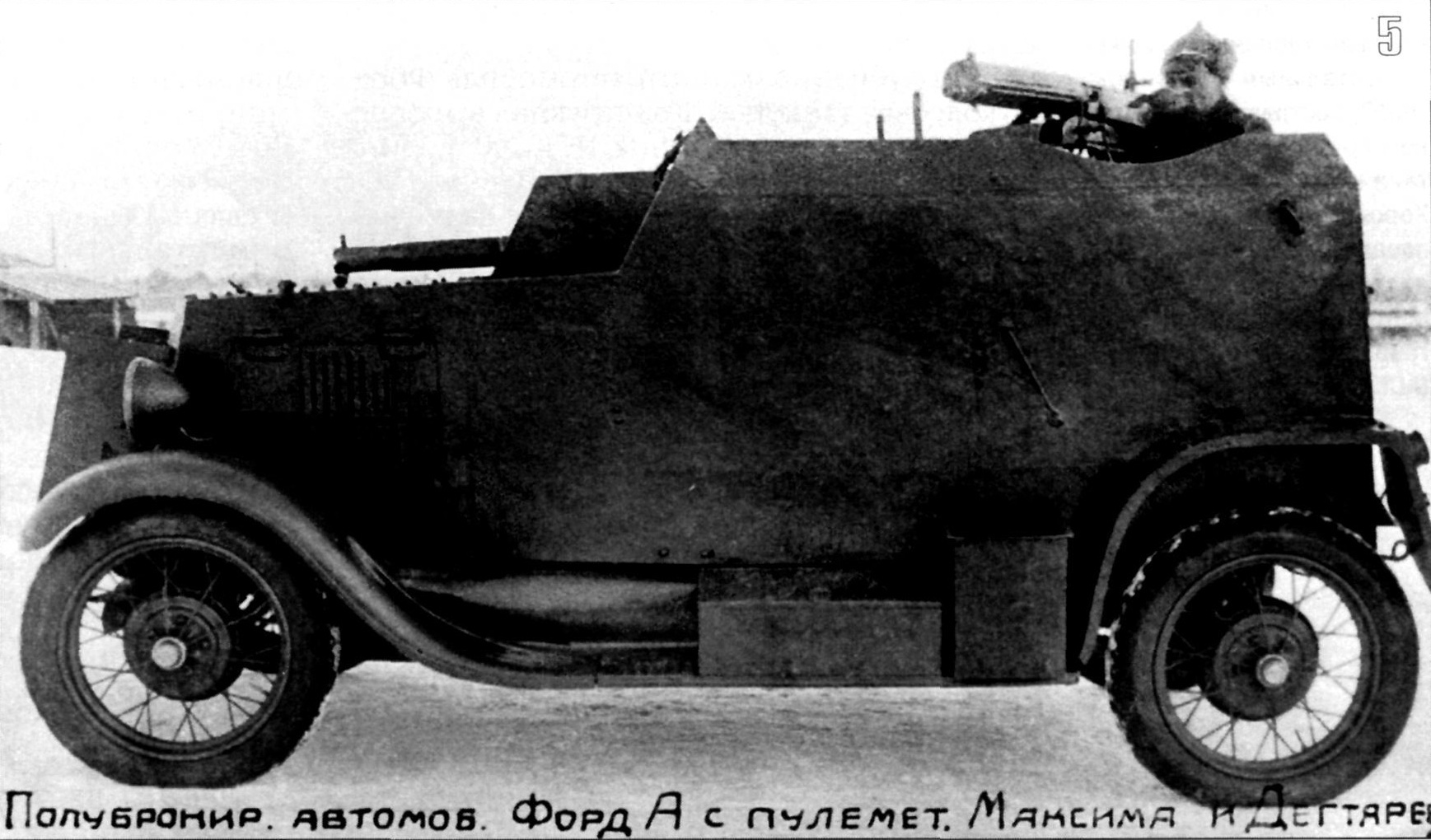
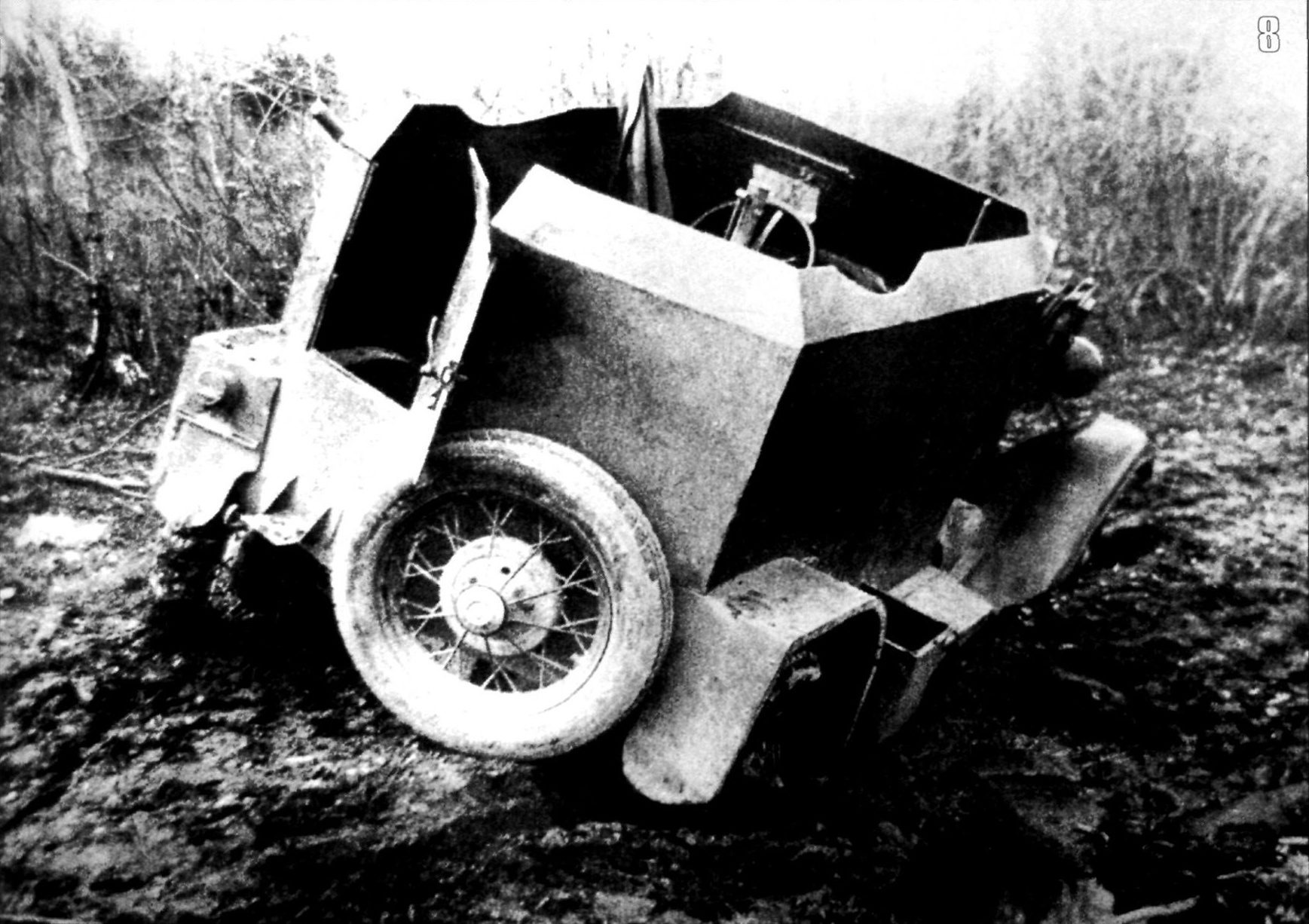
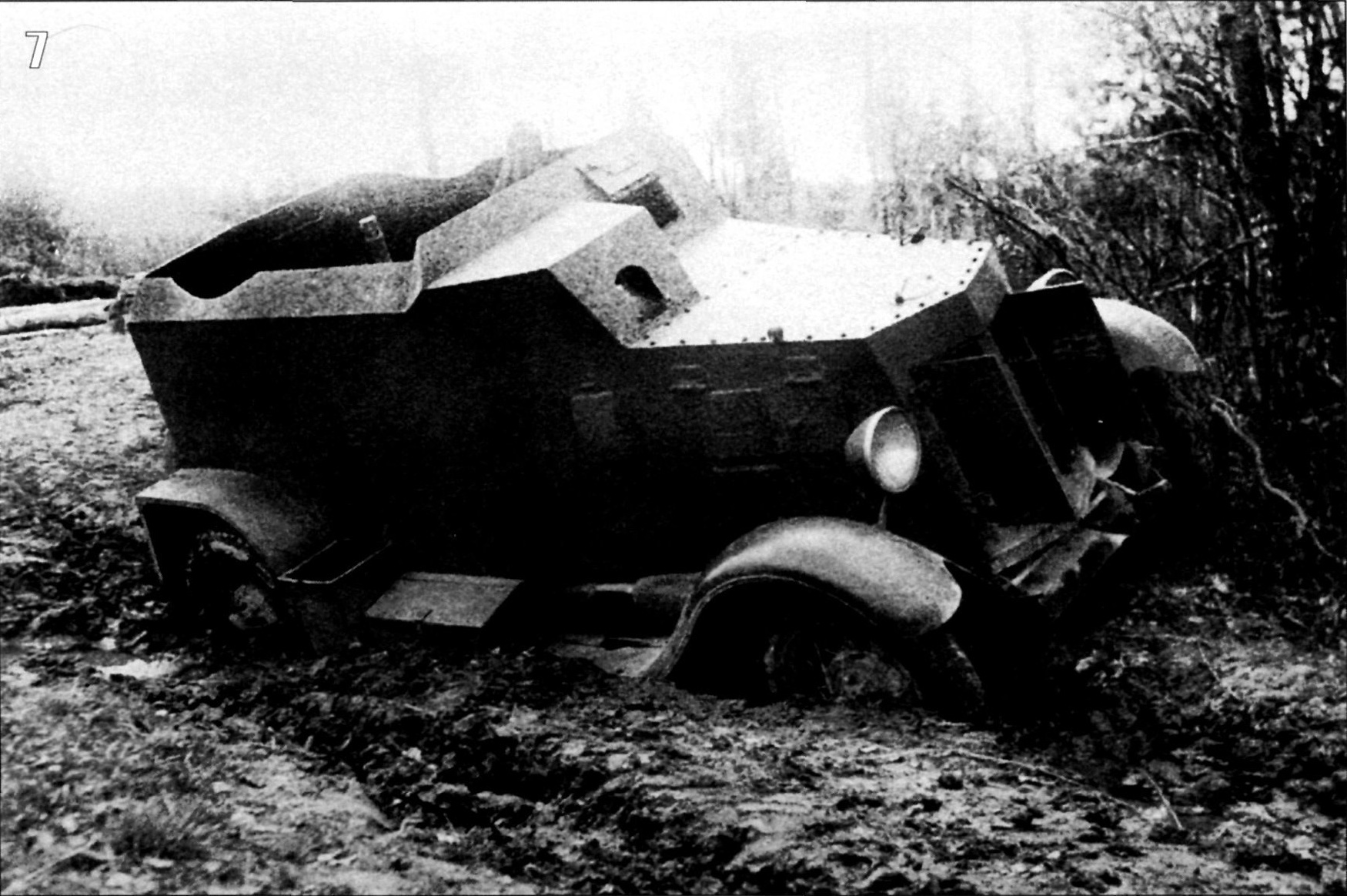
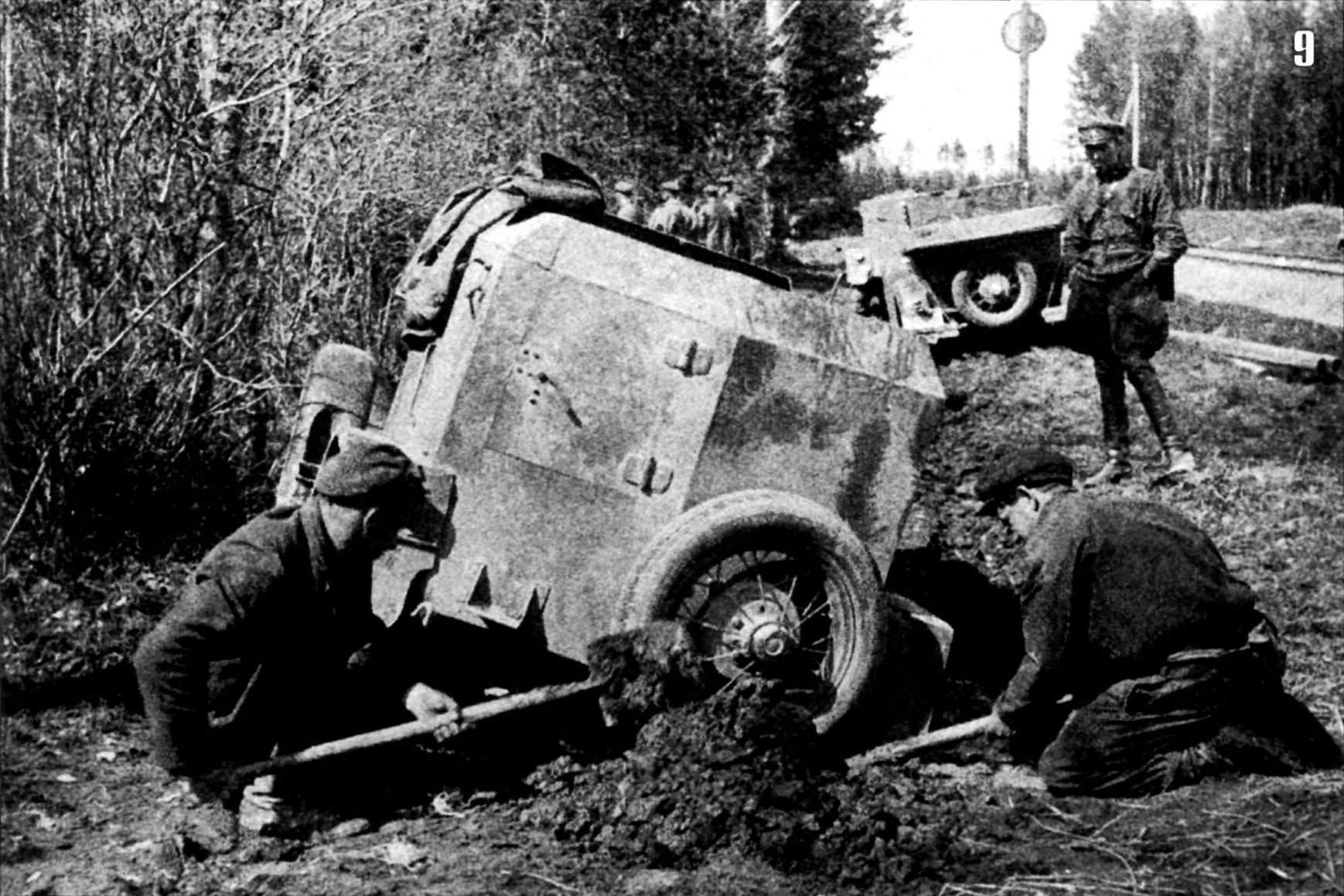
Live-fire trials revealed that engaging anti-aircraft targets with the Maxim machine gun was awkward due to the ‘cramped space inside the vehicle.’ Furthermore, representatives of the Artillery Directorate held the view that « installing armor that protects only the driver’s head is also irrational, since the vehicle’s body can be penetrated right through regardless. » During the discussion of the submitted designs, the Scientific and Technical Committee (NTK) of the Red Army’s Motorization and Mechanization Directorate (UMM RKKA) decided to test the vehicles during a mechanized brigade exercise near Moscow « to determine the utility of such existing installations and to make a final choice regarding the model to be adopted. » The front and side armor shields already fitted to the Fords were retained, as was the Maxim machine gun mounting designed by the Artillery Directorate’s NTC. Taking into account the test results of the machine-gun-armed Ford-A vehicles and military requirements for improved protection, NTK member A. Rozhkov (who had designed the BA-27 armored car) developed a design in June 1930 for a semi-armored vehicle based on the same chassis. It was an open-topped armored vehicle protected by 4–6 mm armor plating. Its armament consisted of a Maxim machine gun on a central mount, allowing for all-round fire and anti-aircraft capability, and a DT machine gun in the front hull plate. The vehicle’s crew consisted of three men: a driver, a commander, and a machine gunner. After the UMM RKKA reviewed the design, a decision was made to manufacture prototype « wheeled tankettes » and conduct trials. On July 11, 1930, negotiations were held with the Izhora Plant regarding the manufacture of « three mild-steel armored hulls for the Ford-A » by August 1. However, this could not be accomplished. One reason was a delay by the Directorate of Mechanization and Motorization in supplying the drawings, but the primary delay was the fault of the enterprise itself.
On August 15, 1930, the Special Department of the Izhora Plant sent a letter to the UMM RKKA [Directorate of Mechanization and Motorization of the Red Army]stating the following:
« The Izhora Plant accepts the order for the development of working drawings and the manufacture of two prototypes of the ‘Ford-A’ armored car based on the design you submitted, with a delivery date of March 1, 1931. The plant cannot
complete the order prior to this date due to an overload of special orders. »
The Directorate of Mechanization and Motorization of the Red Army had to appeal to « higher authorities », specifically, the Revolutionary Military Council of the USSR, but even this was of little help.
On September 15, 1930, the chairman of the 2nd Section of the UMM RKKA Scientific-Technical Committee reported to his superiors:
« I am reporting on my visit to the Izhora Plant regarding the status of prototype orders for armored cars.
1. Installation of an armored shield and machine guns on the Ford-A passenger car (as stipulated by the armament system). The Izhora Plant developed only the design for the shield mount. Virtually all the work was performed by NIOP. Three prototype vehicles were outfitted and handed over by NIOP to the mechanized brigade for testing. Test results are expected following the maneuvers. »
2. Semi-armored Ford vehicle (wheeled tankette). The design was completed at the request of the Scientific and Technical Committee of the Red Army’s Mobilization and Mechanization Department (NTK UMM RKKA); the design and working drawings are complete. The deadline for the delivery of three prototypes, August 1 of this year, as set by the MPU VSNKh USSR (Mobilization and Planning Department of the Supreme Council of the National Economy) and the UMM RKKA, has been missed. According to Comrade Obukhov (Head of the 2nd Mechanical Workshop), the first prototype will not be ready before October 15, since the plant, with its massive orders from the UMM RKKA, cannot assign either managers or workers to exclusively handle experimental work. »
Considering this circumstance, the Directorate of Mechanization and Motorization split the order, entrusting the production of two prototypes to the Experimental Design and Testing Bureau of the Red Army’s UMM, headed by N. Dyrenkov. The latter was a talented, self-taught inventor who took on all the projects, he designed tanks, armored vehicles, motorized armored cars, all-terrain vehicles, and much more. By this time, the design bureau he headed, which had begun work at the Izhora Plant, had moved from Leningrad to Moscow, where it was located on the premises of the NKPS Experimental Plant in Lyublino (later the Mozherez Plant).
By early 1931, two wheeled tankettes had been manufactured, one at the Izhora Plant, the other at the NKPS Experimental Plant. Both vehicles were very similar in design and armament, they were built to A. Rozhkov’s design. Their main difference was in the manufacturing technology of the armored hulls: the Izhora Plant vehicle was riveted, while the second vehicle was welded. After brief trials in January 1931, both vehicles were presented to the customer, representatives of the Directorate of Mechanization and Motorization. Considering the lack of vehicles of this class in the Red Army, the leadership of the Red Army’s UMM raised the question of adopting « wheeled tankettes » for service as reconnaissance and communications vehicles. However, by this time, the NKPS Experimental Plant had already produced two fully armored vehicles on the Ford-A chassis, the D-8 and D-12, to N. Dyrenkov’s design.
On February 12, 1931, the leadership of the Red Army UMM presented a « report on the status of experimental armored vehicle armament prototypes » to the USSR Revolutionary Military Council, which included the following item: « The armored Ford-A. Four prototypes have been substantially completed. The deputy chairman has decided to settle on two armor prototypes designed by Comrade Dyrenkov. »
Nevertheless, by order of the Chairman of the Scientific and Technical Committee of the Red Army UMM, large-scale testing of the « wheeled tankettes » was conducted from February to September 1931 (with several interruptions). The report, compiled in October, stated the following:
« 1. Ease of observation of the road with the driver’s hatch open and closed is quite satisfactory.
2. Driving the vehicle is simple and comfortable, but the driver and machine gunner’s seats must be securely fastened.
3. It takes 5-7 seconds for a three-person crew, unarmed but wearing fur coats, to board, and 4-5 seconds to exit. The driver and front machine gunner board and exit through the side, while the rear machine gunner does so through the door.
4. Test driving revealed that there is virtually no difference in cross-country ability on snowy roads compared to a normal Ford vehicle. It can operate reliably on packed roads, on roads with drifts (on short sections), and on roads covered with up to 10-15 cm of snow. Maximum speed at full load on level ground (speedometer reading):
80–88 km/h (50–55 mph). Average speed at full load on a well-packed highway: 45–50 km/h; average speed on a
snow-covered highway: 30–35 km/h.
Conclusion: The vehicle is simple in design and maintenance, fast, and maneuverable,
with ample power and acceleration reserves.
For summer operation, cooling
needs to be improved. According to data from the test
group, it lacks sufficient durability when operating in summer conditions on solid rubber tires. The vehicle is currently undergoing testing by the group to determine its durability on solid rubber tires. »
In November 1931, all further work on wheeled tankettes was halted. Both vehicles ended transferred to Military Depot No. 37 in Moscow and were later stripped of their armor.
Source:
frontline illustration